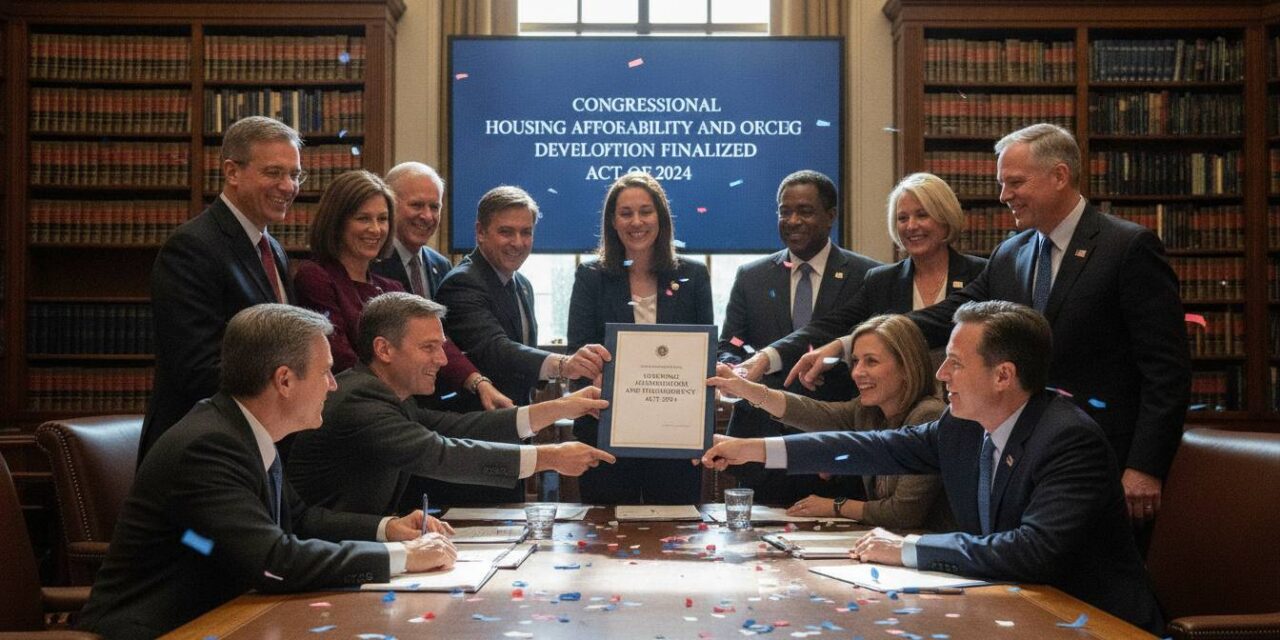
The 21st Century ROAD to Housing Act passed the House on May 20, 2026, by a decisive 396-13 vote, following the Senate’s earlier 89-10 approval on March 12, according to Crypto Briefing’s coverage. This legislation bundles sweeping reforms aimed at boosting housing supply and assistance with a surprising crypto-related provision: a freeze on the Federal Reserve’s issuance of a central bank digital currency (CBDC) until December 31, 2030.
One of the bill’s core changes, Section 901, bans large institutional investors from purchasing single-family homes starting 180 days after the law takes effect, as detailed by CoinDesk. These firms have been buying residential properties en masse, which market data shows has hurt affordability for first-time buyers. The bill does protect existing portfolios built before enactment by grandfathering them, but bars any future acquisitions—limiting expansion strategies for these investors. Penalties for violating this rule include civil fines of up to $1 million or three times the home’s purchase price, amounts high enough to ensure compliance, according to Crypto Briefing’s coverage.
The CBDC moratorium and implications for crypto
Section 1001 of the bill imposes a moratorium on the Federal Reserve’s ability to launch a CBDC until at least December 31, 2030.
Political dynamics behind the bill’s twin priorities
The combination of strong housing reforms with a CBDC ban in a single bill highlights a strategic legislative approach. Housing affordability and limiting institutional investors’ influence enjoy bipartisan support, especially among populist factions on both sides, making these measures politically popular and broadly acceptable. Meanwhile, the CBDC moratorium captures a more technical issue with less standalone momentum in Congress, per CoinDesk analysis.
Market impacts for housing investors
Investors in publicly traded real estate firms that run large single-family rental portfolios will have to adjust their strategies once the 180-day grace period ends. These firms can close deals before enforcement but must halt new acquisitions afterward.
In the crypto space, the CBDC ban offers rare regulatory certainty. Stablecoin platforms and payment systems can expect a stable competitive landscape through 2030, encouraging increased investment and adoption. However, lawmakers still consider stablecoin regulations addressing issuer governance and compliance. The Fed’s explicit prohibition on issuing any CBDC or similar digital asset signals strong bipartisan agreement on U.S. policy priorities, according to CoinDesk.
Next steps and policy watchpoints
As of June 2026, the housing bill awaits further Senate action on the latest House amendments. Industry groups are calling for quick passage to secure regulatory certainty ahead of expected midterm election changes.
The Senate was able to agree on a temporary CBDC ban in the bipartisan housing bill – but House conservatives panned it as not enoughView on X
It’s hard to see Senate Dems agreeing to more https://t.co/peXPg88d48
In the end, the 21st Century ROAD to Housing Act presents a complex mix of housing affordability measures and digital currency policymaking—signaling Congress’s intent to tackle key economic challenges within one package, according to CoinDesk.
Bitcoin Miner ‘Capitulation’ Occurs Amid Trader’s 2026 Bear Market Outlook.
On Google, tick the box next to stnews.live to see our reporting higher in Top Stories.
Disclaimer: The content on this page is for informational purposes only and does not constitute financial advice. Always do your own research before making investment decisions.

Elena Petrova is a regulatory correspondent specializing in crypto law and policy with over 10 years of financial journalism experience. Formerly a finance reporter at Reuters, Elena covers SEC enforcement, MiCA implementation, and global stablecoin regulations. She holds a J.D. from Georgetown Law and is a member of the New York State Bar. Her regulatory analysis is frequently referenced by compliance officers and legal teams at major exchanges.
Conflicts of interest
I have no current legal practice or retainer relationships with any cryptocurrency company. Past employment relationships are listed publicly.