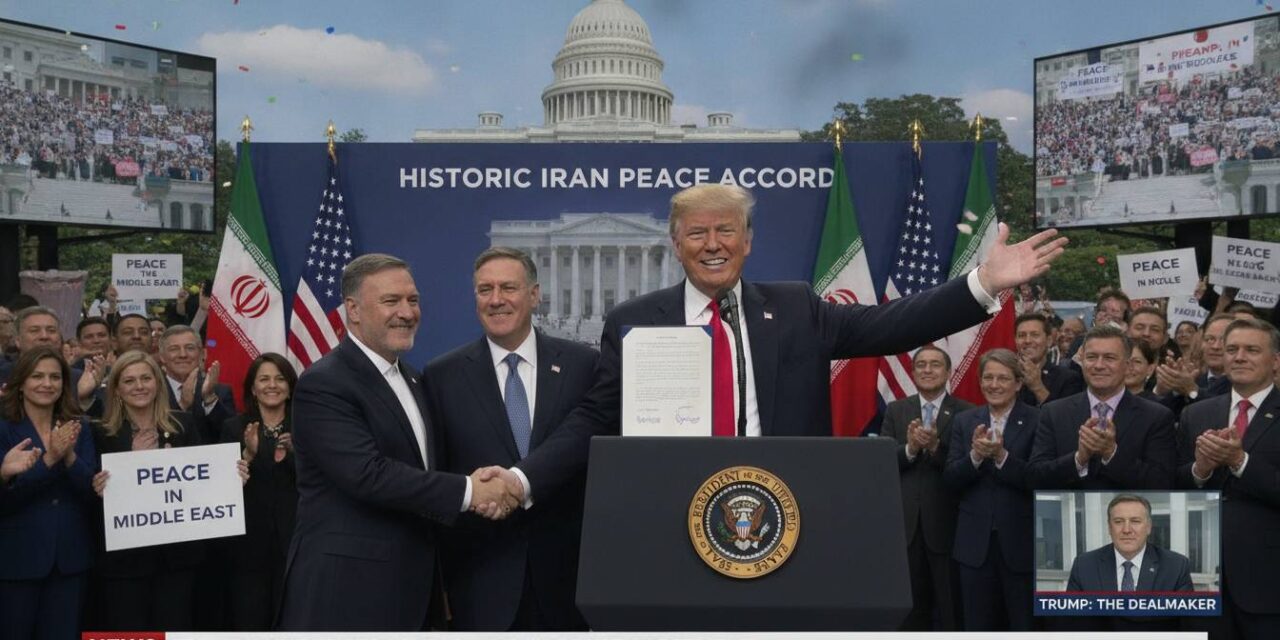
Donald Trump declared a US-Iran peace deal is ready for signing Sunday. He claimed the plan will stop fighting and immediately open the Strait of Hormuz. Hours later, Iran’s foreign ministry rejected Trump’s claim, stating no memorandum will be signed Sunday and warning people not to expect quick results. Questions linger as both governments exchange opposing claims during a tense time. International focus grows as the world wonders if true progress or another deadlock is on the horizon, according to Thehill.
“the Deal is scheduled to get signed tomorrow, and immediately after it is signed, the Hormuz Strait is OPEN TO ALL”, according to CBS News.
“We will have to wait and see about the exact date of the signing of the memorandum of understanding, although it will not be tomorrow [Sunday]”, according to BBC.
Contradictory Claims Over Peace Deal Timing
Trump told supporters that a framework agreement would be signed Sunday, instantly opening the Strait of Hormuz for world shipping. The vital channel has stayed mostly shut since war broke out between the US, Iran, and others on February 28, 2026. Iranian ministry officials, though, quickly denied any deal for Sunday, calling Trump’s claim premature in state media. Esmail Baghaei, a major Iranian diplomat, said that while an accord might be close, “it will not be tomorrow [Sunday],” firmly dismissing the US timeline.
Background: US-Iran Escalation and Ceasefire Fragility
Months of conflict have set the stage for fresh urgency around a possible deal. US and Israeli airstrikes hit Iran on February 28, 2026, unleashing quick Iranian retaliation and shutting shipping lanes. Scattered clashes and artillery exchanges have continued, even after a fragile April ceasefire. Efforts at lasting peace remain stuck. Who will manage the Strait of Hormuz—where one-fifth of world oil moves—remains a key flashpoint. Iranian officials demand changes from old management. US forces shot down several Iranian attack drones in the Strait early Saturday, showing how unstable things are only hours before the disputed signing.
President Trump sent changes to the proposed peace deal back to Iran after a meeting with advisers Friday, officials say. https://t.co/DzOwB5vvLQ pic.twitter.com/dO75K3HVo0View on X
Key Deal Details: Blockade, Nuclear Program, and Strait Access
If signed, the memorandum would end the US naval blockades on Iranian ports while restoring free movement through the Strait of Hormuz. Iranian insiders say terms include stopping nuclear weapons work, with Iran agreeing to pause efforts for the deal’s duration. Yet, Tehran’s public statements show many hard details still need work. Both sides are still debating how to lift sanctions and regulate Iran’s nuclear future. A previous deal attempt fizzled in April over disagreements on verification and step order. In these talks, Iran wants promises the US won’t return to harsh sanctions. Washington demands strict controls on Iranian nuclear plans. President Trump insists signing the deal will reopen the Strait at once—a move that could restore oil flows and shift prices worldwide.
Regional Impacts and Persistent Security Threats
On Sunday, Israel ordered people to leave 29 southern Lebanese villages after rocket fire rose sharply. The same day, US forces hit Iranian-backed militants nearby, heightening fears of broader fighting involving Hezbollah and others. Protests erupted outside a foreign ministry site in Mashhad, Iran’s number-two city, where people showed concern about a deal looking like surrender to the US. Meanwhile, sea tensions persist, as US ships keep watch in the Strait. Oil prices have swung hard after each clash, reflecting how much Hormuz Strait access matters to the world’s supply.
Iranian Domestic Resistance and US Political Calculations
Waves of fresh protests fill Iran’s cities as citizens demand openness on nuclear and defense promises. Leadership projects a united front, yet signs of deep splits are showing between hardliners and moderates. Some officials promote calm, but rifts reach the public. President Trump calls the agreement a turning point for peace and sees it as a signature foreign policy win. Supporters mention the deal to back US diplomatic power. During the weekend, US and UK leaders spoke on the phone to clear details on the signature path and postwar rebuilding help.
Trump says willing to wait for a few days to get ‘right answer’ on Iran peace deal https://t.co/Z2tFUIRCuyView on X
Timeline of Recent Escalation and Negotiations
Events have moved fast over the last months, showing a clear timeline. February 28, 2026: US and Israeli air raids inside Iran started the war, causing Iran to close the Strait of Hormuz right away. In April, both agreed on a ceasefire that only partly held. Direct attacks and shifting alliances have continued ever since. Saturday, US forces shot down several Iranian drones in the Strait, bringing new tension just before the possible signing. Israel then ordered evacuations for 29 Lebanese villages, raising alarms about regional spillover. This whirlwind pace makes a Sunday signing highly uncertain.
Deal Prospects: Skepticism Continues Amid Contradictions
Conflicting messages from Washington and Tehran have left observers unsure if a real signature will happen Sunday. Iranian officials reject that outcome outright, pointing to unresolved arguments on sanctions and nuclear checks. Trump’s upbeat claims have lifted some hopes for last-second progress. But repeated failed rounds have made all sides cautious. Each breakdown has worn away public faith on both sides. With military tension still high, mixed messages only add risk—global markets now react sharply to every headline. Diplomats say the deal’s future depends on whether both leaders fix their differences and turn words into a signed accord.
Looking Ahead: Risk of Further Conflict and Economic Fallout
If the memorandum is not signed Sunday, as Iran predicts, another cycle of tension and economic strain could start. Talks are still ongoing, but no deal could undo months of tough diplomacy, dropping the Gulf back into near-daily standoffs. Keeping the Strait of Hormuz closed would threaten vital oil flows—past blockages have often pushed world prices higher.
This article is for informational purposes only and does not constitute financial or investment advice. Markets are volatile — always do your own research before making investment decisions.
On Google, tick the box next to stnews.live to see our reporting higher in Top Stories.
Disclaimer: The content on this page is for informational purposes only and does not constitute financial advice. Always do your own research before making investment decisions.

STNews Editorial is the in-house newsroom of STNews, reporting on stablecoins, real-world assets (RWA) and the wider crypto market. Our team compiles and edits coverage from primary sources — exchange and on-chain data, company announcements and official regulatory filings.