This article is for informational purposes only and does not constitute financial or investment advice. Cryptocurrency markets are highly volatile. Always do your own research before making any investment decisions.
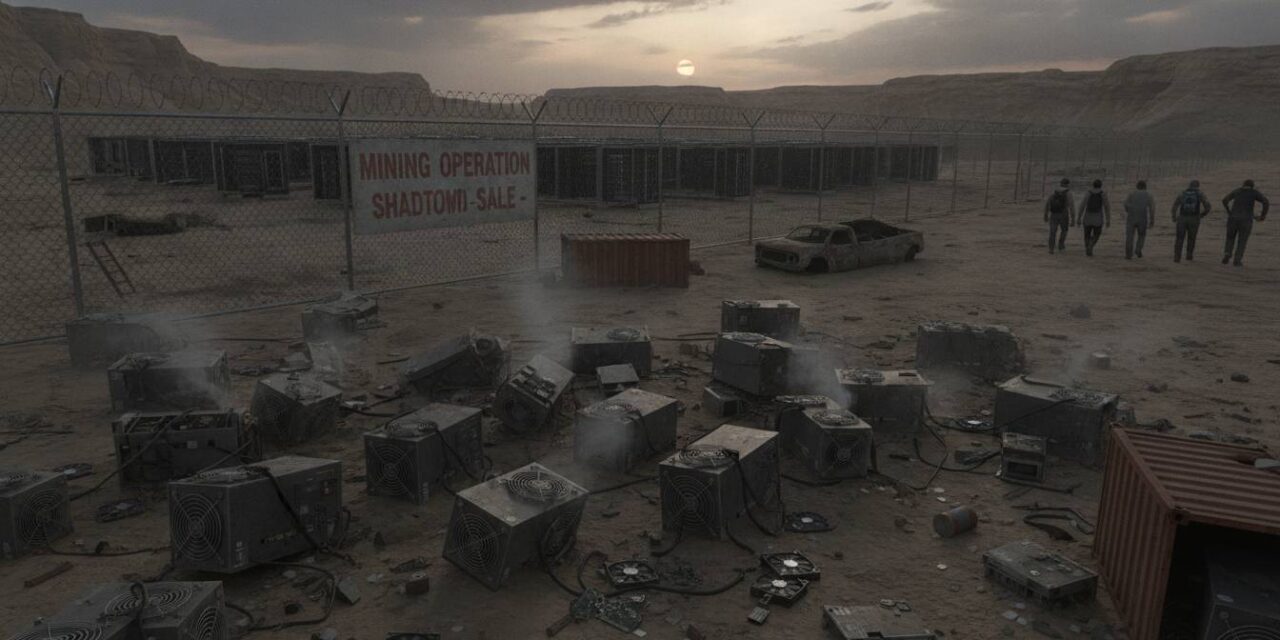
Profitability has rapidly eroded, with margins dropping below 5% and production costs sitting near $61,200 per coin, based on Cointelegraph’s recent analysis. Since October 2025, the network’s hashrate—a key confidence metric—has fallen more than 25%, while AMBCrypto reports that miner revenues are down 11% in just ten days.
The squeeze on mining profits has changed trader sentiment about the recovery timeline. Recent commentary shows that many now expect the Bitcoin bear market’s final bottom won’t hit until later in 2026—quite a shift from bets on a faster comeback just a few months ago.
A Surge in Miner Selling Pressure
AMBCrypto’s latest data shows that Bitcoin miner revenues have dropped 11% over just ten days, leaving barely any profit buffer for even large players. Once mining margins drop under 5%, stress mounts for every operator in the industry.
Those margin figures matter: Cointelegraph’s research puts the network’s electrical cost floor at $48,965 and total production costs much higher—$61,200 per coin.
Hashrate Decline Exposes Fragile Miner Economics
Bitcoin’s hashrate has slumped by more than 25% since October 2025, according to AMBCrypto.
This hardware retreat lines up with Cointelegraph’s reporting that sub-5% mining margins are leading to real operational losses.
Price Floors Drawn From Mining Economics
Both Cointelegraph and Yellow confirm that Bitcoin’s typical production cost now hovers around $61,200, with the direct electrical cost pegged at $48,965 per coin.
When the spot price drops close to or below those numbers, miners become forced sellers to cover operating expenses, often amplifying downside pressure on Bitcoin’s pricepressure. That’s why analysts are closely tracking whether persistent miner selling could drive prices right into those floors before a full recovery can ever get momentum. The fact that market participants are watching those two thresholds closely underscores their importance for anyone hoping to spot a bottom.
🚨 BitPinas Daily Market Price | June 3, 2026 | 9:00 AM PHTView on X
Bitcoin (BTC) has crashed to $66,671.58 (-6.4%) as a full‑scale market correction wipes out recent support levels.
The heavy sell‑off is being driven by a mix of institutional selling pressure and intense military… pic.twitter.com/iQ2iEqIXlJ
Timing the Cycle Bottom: Why Later 2026?
In contrast to prior bear markets—where fast miner shakeouts set up swift rebounds—experts highlight that this cycle’s steep 65% price drop from the highs and the 25% collapse in hashrate signal a much slower, messier bottoming process. AMBCrypto’s research explains that as long as miners are forced to dump coins just above breakeven, every bounce will probably fade and new lows can still emerge before true accumulation begins.
Mining Landscape Shifts and Network Security
2026 is showing the same patterns: hashpower is now shifting rapidly toward regions with cheaper energy and regulatory stability, an adjustment driven by fierce survival incentives.
Implications for Traders: Watching Key Metrics
With Bitcoin’s network in flux, serious traders are now laser-focused on the production cost, hashrate, and miner revenue numbers. AMBCrypto notes a historic 65% drawdown from the cycle’s peak, together with a 25% loss in network power—both dramatic measures seen only during prior cycle resets.
So, Cointelegraph concludes that the next decisive move depends on whether full miner capitulation finally happens before the $48,965 floor is retested—or if new sellers tip Bitcoin even lower first.
On Google, tick the box next to stnews.live to see our reporting higher in Top Stories.
Disclaimer: The content on this page is for informational purposes only and does not constitute financial advice. Always do your own research before making investment decisions.

Elena Petrova is a regulatory correspondent specializing in crypto law and policy with over 10 years of financial journalism experience. Formerly a finance reporter at Reuters, Elena covers SEC enforcement, MiCA implementation, and global stablecoin regulations. She holds a J.D. from Georgetown Law and is a member of the New York State Bar. Her regulatory analysis is frequently referenced by compliance officers and legal teams at major exchanges.
Conflicts of interest
I have no current legal practice or retainer relationships with any cryptocurrency company. Past employment relationships are listed publicly.