- The global Bitcoin network hash rate reached an all-time high of 990 EH/s in May 2026.
- Foundry USA leads with 299 EH/s, accounting for 30.1% of the global Bitcoin mining hash rate.
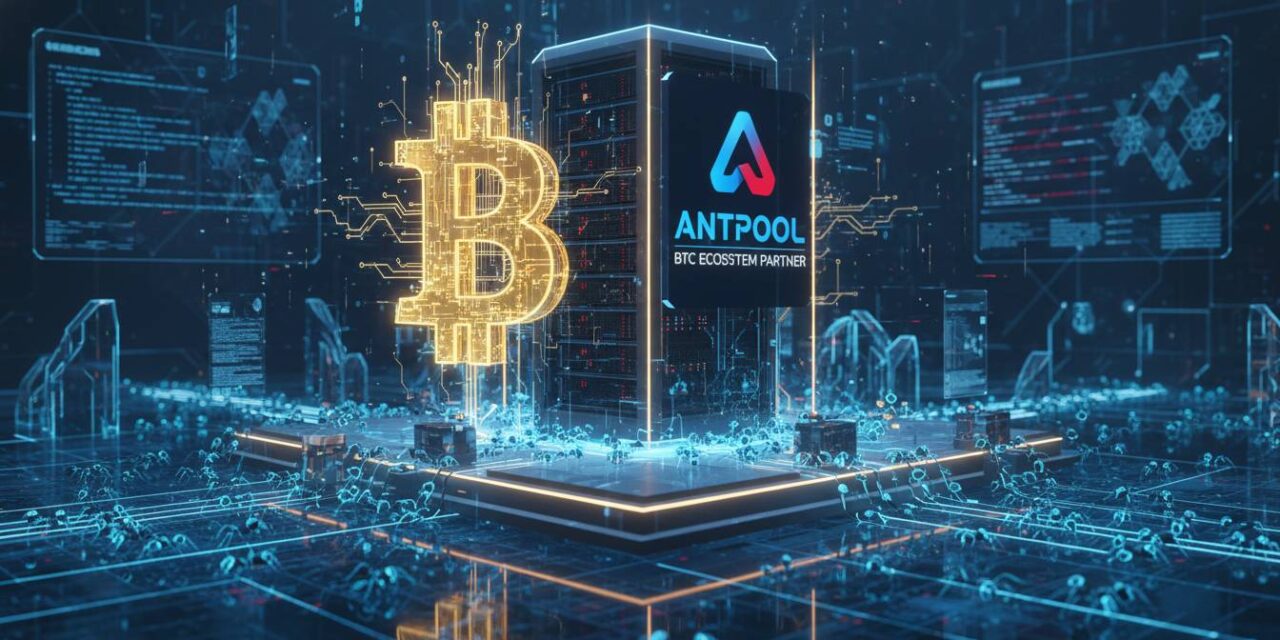
- AntPool controls 211 EH/s, representing 18.3% of the network, and partners with Bitmain for hardware advancements.
- MARA Pool, operated by Marathon Digital Holdings, reported 64 EH/s, equal to 5.7% of the global hash rate.
This article is for informational purposes only. Always verify information independently before making any decisions.
The global Bitcoin network has reached a combined total hash rate of 990 EH/s going into May 2026—an all-time high that raises the stakes across the mining industry. Analysts say the newly announced partnership among BTC Ecosystem, AntPool, and Bitmain in May 2026 signals a new wave of consolidation at the top.
- Explore how BTC Ecosystem, AntPool, and Bitmain are innovating crypto mining for 2026
- Contact us for additional coverage on BTC Ecosystem’s expansion with AntPool and Bitmain
1. Foundry USA (299 EH/s | 30.1%)
Foundry USA maintains the top position in global Bitcoin mining with a pooled hash rate of 299 EH/s, translating to 30.1% of all known network shares. That dominance means U.S.-based miners regularly process over 30% of daily Bitcoin blocks. Founded in 2019 and headquartered in New York, Foundry USA ramped up its overall capacity during the 2024–2025 bull market. The company leveraged extensive U.S. grid access and proprietary ASIC firmware, pushing efficiency levels to nearly 2.3 joules per terahash (J/TH) on the latest hardware. Its close partnerships with hardware companies and electricity suppliers in Texas resulted in over 30 data centers across North America.
Foundry USA’s approach emphasizes capital support, offering financing and bridge loans to midsize miners in return for pooled hash rate allocations. This enables a federated but still cooperative American mining sector, letting minor operators scale up while preventing unchecked mergers. Despite ASIC prices exceeding $28/TH in early 2026, barriers for midsize entrants haven’t surged because of accessible financing.
2. AntPool (211 EH/s | 18.3%)
AntPool controls 211 EH/s, representing 18.3% of the global network’s hash rate and confirming its continued dominance as the top Asia-based mining pool. Independent operations and a strategic relationship with Bitmain—globally the largest ASIC manufacturer—define AntPool’s growth path. In 2026, AntPool adopted Bitmain’s S21 Pro ASICs, which are priced at roughly $3,980 and deliver up to 260 TH/s per device.
The May 2026 partnership brings together software, hardware, and research expertise from all three companies to support large-scale deployments. Joint projects include immersion cooling and adaptive workload distribution, seeking to lower operating costs and improve site-level performance. Over 60% of AntPool’s current capacity now operates alongside renewable energy projects in regions like Inner Mongolia and Sichuan.
3. ViaBTC (145 EH/s | 13.0%)
ViaBTC accounts for 145 EH/s—equivalent to 13.0% of total Bitcoin hash rate—and ranks third worldwide by pooled compute power. Since its 2016 founding in China, ViaBTC has shifted much of its capacity to Europe and the Middle East due to regulatory restrictions in mainland China after 2021. In 2026, ViaBTC achieved sub-20 J/TH energy efficiency through custom firmware and granular workload management. The company attracts miners by offering comparatively low pool fees, ranging from 1.2% to 1.4%, particularly advantageous for high-volume operations.
New incentives for cloud mining participants were introduced in Q2 2026. Published research confirming that fixed-term contracts start at just $0.048 per kilowatt-hour (kWh) for bulk clients in the Nordics.
4. F2Pool (113 EH/s | 10.0%)
F2Pool supplies 113 EH/s to the Bitcoin network, matching 10% of total global pool output. Since launching in 2013, F2Pool has weathered significant regulatory challenges in China, shifting swiftly to a transnational data center model. Sites now span Kazakhstan, Canada, and nations in northern Scandinavia, where renewable power rates dropped below $0.042/kWh in late 2025.
Clients can select pay-per-share-plus (PPS+) or full pay-per-share (FPPS) payout models, with net fees falling as low as 0.9% for major institutional partners. F2Pool’s combination of infrastructure agility and customized fee structures has secured relationships with both legacy miners and new players. Their proprietary cross-border settlement keeps their revenue model resilient even as Bitcoin’s price sits near $72,000 in May 2026.
5. SpiderPool (98 EH/s | 8.8%)
SpiderPool operates at 98 EH/s, holding 8.8% of global hash rate and ranking as the fifth-largest pool. The company’s sites extend across Western China, Kazakhstan, and Kyrgyzstan. Over 2025–2026, SpiderPool boosted site-level energy efficiency with modular data centers using proprietary submersible cooling, bringing ambient power draw nearly 10% below traditional air-cooled approaches.
SpiderPool also benefits from dynamic resource allocation, rapidly switching between Bitcoin and merged coins like RSK. Partnerships with new power affiliates in Kazakhstan delivered bulk electricity at $0.035/kWh for SpiderPool’s largest customers by Q2 2026. Their focus on cost control has cushioned profitability as ASIC prices and energy tariffs rose across Eurasia.
6. MARA Pool (64 EH/s | 5.7%)
MARA Pool, operated by Marathon Digital Holdings, posted 64 EH/s in April 2026, equal to 5.7% of global hash rate. Marathon committed over $1.3 billion from 2025 to 2026 for two primary new mining campuses in North Dakota and Texas. Both sites tap wind and nuclear energy, achieving an average site power cost below $0.032/kWh post-Q1 2026.
MARA Pool emphasizes regulatory adherence, carbon offset validation, and uses AI-driven thermal controls for optimal ASIC management. Marathon intends to double the pool’s hash rate by the end of 2026, mainly by acquiring and upgrading underused North American energy assets.
BTC Ecosystem, AntPool and Bitmain: Partnership Timeline and Strategic Impact
- 2024 Q4 — Planning Phase:Initial discussions began on a tri-party expansion model to address supply chain and infrastructure bottlenecks across North America and Asia. Bitmain and AntPool shared next-generation ASIC blueprints with BTC Ecosystem’s technical staff to assess integration feasibility.
- 2025 Q2 — Pilot Implementation:Pilot deployments of Bitmain S21 Pro ASICs, each yielding up to 260 TH/s, achieved successful cost reductions at facilities in Sichuan and Alberta. The viability of immersion-cooled, modular data centers emerged from these pilots.
- 2025 Q4 — Agreement Signing:Parties finalized a binding pact valued at $420 million, covering procurement, R&D initiatives, and profit-sharing, as formally announced on press releases. New governance boards were created to direct joint operations and hardware R&D.
- 2026 May — Full Public Launch:The partnership unveiled global expansion plans—targeting an additional 30 EH/s of hash rate by December 2026, with 60% of new capacity guaranteed as renewable. The move positions the network above 250 EH/s overall.
- 2026 Q3 — Planned Expansion:BTC Ecosystem, AntPool, and Bitmain intend to commission several further mining sites—including two new Texas facilities, one in Inner Mongolia, and another in Uzbekistan—deploying substantial batches of S21 Pro ASICs by the year’s close.
Decentralization, Sustainability, and the Next Era of Mining Competition
AntPool’s deep liquidity, Bitmain’s hardware leadership, and BTC Ecosystem’s operational expertise establish the foundation for this three-way venture. Having committed to over 60% renewable energy integration by mid-2027 for new facilities, the joint strategy is positioned for long-term sustainability. Per Hashrateindex‘s March 2026 sustainability dashboard, global Bitcoin mining uses 47% renewable power—a figure the partnership targets to surpass.
Per HashrateIndex’s March 2026.
The alliance has earmarked at least $130 million each year for R&D through 2027, focusing on new ASIC firmware, advanced thermal management, and real-time optimization for dynamic workloads.
How the Mining Competitive Landscape Is Changing
| Mining Pool | April 2026 Hashrate (EH/s) | Global Pool Share (%) | Main Region |
|---|---|---|---|
| Foundry USA | 299 | 30.1 | North America |
| AntPool | 211 | 18.3 | Asia |
| ViaBTC | 145 | 13.0 | Europe/Asia |
| F2Pool | 113 | 10.0 | Global |
| SpiderPool | 98 | 8.8 | Central Asia/China |
| MARA Pool | 64 | 5.7 | North America |
The six largest pools now command nearly 86% of all known hash rate—a dramatic demonstration of increased consolidation during 2025–2026.
Equipment, Infrastructure, and the Economics of Mining in 2026
Bitmain’s S21 Pro miner emerges as the flagship for 2026 deployments, hitting up to 260 TH/s at an energy cost of just 18 J/TH. Priced at approximately $3,980 for volume customers, this equipment is at the core of the BTC Ecosystem, AntPool, and Bitmain rollout. Block contracts for wind and hydro power secure average rates from $0.032 to $0.044 per kWh, supporting cost leadership for new and refurbished sites alike.
Modular, immersion-cooled data centers now dominate new buildouts, offering superior heat transfer and shorter commissioning times. The partners plan to roll out competitive fee levels for high-volume miners, maintaining overall sector pricing pressure. Over 60% of the alliance’s new output will be powered by renewables, and key campuses in 2027 are targeting industry-leading emissions performance.
Outlook: Strategic Risk, Global Policy, and the Next Halving Cycle
The mining landscape faces heightened risk and reward as the 2028 halving nears. Vertically integrated consortia—like the partnership between BTC Ecosystem, AntPool, and Bitmain—are positioned to stay profitable as block rewards shrink. Institutional researchers estimate that block rewards are projected to fall below 2.0 BTC per block sometime in Q3 2028, driven by improved ASIC efficiency and sustained access to low-cost renewable power. Remaining competitive will demand continuous innovation in hardware, supply contracts, and cross-border regulatory navigation.
On Google, tick the box next to stnews.live to see our reporting higher in Top Stories.
Disclaimer: The content on this page is for informational purposes only and does not constitute financial advice. Always do your own research before making investment decisions.

Sarah Williams is a blockchain technology editor and investigative journalist with 6 years of dedicated crypto reporting. Formerly an editor at CoinDesk, Sarah has broken stories on exchange insolvencies, DeFi exploits, and regulatory enforcement actions. She holds a B.S. in Computer Science from MIT and contributes to the MIT Digital Currency Initiative. Sarah is a frequent speaker at Consensus, Token2049, and ETHGlobal events.
Conflicts of interest
I hold no positions in any cryptocurrency mentioned in my coverage. All investment-related content is reviewed by senior editors before publication. I am not compensated by any project I cover.