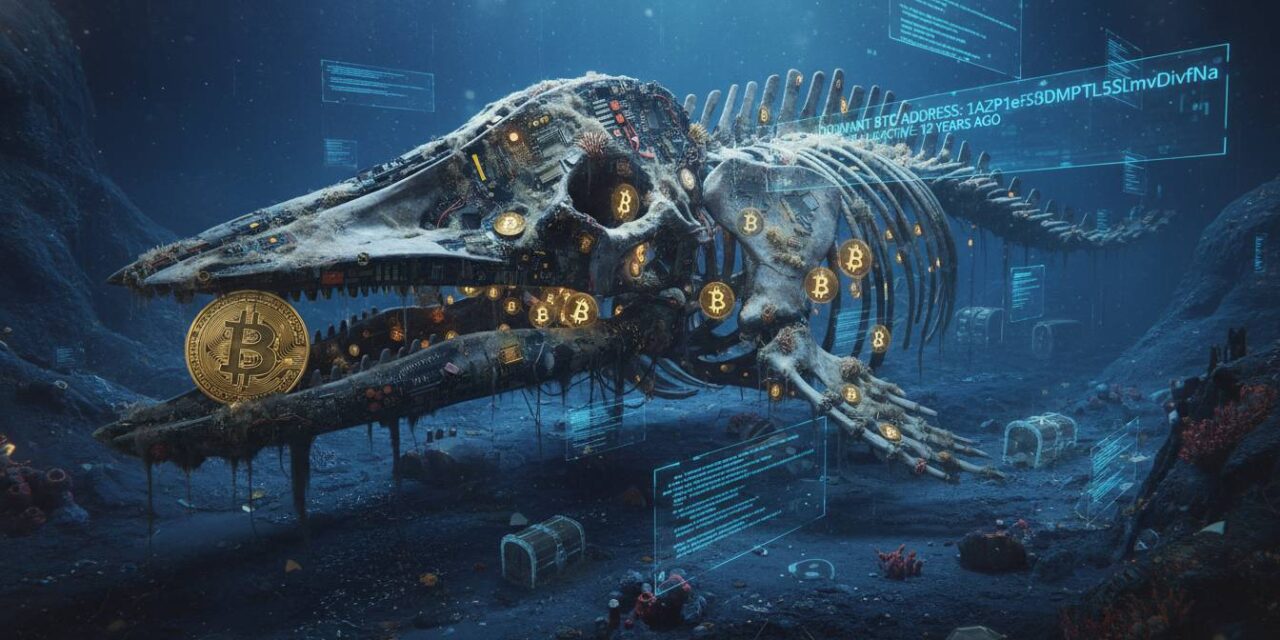
- On May 24, 2026, a dormant Bitcoin whale transferred 2,650 BTC, valued at approximately $173 million, after 12 years of inactivity.
- Over 1.25 million BTC, worth more than $80 billion, remain in dormant wallets as of mid-2026.
- Previous similar transfers, like a 2,100 BTC move in 2021, often resulted in significant market volatility.
- Market reactions included a $900 dip in Bitcoin's spot price following the whale transfer, highlighting its impact on liquidity.
This article is for informational purposes only. Always verify information independently before making any decisions.
According to CoinDesk and on-chain trackers, a dormant Bitcoin whale transferred 2,650 BTC—valued at around $173 million—to accounts associated with major Crypto trading firms on May 24, 2026. This single transfer ended twelve years of wallet inactivity and briskly became one of the most closely analyzed on-chain moves of the year. Blockchain analysts flagged the activity as a rare and potentially market-moving event because such large, long-dormant addresses rarely reemerge. Traders and institutional desks worldwide watched its market effect in real time. Volatility followed the alert.
Bitcoin Whale Transaction Details and Historical Context
Records compiled by 12-Year Dormant Bitcoin Whale Moves $41M BTC show the wallet began accumulating its Bitcoin holdings between late 2011 and early 2012—a period when 10,000 BTC infamously bought one pizza delivery. The whale spent months quietly consolidating the 2,650 BTC, eventually holding an amount now worth over $170 million. No transfers or outgoing movements occurred between March 2014—the date of its last known deposit—and its May 2026 awakening.
Many consider the 2,650 BTC transfer a modern echo of the 2021 event, when a separate whale dormant for 13 years moved 2,100 BTC, valued at $67 million then, according to Bitcoinfoundation.
According to Bitcoinworld, such awakenings have historically occurred during times of increased institutional interest, regulatory turning points, or system shocks—major narrative shifts that force market participants to reassess existing supply. That $80 billion held across dormant addresses adds psychological weight to observed inflows, magnifying both bullish hypotheses and fears of deep sell pressure. Comparing 2026 to prior cycles, the dominance of early-era coins in aggregate on-chain flows continues to shrink, even as each new awakening draws fresh speculation about market intent.
The Phenomenon of Dormant Bitcoin Wallets
According to the How to Track Crypto Whale Movements? guide, a “dormant” Bitcoin wallet is defined as an address that has experienced no outward movement for at least five years. As of mid-2026, these sleeping addresses collectively hold more than 1.25 million BTC—worth more than $80 billion based on current prices. That sum includes both intentional long-term holds and coins permanently lost due to forgotten keys. Some analysts suggesting that as much as 30% of all outstanding Bitcoin remains locked in such states.
🐋 A #Bitcoin whale whose wallet was dormant since 2014 has moved 500 BTC.View on X
The five-transaction transfer is part of a larger trend, with onchain data showing nearly 1,911 $BTC from long-dormant wallets have been moved in March alone. 🌊 Explore the data.https://t.co/8KYJuiUhWY pic.twitter.com/pXn0L64UlR
For some, simply never moving coins is a deliberate long-term play. For others, the wallets are simply inaccessible. The effect on liquid supply is enormous: by lowering circulating float, dormant coins help intensify price swings as fresh demand chases a shrinking number of available coins on exchanges.
According to Cryptorank, when previously dormant wallets awaken and move substantial amounts, they frequently do so ahead of events that shift narrative focus—regulatory developments, hacks at major platforms, or product launches targeting institutions. In past market cycles, heightened activity among ancient wallets has lined up closely with subsequent price volatility, as whales surface supply and open arbitrage windows for nimble traders.
$80B+ — Total value in dormant Bitcoin wallets (2026)
Estimates suggest a significant portion—possibly upwards of 20%—are permanently lost to owner error or inaccessible hardware. Each new transfer from a forgotten or long-idle wallet reignites debate over how much Bitcoin truly remains available for trade. Because these whales sometimes control significant chunks of float, their reappearance unsettles liquidity providers and prompts a rapid repricing of risk, especially during thin trading sessions.
Market Impact and Analyst Reactions
Per a bitcoin whale that went silent in 2013 moves $40 million, the May 2026 whale transfer produced immediate effects on both spot and derivatives markets. Exchange market makers quickly raised spreads as the influx of a 2,650 BTC position flirted with local liquidity limits. Short-term funding rates on perpetual swaps ticked higher as traders braced for a selloff. The transfer also generated a surge in social media alerts and on-chain tracking notifications, prompting algorithmic trade bots to adjust exposure across multiple venues. That activity coincided with a swift $900 dip in Bitcoin’s spot price, though the market recovered by session close.
According to Cryptorank, not all whale moves now alter the market’s structural balance—a single actor’s ability to sway global price has dwindled as institutional liquidity pools have grown. But analysts caution that narrative and psychology still matter. High-profile transactions by giant dormant wallets attract disproportionate attention, often igniting rumors of institutional rotation, upcoming OTC deals, or “miner capitulation.” These psychological effects. Independent of the actual disposition of the moved coins—can spur follow-on volatility or shift short-term momentum. For sophisticated funds, the event is an opportunity to capitalise on chaos: arbitrage models, custom liquidity pools, and options strategies are dusted off whenever whales surface.
$173M — Value of whale transfer (May 2026)
| Date | Exchange | Transferred BTC | Market Value (USD) |
|---|---|---|---|
| 2026-05-24 | Coinbase (Institutional) | – | – |
| 2026-05-24 | Kraken (OTC) | – | – |
According to Bitcoinfoundation, the 2021 awakening of a comparable dormant wallet—2,100 BTC after 13 years—also led to heightened trading volumes and risk-off positioning on major exchanges.
Long-Term Holding vs. Active Trading Strategies
Per Dormant 2,100 BTC Worth $147M Moved, the Bitcoin ecosystem distinguishes long-term holders (LTHs) as wallets that have not spent outputs for five years or more. These players often operate with strong conviction, unaffected by short-term price swings, preferring “buy and wait” as their default strategy. In contrast, active traders—whether high-frequency bots, prop desks, or institutional market makers—move funds much more regularly, cycling assets between exchange accounts for yield, arbitrage, and margin trading. Whales tied to these activities often direct funds in bursts, sometimes multiple times per day, compared to the glacial pace of long-term accumulators.
| Category | Avg. Holding Period | 2026 BTC Supply Share | Movement Frequency (2025–26) |
|---|---|---|---|
| Long-Term Holder | 7+ years | ~13% | Rare: 1–2 times/decade |
| Active Trader | 1–2 weeks | ~22% | Frequent: Multiple times/week |
| Others | Variable | ~65% | Mixed: Random |
Data tracked by Glassnode shows the majority of top-performing LTHs continue to outperform most active traders over multi-year windows.
13% — BTC supply held by long-term holders in 2026
According to Nansen, the growth of institutional monitoring and automation has changed the rhythm of these awakenings.
Why This Matters
According to 12-Year Dormant Bitcoin Whale Moves $41M BTC, massive awakenings of long-inactive wallets hold structural importance for liquidity, regulatory, and psychological reasons. In a given year, only a handful of dormant whales—those with over 1,000 BTC—reactivate. When they do, traders respond instantly, scouring for signs of coordinated institutional moves or estate liquidations. Wall Street attention and new ETF vehicles mean more dormant whales must now comply with regulatory standards to convert positions or meet legal requirements.
The 2016 wallets moved the most dormant #Bitcoin this month. 🌊 They moved 725 BTC. The 2014 wallets followed with 530 BTC, and the 2013 wallets moved 295 BTC.View on X
This brings the total to nearly 2,000 $BTC. https://t.co/Vhvy5xtpe5 pic.twitter.com/CyU0MteRMl
Regulatory scrutiny since 2024 now compels reporting of large transactions in US and EU markets, with algorithms quickly flagging substantial transfers above designated thresholds.
Conclusion
The transfer of 2,650 BTC from a dormant whale in May 2026 was one of the most scrutinized blockchain moves of the year, drawing worldwide attention to the continued influence of early holders and the ongoing evolution of Bitcoin market structure. Data from Cryptorank confirms the psychological and practical impact of legacy wallet awakenings is now as meaningful as their raw dollar value, especially as regulation, institutional adoption, and transparency combine to force continual adaptation.
FAQs
- What is a dormant Bitcoin whale?According to Glassnode, a dormant whale is a Bitcoin address that has held over 1,000 BTC for at least five years without transfers. These addresses are rare due to gradual distribution, loss of access, or holder intent to avoid moving coins. Their rare awakenings prompt pervasive attention.
- Why do dormant whales suddenly move coins?According to Bitcoinworld, triggers vary: inheritance claims, tax or regulatory requirements, cryptographic security upgrades, or simple retrieval after years of hibernation. Each movement prompts market analysis due to possible sell pressure or on-chain rebalancing.
- Do all whale transfers signal market declines?According to Cryptorank, not every substantial transfer results in price drops. Some whales move coins for custody changes or testing access, though large exchange-bound transfers often increase short-term volatility and speculation.
- How can the public monitor dormant whale activity?Using tools cited by How to Track Crypto Whale Movements?, anyone can monitor whale transactions with blockchain explorers, on-chain analytics subscriptions, and automated alert services that track address changes in real time.
- Is there a way to know if a dormant wallet is lost or just inactive?According to CryptoQuant, blockchain analytics can sometimes cluster active vs. likely-lost addresses based on transaction history and network behavior, but ultimate proof requires confirmation from the wallet owner. Many dormant wallets remain mysteries to both analysts and the public.
Timeline of Key Events
- 2011–2012:Whale wallet quietly accumulates 2,650 BTC during Bitcoin’s early development.
- 2014-03:Final known deposit—beginning more than a decade of dormancy.
- 2021-08:Comparable dormant whale moves 2,100 BTC after 13 years, worth $67 million at the time, per Bitcoinfoundation.
- 2026-05-24:Legendary whale executes multi-tranche transfer of 2,650 BTC to major trading desks.
- 2026-05-24:Spot Bitcoin price drops by $900 on volume spike, then rebounds.
- 2026-05-25:Aggregate exchange volumes increase markedly as traders respond to on-chain alert.
Top Tools to Track Crypto Whale Activity
- Whale Alert:Real-time bot that tracks and broadcasts large cryptocurrency movements across blockchains, providing instant notifications about whale activity for public monitoring.
- CryptoQuant:Offers comprehensive on-chain analytics, including exchange inflow and outflow data, whale wallet clustering, and historical transaction trends for professionals and retail users.
- Glassnode:Supplies powerful data visualizations and metrics about wallet age, dormancy, and address activity, making it a top choice for blockchain researchers and whale watchers.
- Nansen:Focuses on wallet identification, labeling of entities (including exchanges and funds), and institutional flow tracking—allowing users to spot major market players behind addresses.
- Blockchair:Acts as a multi-blockchain explorer for forensic analysis of Bitcoin and other major assets, letting advanced users track every move of a whale address down to transaction details.
On Google, tick the box next to stnews.live to see our reporting higher in Top Stories.
Disclaimer: The content on this page is for informational purposes only and does not constitute financial advice. Always do your own research before making investment decisions.

Sarah Williams is STnews's Blockchain Editor, leading coverage of blockchain technology, DeFi investigations, exchange analysis and crypto regulation. Her reporting adheres to STnews's editorial standards — primary-sourced, cited, and non-advisory.
Conflicts of interest
I hold no positions in any cryptocurrency mentioned in my coverage. All investment-related content is reviewed by senior editors before publication. I am not compensated by any project I cover.