- Pi Network is a mobile-first cryptocurrency ecosystem with millions of active users as of 2026.
- The mining rate for new accounts dropped to 0.0159 Pi per hour in early 2026.
- Users must complete KYC checks to initiate wallet-to-wallet transfers within the network as of Q2 2026.
- Users can achieve total mining reward multiples nearing 200% through referrals and active contributions.
This article is for informational purposes only. Always verify information independently before making any decisions.
Pi Network stands out in 2026 as the only meaningful-scale mobile-first cryptocurrency ecosystem with an active global user base consistently in the millions. Users mine tokens directly from their smartphones—without consuming any device battery or substantial processing power—offering a tangible contrast to traditional cryptocurrencies like Bitcoin that require high-energy proof-of-work mining. Experts note the daily activity rate has remained unusually high for a cryptocurrency network, with participation rivalling the largest traditional blockchains by number of nodes. Data shows these claims, combined with persistent mass adoption, place Pi Network among the most engaged crypto communities worldwide.
Pi Network is designed as a cryptocurrency ecosystem enabling users to earn its native Pi tokens through a free mobile app, foregoing the need for high-cost mining equipment and technical knowledge required by legacy blockchains like Bitcoin or Ethereum. The project’s stated mission is to democratise digital asset access by lowering traditional adoption barriers, making crypto participation feasible for anyone with a mobile device and internet access, with no required upfront capital.
Downloads of the Pi Network app reached into the millions by late 2025, driving its ascent as one of the most downloaded finance apps in central regions worldwide. The volume spike traders noted signals growing institutional interest, but this accelerated growth has sparked questions among regulators and prospective users about whether Pi tokens will ever achieve real-world value.
Preface
Legacy blockchains, including Bitcoin, require specialised hardware and broad system know-how, setting a high hurdle for most individuals, whereas Pi simply requires a mobile device and internet connection. The founders of Pi Network explicitly cite their goal of building an inclusive digital currency—aiming to recruit non-technical users, college students, and unbanked populations outside traditional finance ecosystems.
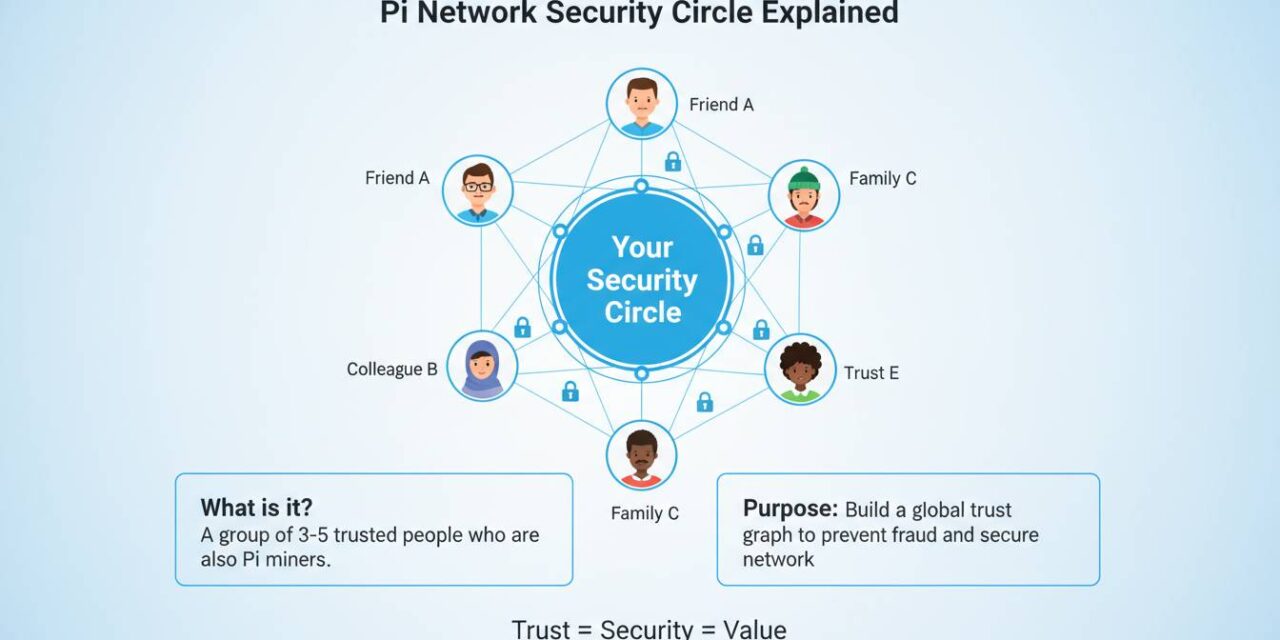
Pi Network users join through a trusted inviter, then build a list of real contacts forming their personal “security circle”—a critical element of the network’s consensus and anti-fraud mechanism.
How to start using Pi Network?
New users join Pi by installing its app, available on Google Play and the Apple App Store, and registering with a mobile phone number or Facebook account.
The mining rate for new accounts in early 2026 had dropped to just 0.0159 Pi per hour, a sharp decrease from earlier phases. figures show this reduction reflects several planned halving events triggered upon reaching defined user milestones, echoing the monetary policies in classic blockchain networks but adapted for mobile dynamics. Users seeking to earn more must complete profile verification, build daily activity streaks, and recruit new participants. For every friend referred who mines for three consecutive days, miners can increase their earning rate, building a feedback loop of social incentive and app engagement. Gamified mechanics drive exponential network effects.
Security circle and mining speed
The security circle is central to Pi Network’s unique trust model. Three days after mining activation, users must add at least five real, personally known contacts to their security circle, with these connections acting as mutual validators.
The default mining rate can be increased by up to 25% per active, trusted member added to a user’s security circle. published research shows roles within the app also evolve: ordinary users are designated “Pioneers,” while those who form a functional circle achieve “Contributor” status. High-recruiters advance to “Ambassador.” This tiering incentivizes daily engagement and expands organic growth. Mechanically, the system multiplies base rewards for those who demonstrate both consistent activity and successful recruitment of active real users, generating exponential reward curves for highly involved participants.
Users who combine referrals (Ambassador bonuses) with active contributions (Contributor status) can achieve total mining reward multiples nearing 200%.
Pi Browser and Wallet
The Pi Browser serves as the ecosystem’s main gateway to decentralized apps (dApps), providing access to both pilot crypto transactions and advanced network utilities. Through the browser, users establish their own Pi Wallet address directly linked to their Pi account, allowing exploration of the ecosystem’s emerging apps. The Pi Wallet offers a visual breakdown—pending, locked, and transferable balances—helping users track their token readiness for mainnet migration.
To complete first or second migrations, Pioneers must set up Pi Wallet two-factor authentication (2FA) through Step 3 of the Mainnet Checklist.View on X
This step is required to further strengthen account and wallet security before real Pi is transferred, an irreversible and immutable… pic.twitter.com/1Q9Zk2vPzU
As of Q2 2026, only users who have successfully completed Know Your Customer (KYC) identity checks can initiate wallet-to-wallet transfers within the network.
Wallet activation requires users to synchronise their public wallet address with the Pi Browser app.
Pi Network’s combination of closed testnet transfers, KYC requirements, and device-held private keys places user security and network stability at the centre of its development priorities.
Risks and future outlook
Those joining seeking immediate returns or rapid liquidity may experience frustration unless mainnet launches and trading becomes widely available. Historical precedent in blockchain emphasises the frequent lag between large-scale user adoption and token liquidity, especially for experimental platforms with atypical consensus models. For now, Pi Network operates with a focus on retention, social mining, and ecosystem development.
Timeline: Key milestones in Pi Network’s development
- March 14, 2019— Pi Network officially launched its mobile mining pilot globally.
- April 2021— Introduction of “security circles” as part of social consensus mechanism.
- September 2021— First scheduled mining rate halving after reaching set user milestones.
- Q2 2023— Beta version of Pi Browser and Wallet released to global users.
- Late 2025— App downloads reach into the millions, marking new heights of global participation.
- Q2 2026— Closed mainnet phase remains ongoing, KYC required for all transfers, next halving triggers at new user thresholds.
Conclusion: Is Pi Network right for you?
In the end, Pi Network offers an experiment in inclusive crypto—pushing the limits of what networks can achieve with social trust, mobile devices, and long-term engagement priorities.
On Google, tick the box next to stnews.live to see our reporting higher in Top Stories.
Disclaimer: The content on this page is for informational purposes only and does not constitute financial advice. Always do your own research before making investment decisions.

Sarah Williams is STnews's Blockchain Editor, leading coverage of blockchain technology, DeFi investigations, exchange analysis and crypto regulation. Her reporting adheres to STnews's editorial standards — primary-sourced, cited, and non-advisory.
Conflicts of interest
I hold no positions in any cryptocurrency mentioned in my coverage. All investment-related content is reviewed by senior editors before publication. I am not compensated by any project I cover.