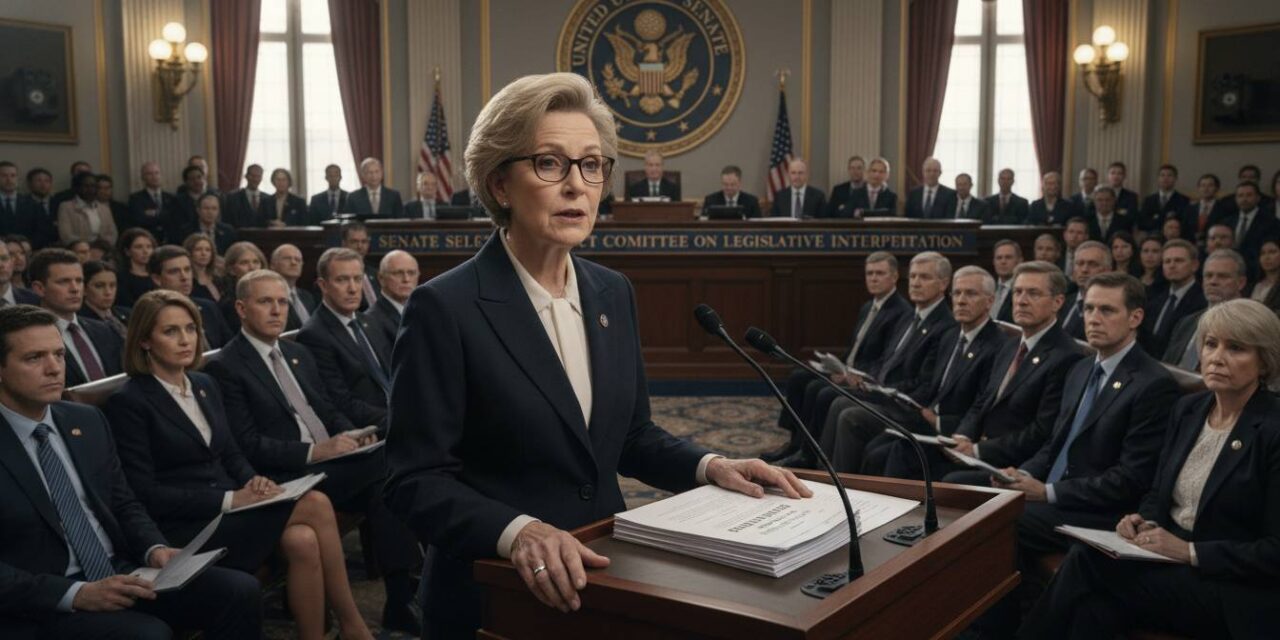
- Senator Cynthia Lummis introduced the bipartisan CLARITY Act to clarify U.S. crypto regulation by distinguishing between securities and commodities.
- Tokens passing decentralization tests will be overseen by the CFTC, while others will remain under SEC jurisdiction.
- Digital asset issuers can self-certify their tokens, with agencies having 60 days to object to their classification.
- The Act mandates stablecoin issuers to maintain 1:1 reserves and undergo quarterly audits, with fines starting at $2 million for non-compliance.
This article is for informational purposes only. Always verify information independently before making any decisions.
Senator Cynthia Lummis has unveiled the bipartisan CLARITY Act to end the U.S. Crypto industry’s persistent regulatory ambiguity. It establishes a clear line between digital asset securities and commodities. Digital tokens meeting specific decentralization benchmarks shift under Commodity Futures Trading Commission (CFTC) oversight. Tokens not meeting these stay with Securities and Exchange Commission (SEC) governance. Codifying this distinction eliminates uncertainty for exchanges, stablecoin issuers, and digital asset projects. Policy is finally catching up with markets.
How will the CLARITY Act change U.S. crypto rules
The CLARITY Act introduces a firm definition that splits digital assets into securities and commodities, assigning each to a federal agency, as tokens that pass decentralization tests—meaning no single entity controls them—will be overseen by the CFTC, while those lacking decentralization will fall under SEC jurisdiction; platforms like Coinbase and Kraken once faced unpredictable enforcement risk.
The Clarity Act is the best thing that could happen to the DeFi community and finally gives them the legal certainty they deserve. Developers, validators, and node operators will finally have a safe harbor and we can ensure American innovation can stay right here on US soil.View on X
The legislation lets digital asset issuers classify their own tokens as commodities or securities. If an agency disagrees, it must formally object within 60 days. Without an objection, the issuer’s status stands.
Why is Lummis pushing for urgency now
The SEC has launched hundreds of lawsuits against major crypto platforms. Enforcement actions against Coinbase and Binance in 2025 ended with high-profile settlements and new appeals.
What CLARITY Actually Is
The CLARITY Act, led by Senator Cynthia Lummis, is the first comprehensive federal law to spell out how digital assets are classified and regulated in the United States. It sets a multi-factor decentralization test to decide if a digital asset is a security or a commodity.
THE CLARITY ACT IS DONE. 🚨View on X
Lummis just confirmed it.
Text dropping NEXT WEEK.
DeFi protected.
Stablecoin yield unlocked.
Institutional barriers gone.
One bill. Every problem solved.
Years of regulatory uncertainty.
Ended.
Next week.
The text drops next week.… pic.twitter.com/2grVMOG0vV
The bill makes token issuers self-certify, submitting disclosures about governance, decentralization, and rights. Agencies have 60 days to review these, as required by the Act.
If enacted, the CLARITY Act becomes America’s first true digital asset law passed by Congress.
The SEC/CFTC Jurisdictional Split
The SEC keeps digital securities under tests like Howey and Reves. The CFTC becomes watchdog for digital commodities. Projects passing the decentralization test skip SEC oversight and go to the CFTC.
Under old rules, projects could face contradictory demands from both agencies—different disclosures, different anti-fraud rules. Now, each asset gets one primary regulator under the CLARITY Act.
| Asset Type | Regulator | Issuer/Exchange Process | Review Timeline |
|---|---|---|---|
| Digital Security | SEC | Register with SEC, full disclosure and anti-fraud | 60 days (agency rebuttal) |
| Digital Commodity | CFTC | Self-certify to CFTC, streamlined disclosure and anti-manipulation | 60 days (agency rebuttal) |
Digital Commodity vs. Security: Where the Line Gets Drawn
The SEC must draft precise “safe harbor” criteria—covering voting, code changes, node participation—while the CFTC gets the final say after consulting with the SEC.
Tokens such as Ethereum, Solana, and Avalanche—often cited as case studies—may re-apply for commodity designation under the new regime.
Which Companies Are Directly Affected by the CLARITY Act
Nearly all U.S.-based crypto exchanges, custody platforms, and token issuers will see direct effects from the Act. Coinbase, Kraken, and Gemini have publicly backed the bill. They say it will slash legal costs stemming from SEC or CFTC queries about token listings. Crypto bank Anchorage and wallet providers are tracking how the new law could streamline operations and onboarding. An estimated 270 digital assets filed Form D notices with the SEC between 2023 and 2025—these projects can now seek reclassification or use the faster licensing process. Payment leaders Circle and Paxos, with stablecoins in the tens of billions, are preparing to revamp legal structures and disclosures to meet the Act’s rules.
projects blocked users or scaled back out of fear of “regulation by enforcement.” New safe harbors let existing assets voluntarily move to CFTC oversight with reduced liability and fewer retroactive penalties. Early compliance and more public transparency now have vigorous incentives. Enterprise blockchain builders like Hyperledger and ConsenSys are already launching compliance tools for both new and legacy projects.
What Changes for Stablecoin Issuers
Stablecoins—backed by dollar or gold—have lived in legal grey zones for years. The CLARITY Act brings them comprehensive federal standards for the first time. Issuers must provide 1:1 reserve backing, submit to quarterly audits by registered public accountants, and formally register with the SEC or CFTC depending on the underlying reserve. Tether’s Q1 2026 disclosures put $95 billion in USDT outstanding, making it a global heavyweight.
The Act strictly limits algorithmic and uncollateralized stablecoins, referencing risks from the $40 billion TerraUSD crash in May 2022.
Fines for unregistered or non-compliant stablecoins start at $2 million per incident, climbing for repeat or willful violations. Issuers must keep strong reserves and transparent governance, or they face market bans. Getting compliant may also open doors to Federal Reserve master accounts, a rare achievement among stablecoin providers.
$2 million — Penalties Per Incident
CLARITY Act Timeline: Central Milestones
- May 20, 2026 — Final draft text circulated to Senate and House sponsors
- May 24, 2026 — Committee markup and amendments announced
- June 2, 2026 — Anticipated floor vote in the full House
- June 8, 2026 — Senate Banking Committee hearing scheduled with industry and agency witnesses
- Q3 2026 — Final floor votes and reconciliation conference if needed
- Q4 2026 — Possible presidential signature, law enters into force; phased implementation begins
On that day, the Senate Banking Committee will hold a hearing with regulators and industry. If there are no substantial amendments, Congress votes in Q3. Implementation rolls out in phases, giving agencies and companies time to adjust to the new rules. Congressional momentum now puts the pressure on the Senate and the President.
On Google, tick the box next to stnews.live to see our reporting higher in Top Stories.
Disclaimer: The content on this page is for informational purposes only and does not constitute financial advice. Always do your own research before making investment decisions.

Sarah Williams is STnews's Blockchain Editor, leading coverage of blockchain technology, DeFi investigations, exchange analysis and crypto regulation. Her reporting adheres to STnews's editorial standards — primary-sourced, cited, and non-advisory.
Conflicts of interest
I hold no positions in any cryptocurrency mentioned in my coverage. All investment-related content is reviewed by senior editors before publication. I am not compensated by any project I cover.