- Kalshi and Polymarket's appeals in Nevada and Washington were denied on May 15, 2026, halting state-level lawsuits.
- Polymarket faces potential civil penalties exceeding $500,000 in Nevada due to ongoing administrative reviews.
- Active users for both platforms dropped 18% in April 2026 amid regulatory actions and legal challenges.
- Nevada's digital wagering enforcement budget increased by 44% to $19.8 million for FY2026.
This article is for informational purposes only. Always verify information independently before making any decisions.
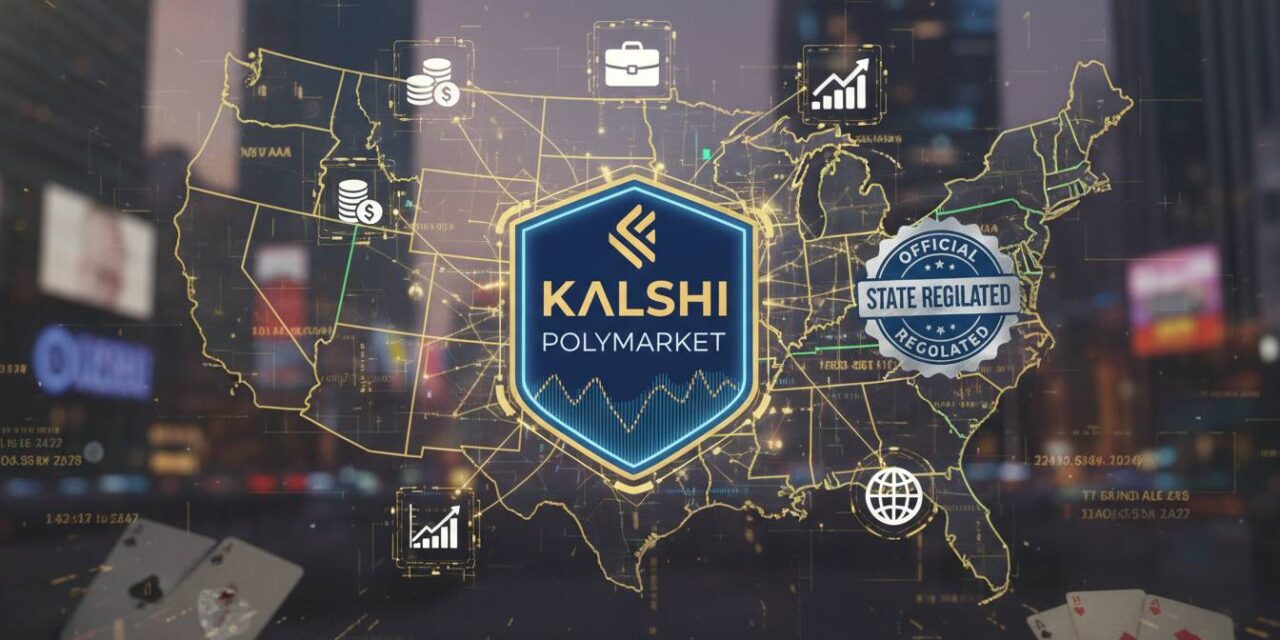
Kalshi and Polymarket faced setbacks in their regulatory battles as appeals in Nevada and Washington were denied, halting attempts to pause state-level lawsuits.
State courts in Nevada and Washington rejected urgent pleas for temporary relief on May 15, 2026.
Polymarket risks more than $500,000 in civil penalties if Nevada regulators prevail.
Circuit Split
The split between state and federal courts over prediction market regulation became glaring after Nevada and Washington state courts each denied urgent requests for intervention on May 15, 2026. Both courts declined to block enforcement actions by their gaming control boards, requiring companies to defend gambling claims at the state level before federal questions arise.
Massachusetts enforcers agreed not to target Polymarket for now in exchange for the prediction market pausing its lawsuit against the state while rival Kalshi appeals a ban on offering sports-related wagers in the commonwealth. https://t.co/2efrC1NkSCView on X
Gaming agencies such as Nevada’s Gaming Control Board — asserting exclusive jurisdiction over any product involving wagers on future events — now hold more power than federal permissions in the courtroom.
Kalshi operates with Commodity Futures Trading Commission (CFTC) approval for select markets.
Polymarket’s potential civil penalties above $500,000 in Nevada stem from ongoing administrative review of its local activity.
Court records show both companies pay at least $1.2 million monthly in legal and compliance expenses.
Active users for both Polymarket and Kalshi dipped 18% in April 2026 due to regulatory action. Bloomberg Law highlights this decline, which Kalshi attributed to “unique regulatory risks” from state-level enforcement and unresolved court battles.
- Kalshi faces at least $1.2 million monthly legal costs
- Potential civil penalties exceed $500,000 for Polymarket in Nevada
- Polymarket U.S. users down 18% in April 2026
- Multiple prediction markets have delayed or cancelled product launches
Regional outlets like Providencejournal.com and The Boston Globe documented a major rise in state regulatory hiring and enforcement funds from 2025 to 2026. Agencies in Rhode Island, Nevada, and Washington ramped up their teams and sought increased budgets for digital wagering oversight.
Polymarket, Kalshi Lose Bid In US Court
Kalshi and Polymarket argued that CFTC federal law should supersede state gambling statutes for prediction markets.
🗞️🇺🇸 Kalshi scored a major legal victory as a federal appeals court ruled its sports-related markets should be regulated by the CFTC, not New Jersey state gambling authorities.View on X
The 2-1 decision affirms a preliminary injunction against the state. pic.twitter.com/xvSimT8nX6
Nevada’s decision stated that providers are “subject to substantial local interest in regulating gambling activity.” No injunction was issued, so companies must battle state actions while federal litigation unfolds.
Polymarket’s filings project a sharp decline in 2026 transaction volume if substantial states like Nevada and Washington maintain prohibitions.
Multi-state enforcement could push monthly legal costs past $2 million.
Authorities Divided On Prediction Market Regulation
Rhode Island and Nevada are actively preventing or challenging betting contracts, including those linked to national exchanges.
Rhode Island’s current suit targets Kalshi for contracts based on local election outcomes, arguing event-based payouts not tied to traditional financial risk are “categorically” gambling — regardless of CFTC approval or crypto settlement.
Rhode Island’s lottery revenue reached $1.6 billion in 2025, and overall U.S. lottery revenue totaled $108 billion — figures fiercely guarded by pro-lottery lobbyists.
- Rhode Island’s lottery revenue: $1.6 billion in 2025
- National U.S. lottery revenue: $108 billion in 2025
- At least 17 enforcement actions brought by states in 2025
- Fourteen state regulatory investigations opened into prediction markets in 2025
Kalshi has filed a federal lawsuit against Rhode Island officials, arguing the company is only subject to federal regulations
Kalshi filed a federal suit on May 16, 2026, in U.S. District Court for Rhode Island, naming the Department of Business Regulation and Attorney General Peter Neronha. The company claims the Commodity Exchange Act should override state gambling definitions for their CFTC-approved contracts.
Kalshi’s court complaint records $800,000 spent on legal fees contesting Rhode Island’s cease-and-desist order in Q1 2026. Projections show costs escalating to $2 million if lawsuits spread across New England.
Support Independent Journalism in Nevada
Three global event contract platforms started geo-blocking Nevada users in 2026 after aggressive local enforcement. The Nevada Independent reports that more than 32,000 unique Nevada IP addresses tried to access Kalshi or Polymarket in Q1 2026 — highlighting continued demand despite regulatory blocks.
Compliance staffing, legal advice, and insurance coverage contributed to a 23% year-over-year surge in operating expenses for prediction markets by April 2026.
Nevada’s digital wagering enforcement budget rose 44% between 2024 and 2026, landing at $19.8 million for the year ending March 2026.
Nevada’s sports betting taxable revenue hit $9.9 billion in 2025 — showing gaming’s huge role in the state economy.
- Nevada digital wagering enforcement budget: $19.8 million FY2026
- Sports betting taxable revenue: $9.9 billion in Nevada, 2025
- 32,000 unique Nevada IPs attempted access in Q1 2026
- 44% rise in enforcement budget between 2024 and 2026
- Operating expenses for prediction platforms up 23% YoY as of April 2026
Trending
Coverage from Bloomberg Law, Providence Journal, and The Nevada Independent documents a surge in state-level lobbying by both gaming and fintech groups in response to regulatory crackdowns.
State attorneys general increased regulatory output by 30% over 2025, pairing tougher enforcement with bigger budgets. Legal expenses for the industry reached $17 million through May 2026 — creating enormous costs even if companies remain active.
Uncertainty now shapes decisions for global operators.
Kalshi’s weekly event contract volume dropped dramatically after the May 2026 Nevada court ruling. Bloomberg Law notes this decline followed a wave of uncertainty among both institutional and retail users about future market access.
- $17 million in total prediction market legal expenses reported in 2026
- 30% increase in state AG regulatory actions in 2026 versus 2025
- Kalshi weekly event contract volume down after Nevada ruling
- At least two international operators withdrew from U.S. in 2026
- Seven federal lawmakers have proposed new event contract regulations in 2026
For expanded coverage, see the detailed Kalshi and Polymarket Face Increased Regulatory Challenges After State Appeals Denied articles examining economic risks, technical challenges, and the politics driving the ongoing standoff.
Only a clear ruling from Congress or the Supreme Court is likely to end the contradictory patchwork affecting prediction markets nationwide.
On Google, tick the box next to stnews.live to see our reporting higher in Top Stories.
Disclaimer: The content on this page is for informational purposes only and does not constitute financial advice. Always do your own research before making investment decisions.

Sarah Williams is STnews's Blockchain Editor, leading coverage of blockchain technology, DeFi investigations, exchange analysis and crypto regulation. Her reporting adheres to STnews's editorial standards — primary-sourced, cited, and non-advisory.
Conflicts of interest
I hold no positions in any cryptocurrency mentioned in my coverage. All investment-related content is reviewed by senior editors before publication. I am not compensated by any project I cover.