- UpsideOnly targets the $12 billion annual retail trading losses by using only company funds for trades, not client capital.
- The platform's AI engine, BayesShield, was trained on over 22 billion retail trades to enhance market predictions.
- Users can participate without deposits, with optional refundable stakes backed by US Treasury Bills for higher payouts.
- Patrick Gruhn, former FTX Europe chief, founded UpsideOnly after the $400 million collapse of FTX Europe in November 2022.
This article is for informational purposes only. Always verify information independently before making any decisions.
Retail traders lose over $12 billion every year to platforms that profit from user mistakes [source needed]. That’s the market UpsideOnly is targeting. The AI-powered platform, founded by Patrick Gruhn — former head of FTX Europe — launched after his previous venture collapsed with $400 million in user losses.
According to Cryptotimes, UpsideOnly is powered by the patent-pending BayesShield AI engine. That system was trained on more than 22 billion executed retail trades — one of the largest behavioral trading datasets in Finance.
Users never risk their own money, per Pymnts.
$12B — Annual retail trading losses (industry-wide, per Cryptobriefing)
Get the Full Story
As stated by Cryptotimes, UpsideOnly’s operational model sources predictive input from users, but only the company’s funds — never client capital — are used to place trades.
Unlike legacy brokers that monetize user losses through fees and margin calls, UpsideOnly is built to flip that relationship, per Cryptotimes.
How UpsideOnly works: BayesShield AI and profit-sharing
According to Cryptobriefing, the BayesShield AI engine at the core of UpsideOnly ingests live, crowd-sourced predictions and continuously refines its market inference models. Over 22 billion anonymized trades informed the AI’s design, yielding detection algorithms for nuanced patterns in volatility, timing, and trader psychology.
If that trade wins, the user receives a fixed share of profits. If it loses or goes unexecuted, the user receives nothing but also sustains no loss. According to Cryptotimes, no trade ever occurs unless the AI’s signal and risk matrix align — human and machine are always on the same side of the bet.
22B — Retail trades in UpsideOnly’s AI training set (per Cryptotimes)
No deposit needed and bot control
According to Cryptotimes, UpsideOnly doesn’t require a financial deposit from participants for core use. A marked change from most broker or trading apps, where deposits create direct or hidden exposure. Any user can participate and earn payouts by submitting predictions. For higher payout rates, users may optionally stake a refundable deposit of $1 or more.
The company states that these deposits are 100% backed by short-term US Treasury Bills, held within external, US-based fiduciary accounts, and available for withdrawal at any time. No user capital ever enters the operating pool or covers trading losses, per company policy.
“Risk-free” participation and platform user incentives
This structure intends to directly address the reputational fallout from platforms such as FTX, eToro, and Bybit, which have come under fire for intransparent margin arrangements and hidden fees.
50–70% — Average winning user payout ratio (company data, per Cryptotimes)
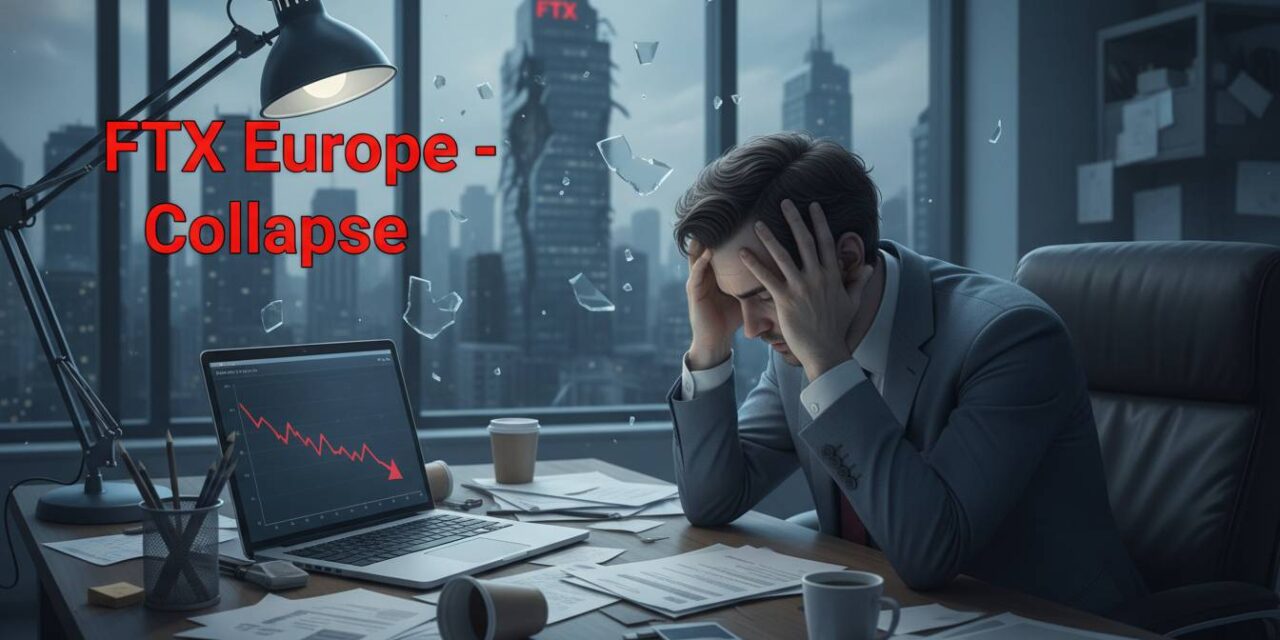
Background: The FTX Europe collapse and $400 million loss
The pan-European FTX entity collapsed in November 2022, wiping out approximately $400 million in user and institutional balances, per Cryptobriefing. Patrick Gruhn, now the founder of UpsideOnly, was then chief of FTX’s Europe division and became a visible actor in public and regulatory discussions about retail user protection after FTX’s implosion. That $400 million hole formed part of the FTX Group’s multi-billion dollar global asset deficit, topping $8 billion in customer claims.
Public pressure arising from the bankruptcy fueled industry calls for proper segregation of client assets and brought regulatory attention to conflicts of interest within dual-role trading venues. Gruhn’s leadership of UpsideOnly is now defined by a public stance in favor of hard separation between capital providers (the platform) and market participants (users), vowing not to repeat prior patterns of retail risk absorption.
$400M — FTX Europe collapse loss (Nov 2022, per Cryptobriefing)
According to Cryptotimes, UpsideOnly’s technical and legal infrastructure is a direct reaction to these past failures, designed so that not a single dollar of user deposit can be used in company operations or market speculation.
So Gruhn’s ongoing commentary often returns to this point — the “lesson” of the $400 million collapse was that client trust isn’t a renewable resource, and must be engineered into every product by default.
Why the platform was created: A response to systemic retail loss
According to Cryptobriefing, the driving force for UpsideOnly’s creation is the “over $12 billion” retail traders lose to platforms each year, a cycle exacerbated by incumbent brokerages that often profit from turnover, leverage, and user mistakes.
Gruhn’s connection with now bankrupt FTX
According to Cryptotimes, Patrick Gruhn held the role of FTX Europe chief during its operational wind-down and was a prominent figure in post-collapse regulatory proceedings and audits.
While Gruhn was a central manager during this period, no legal filings have currently attached criminal liability to his leadership. Gruhn now claims to have internalized those failures as design principles for UpsideOnly, constructing its business logic around maximally ring-fenced user participation. Instead of risk-pooling, UpsideOnly creates absolute separation between prediction and execution. According to Cryptobriefing, the platform doesn’t accept user funds for trading risk, and every capital movement is held open for third-party audit.
Transparency and oversight: An attempt at restoring trust
According to Cryptobriefing, UpsideOnly operates a multi-tiered transparency framework.
The firm states that it has mapped its compliance architecture directly from the lessons of FTX, prioritizing external verification over proprietary secrecy. Regulatory filings in both US and EU domains are maintained with up-to-the-minute status information and, the company claims, can be subjected to on-request live audit.
UpsideOnly’s zero-loss record remains observational for now — it hasn’t experienced a stress event on the scale of its predecessor, so the ultimate durability remains untested.
100% — User deposits held in US Treasury Bills (per company policy)
AI, crowd-sourcing, and the future of retail prediction
According to Cryptotimes, BayesShield AI is an adaptive system: each user prediction updates the platform’s models, and win rates are archived alongside the evolving data set. This creates a live feedback circuit that ideally improves future predictions while punishing nothing but bad signals. The algorithm ingests potentially thousands of new retail ideas per minute but acts as a bottleneck — only deploying capital on those where machine confidence and user conviction meet. Platform performance data since launch shows user payout ratios ranging between 50% and 70% for “winning” predictions, per the company’s reports.
JUST IN: Former FTX executive launches a “no-loss” AI trading platform where users make fake trades while the company risks its own capital.View on X
Industry context: The restructure of retail trading models
According to Cryptotimes and Cryptobriefing, the broader backdrop is rapid change in how retail trading platforms monetize and risk-manage user participation.
Several other startups are racing to define “no-loss” or “risk-free” participation, but few so far offer independently auditable, institutionally segregated capital flows. Industry debate centers on whether such models can sustain profitability over the long term without reintroducing old forms of indirect user exposure, or unduly limiting signal quality by throttling for capital preservation.
Challenges and unresolved questions
Per Bitcoinworld.co.in, UpsideOnly must solve two critical challenges to maintain momentum: scaling profitable trade execution as the user base expands and maintaining enough signal quality to keep the BayesShield AI engine outperforming baseline benchmarks over volatile cycles. Zero-user-loss mechanics represent both a shield and a constraint — solvency is now rooted exclusively in the performance of the company’s trading engine and capital reserves.
The company says it can throttle capital deployment to remain within prudent risk parameters, but long-term sustainability will depend on external audit verification and regulatory trust. Specter of adversarial gaming, prediction manipulation, or mass crowd-sourcing attacks remains a persistent business risk. As more platforms adopt “risk-free” language, the ones able to demonstrate true capital segregation, periodic attestation, and honest loss handling will likely build the longest-lasting user base.
Outlook: Will “risk-free” retail prediction catch on?
According to Cryptobriefing, retail user adoption of UpsideOnly has already exceeded initial internal forecasts, with organic growth driven by the seductive promise of zero personal loss.
According to Cryptotimes, the sustainability of this approach depends on its ability to withstand both competitive and operational stress — regulatory challenges, AI adversarial exploitation, or coordinated prediction attacks. What will ultimately determine success is whether UpsideOnly can maintain real public transparency and demonstrate profitable AI-driven trade execution without ever absorbing user loss, even as its balance sheet and prediction flow multiply in scale.
If this model endures, it will set precedent for a whole new fintech vertical — one that ties growth to user trust, not just transaction count.
- UpsideOnly is led by ex-FTX Europe chief Patrick Gruhn, whose previous platform collapsed with $400 million in losses.
- Platform users face zero capital risk, but company capital is deployed in all trades, with profits shared on correct forecasts.
- Payouts to users are higher when they post a refundable deposit, fully segregated from trading capital and held in US Treasury bills.
- BayesShield AI was trained on over 22 billion trades for pattern recognition; user predictions have been logged since launch.
- Trust and transparency claims are backed by multi-level audit frameworks and public regulatory compliance disclosures.
On Google, tick the box next to stnews.live to see our reporting higher in Top Stories.
Disclaimer: The content on this page is for informational purposes only and does not constitute financial advice. Always do your own research before making investment decisions.

Sarah Williams is STnews's Blockchain Editor, leading coverage of blockchain technology, DeFi investigations, exchange analysis and crypto regulation. Her reporting adheres to STnews's editorial standards — primary-sourced, cited, and non-advisory.
Conflicts of interest
I hold no positions in any cryptocurrency mentioned in my coverage. All investment-related content is reviewed by senior editors before publication. I am not compensated by any project I cover.