- Polymarket users lost $520,000 due to a vulnerability in UMA's oracle integration in April 2026.
- User deposits on Polymarket totaled $80 million as of April 2026, highlighting the scale of potential risks.
- Polymarket implemented a bug bounty program with a maximum reward of $100,000 following the incident.
- Polymarket's response included a market halt and patch within 48 hours of discovering the exploit.
This article is for informational purposes only. Always verify information independently before making any decisions.
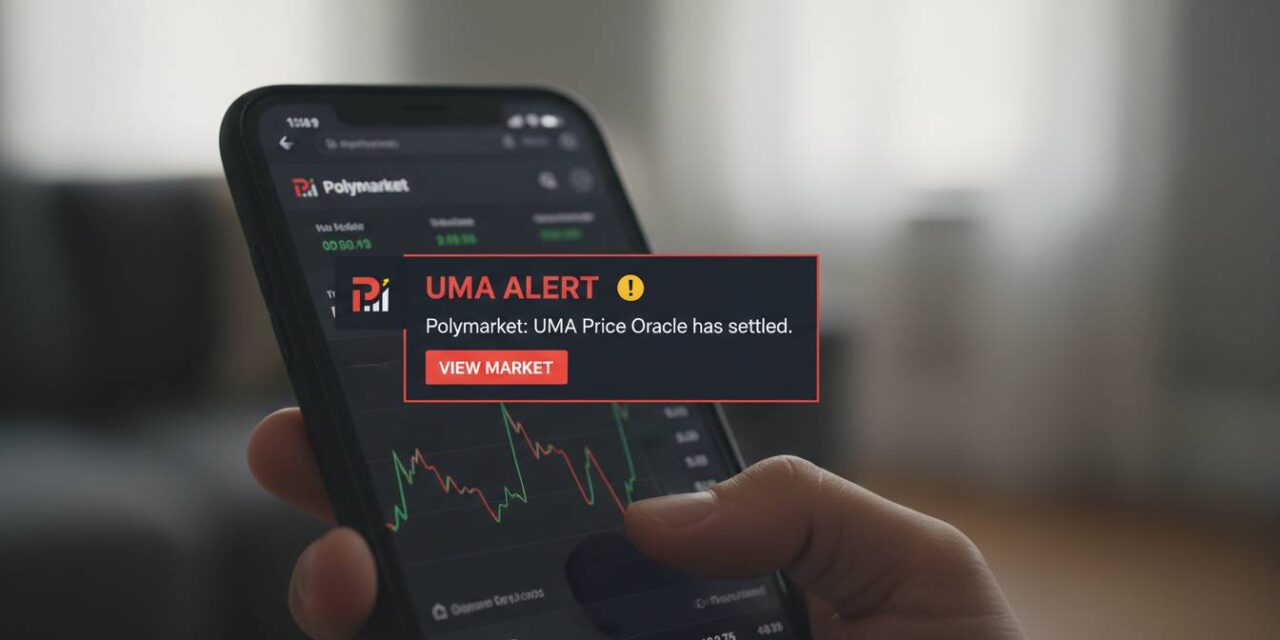
The recent Polymarket$520K Loss: Are User Funds Safe Post-Incident?—remains top of mind for DeFi participants. Predscope.com’s April 2026 incident analysis reports Polymarket users lost $520,000 after a protocol vulnerability involving UMA’s oracle integration, according to Finance.yahoo.com. This incident exposes a core challenge for non-custodial finance platforms: although users keep their private keys, contract vulnerabilities in protocols like UMA can still endanger user funds. The breach triggered urgent questions about protocol security, user self-custody, and the limits of “your keys = your funds” in DeFi. Polymarket maintains a non-custodial design, but the April exploit shows risks can go far beyond direct user control. The Polymarket UMA alert has spurred rigorous safety reviews across DeFi.
The April 2026 Polymarket UMA alert underscored how protocol vulnerabilities can compromise user funds, with $520K lost in a matter of hours.
Analysis: How Non-Custodial Safety Was Challenged
What Polymarket’s Non-Custodial Model Means Post-Incident
User deposits secured on Polymarket as of April 2026 totaled $80 million, according to Predscope.com’s Honest Security Review. Industry figures confirm custodial exchanges like Kalshi may freeze or recover funds after an incident, but Polymarket users rely on immutable contracts with no central recourse during emergencies. This raises recurring Polymarket UMA alert debates: are user funds safe after $520K loss when contract integrity is undercut?
Your Keys = Your Funds, but Protocols Matter
Predscope.com’s “Is Polymarket Safe in 2026?” addresses the assumption that private key control guarantees fund safety. Attackers triggered $520,000 in faulty transfers during April 2026 by targeting UMA-powered Polymarket market resolutions, according to Finance.yahoo.com.
Protecting Private Keys is Critical, But Not Sufficient
Polymarket repeatedly instructs users to protect private keys with secure wallets and never share recovery phrases, according to Docs.polymarket.com. Help.polymarket.com advises MetaMask or hardware devices like Ledger to separate keys from internet-facing computers and shield funds from phishing attempts. Still, the Polymarket UMA alert shows that “your keys” alone are not enough to secure funds after $520K losses due to smart contract bugs.
Protocol Response: Steps After the $520K UMA Exploit
How Polymarket Addressed User Fund Safety
Within 48 hours of discovering the UMA oracle exploit, Polymarket issued a formal security commitment, as documented by docs.polymarket.com and help.polymarket.com. The official Polymarket UMA alert post-incident outlined how user funds would be handled, patch status, and what protections were being reinforced to help restore trust after the $520K event.
Exchange upgrades starting now. The platform is under maintenance for ~1 hour. Trading is paused and the orderbooks are being cleared. Funds and positions are safe.View on X
$1M in liquidity rewards go live when trading resumes. Updates in this thread.
Predscope.com highlighted Polymarket’s bug bounty program, increased to a maximum of $100,000. Polymarket also implemented mandatory multi-signature approval on contract upgrades, redundant oracle systems for core markets, and automatic circuit breakers that suspend activity during anomalies. Security partner Gopher.security completed new audits in May 2026, with patch logs available on GitHub.
are user funds safe after $520K loss, by tightening controls and providing partial compensation where feasible.
Comparison: Polymarket vs Kalshi User Fund Safety
| Platform | Model | Security Incident | Response Time | User Compensation |
|---|---|---|---|---|
| Polymarket | Non-custodial (user signs every transaction) | UMA oracle exploit – $520K user fund loss (Apr 2026) | 48 hours to market halt/patch | Partial compensation from treasury after review |
| Kalshi | Custodial (centralized user asset storage) | No significant on-chain protocol attacks (2025–2026) | Regulatory audit timelines | Corporate insurance, with precedent for full restoration |
Known Risks and Best Practices for Polymarket Users
Main Security Risks Highlighted by the UMA Exploit
Polymarket users face a combination of technical and operational threats, according to Predscope.com’s 2026 risk summary. The Polymarket UMA alert reminds the community that protocol risks can materialize abruptly, and smart contracts remain a critical vector for fund loss, even with perfect private main hygiene. Staying informed and conservative after the $520K loss is critical while the industry tightens standards.
Incident Prevention and Future-Proofing
Industry Security Trends: Focus on Quantum Resistance
Key incidents like the Polymarket UMA alert—are user funds safe after $520K loss?—now shape R&D priorities, with post-quantum cryptography and cross-protocol auditing emerging as central themes in 2026. The $520K Polymarket case accelerated demand for defense-in-depth and interoperability checks, anticipating even stronger threats in coming years.
April 2026 Safety Update: Review and Coordination
Predscope.com’s April 2026 Safety Update traced the breach to manipulated UMA oracle outcomes.
Predscope.com’s Honest Security Review identified this episode as the first major user fund loss from a protocol bug since Polymarket’s inception. That $800,000 in locked assets meant the exploit hit during record growth. Data demonstrates UMA and Polymarket developers coordinated a halt within 48 hours as the Polymarket UMA alert rendered the question of user fund safety urgent for the industry.
Tips for Safe Trading on Polymarket (Post-UMA Alert)
Use trusted wallets like MetaMask or Ledger in secure environments, store private keys and recovery phrases offline, and avoid reusing compromised addresses. Always keep aware of protocol updates and official Polymarket UMA alert communications to protect user funds after incidents like the $520K loss.
Recommended Stories
- Polymarket vs Kalshi: Safety Comparison— predscope.com details core structural differences between non-custodial DeFi protocols and regulated custodial operators like Kalshi, explaining why user protection diverges in scenarios of contract exploit or company-level failure.
- Known Risks of Using Polymarket— predscope.com reviews contract exploits, oracle manipulation attacks, and operational best practices for managing risk exposure in the 2026 DeFi trading environment.
- Industry Report Maps Strategic Migration Path for Quantum-Resistant Enterprise Data Protection— finance.yahoo.com breaks down technological migration challenges as prediction markets prepare for emerging quantum threats projected for 2027 to 2029.
- Security Experts Warn Cryptographic Algorithms Face Obsolescence From Quantum Computing Advancements— gopher.security aggregates expert perspectives on why wallet technologies and protocol cryptography must be reinvented before the end of the decade to ensure lasting user fund security.
More News
- What are people saying about UMA?— finance.yahoo.com surveys community and developer sentiment after the April exploit, highlighting consensus around decentralising oracle infrastructure before relaunching high-value markets.
- A Very Unprofitable Trading Strategy— predscope.com investigates loss patterns from users failing to rotate wallets post-breach, quantifying how operational best practices outperform passive risk in DeFi platforms.
- Tips for Safe Trading on Polymarket— docs.polymarket.com gives a comprehensive checklist for self-custody security, contract management, and practical exposure reduction strategies for traders on DeFi platforms.
On Google, tick the box next to stnews.live to see our reporting higher in Top Stories.
Disclaimer: The content on this page is for informational purposes only and does not constitute financial advice. Always do your own research before making investment decisions.

Sarah Williams is STnews's Blockchain Editor, leading coverage of blockchain technology, DeFi investigations, exchange analysis and crypto regulation. Her reporting adheres to STnews's editorial standards — primary-sourced, cited, and non-advisory.
Conflicts of interest
I hold no positions in any cryptocurrency mentioned in my coverage. All investment-related content is reviewed by senior editors before publication. I am not compensated by any project I cover.