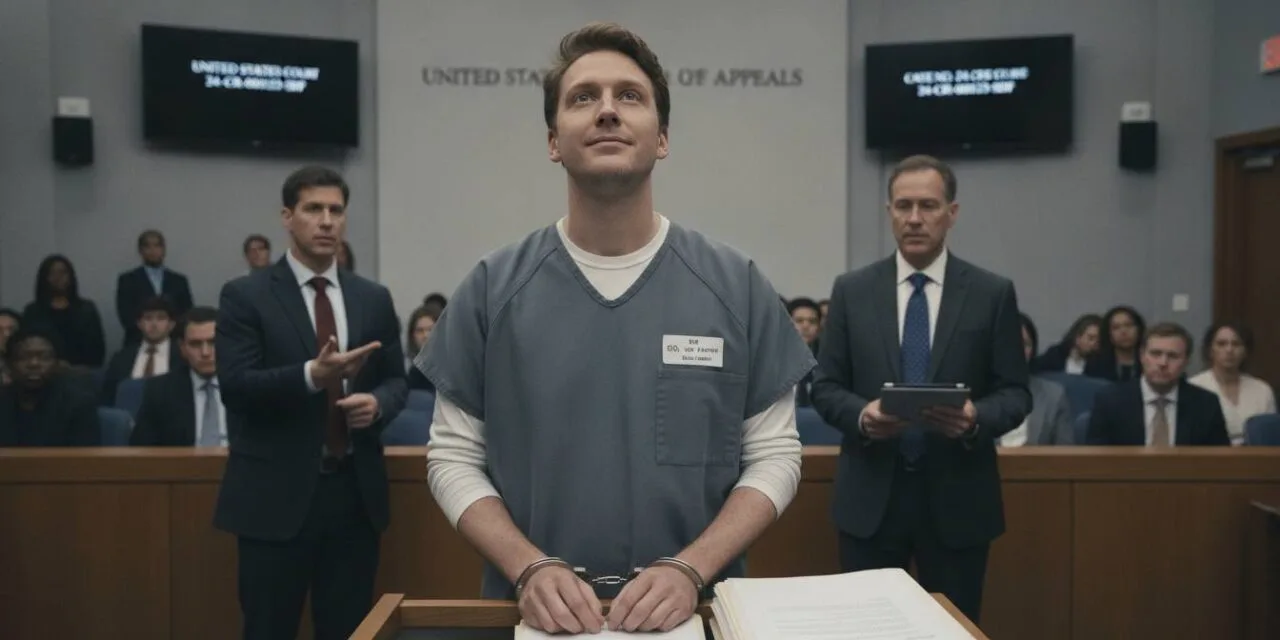
Sam Bankman-Fried’s bid to overturn his 25-year prison sentence has failed, marking a dramatic downfall for someone once hailed as a crypto superstar. Forbes and The Guardian report that a three-judge panel from the US Court of Appeals for the Second Circuit in Manhattan upheld his conviction for taking $8 billion in customer funds during the infamous collapse of FTX. The appellate court called the government’s evidence “strong,” depicting Bankman-Fried as the “main driver” of the massive fraud — one that’ll keep him behind bars until at least 2044.
How FTX’s collapse led to the conviction
The trial saw witnesses lay out elaborate attempts to hide FTX’s financial vulnerability. Due to these revelations, Bankman-Fried was ordered to surrender any remaining stake in FTX and Alameda — and his net worth plummeted to $0.
The scope of the fraud and financial loss
FTX customers lost more than $8 billion — a figure repeated by Forbes and The Guardian throughout the case. Prosecutors said those missing funds were used for political donations, luxury real estate, major advertising campaigns, and risky trades at Alameda Research. The $11 billion forfeiture, as highlighted by Bitcoinmagazine, is meant to compensate victims; still, court records reveal that clawing back those assets will be a long and uncertain process.
At his peak, Forbes estimated Bankman-Fried’s fortune had reached $26.5 billion, but the FTX implosion erased it overnight.
Some FTX creditors, according to bankruptcy hearing summaries from Bitcoinmagazine, are expected to recover “more than 100 cents on the dollar” as asset liquidations and claims move forward.
Bankman-Fried’s current status and remaining legal options
Bankman-Fried is now held at a low-security federal prison near Santa Barbara, California, after being moved from New York — The Guardian reports. He won’t be eligible for release before 2044, unless an extraordinary future appeal or executive clemency intervenes. Bankman-Fried has tried to secure a presidential pardon, but former President Donald Trump publicly rejected any intent to grant him one.
I spoke to Sam Bankman-Fried in an exclusive interview from prisonView on X
He said he would “absolutely” want a pardon from Trump
But the White House has said they have no intentions of granting him one 👇@SBF still maintains that he did not commit fraud & appealing his conviction… pic.twitter.com/UuvAb4esri
His petition for a “pardon after completion of sentence” is officially pending, yet there’s very little precedent for such requests succeeding in major financial fraud cases.
What’s next for Sam Bankman-Fried and the crypto industry
With the appeals court upholding Bankman-Fried’s sentence, Bitcoinmagazine suggests that enforcement agencies will keep signaling their increased willingness to pursue criminal charges. Prosecutors have called FTX’s collapse a “fraud of epic proportions.” And in the aftermath, regulators and lawmakers are debating whether extra safeguards are needed to prevent future disasters like this.
Sam Bankman-Fried’s rise and fall
FTX’s founding in 2019 saw Bankman-Fried quickly become what Forbes once dubbed the “multi-billionaire poster boy of crypto.” He built personal wealth — up to $26.5 billion — in just three years through bold trades, relentless marketing, and enormous industry sway.
The Guardian details that old secrets were exposed: hidden borrowing, reckless leverage, and unchecked risk-taking within FTX.
Timeline: significant events from FTX’s founding to sentencing
Industry records compiled by Bitcoinmagazine and Forbes show Bankman-Fried founded FTX in 2019 and swiftly propelled the exchange to a $32 billion valuation by early 2022. But the momentum stopped cold in November 2022, when a wave of withdrawals exposed an $8 billion hole, sending FTX into bankruptcy.
After a five-week jury trial in late 2023, Bankman-Fried was convicted on seven felony counts. On March 28, 2024, he received his 25-year prison sentence along with that $11 billion forfeiture order, underscoring the consequences of unchecked risk in the crypto world.
SBF Semafor Money Chase: After Sam Bankman-Fried Got 25 Years Now Forfeiture of Semafor $10 Million Sought by DOJ in SDNY – Inner City Press story: https://t.co/W7ifrjPHBC Book: https://t.co/ExLjXQJArQ DOJ Filing on Patreon here https://t.co/CHaLa2hr8A pic.twitter.com/cD0CdC1EKEView on X
Industry impact and lessons for crypto oversight
The FTX collapse is fueling renewed calls for crypto regulation, with The Guardian highlighting how regulatory agencies worldwide are moving to introduce targeted safeguards — tightening everything from corporate governance to asset custody rules.
Withdrawal rates jumped in the wake of FTX’s meltdown, as investors demanded more openness from crypto platforms. This reverberation isn’t limited to FTX alone. According to industry trackers, repercussions can be seen in the recent turbulence in Cardano’s price, with confidence in alternative coins swinging sharply
On Google, tick the box next to stnews.live to see our reporting higher in Top Stories.
Disclaimer: The content on this page is for informational purposes only and does not constitute financial advice. Always do your own research before making investment decisions.

STNews Editorial is the in-house newsroom of STNews, reporting on stablecoins, real-world assets (RWA) and the wider crypto market. Our team compiles and edits coverage from primary sources — exchange and on-chain data, company announcements and official regulatory filings.