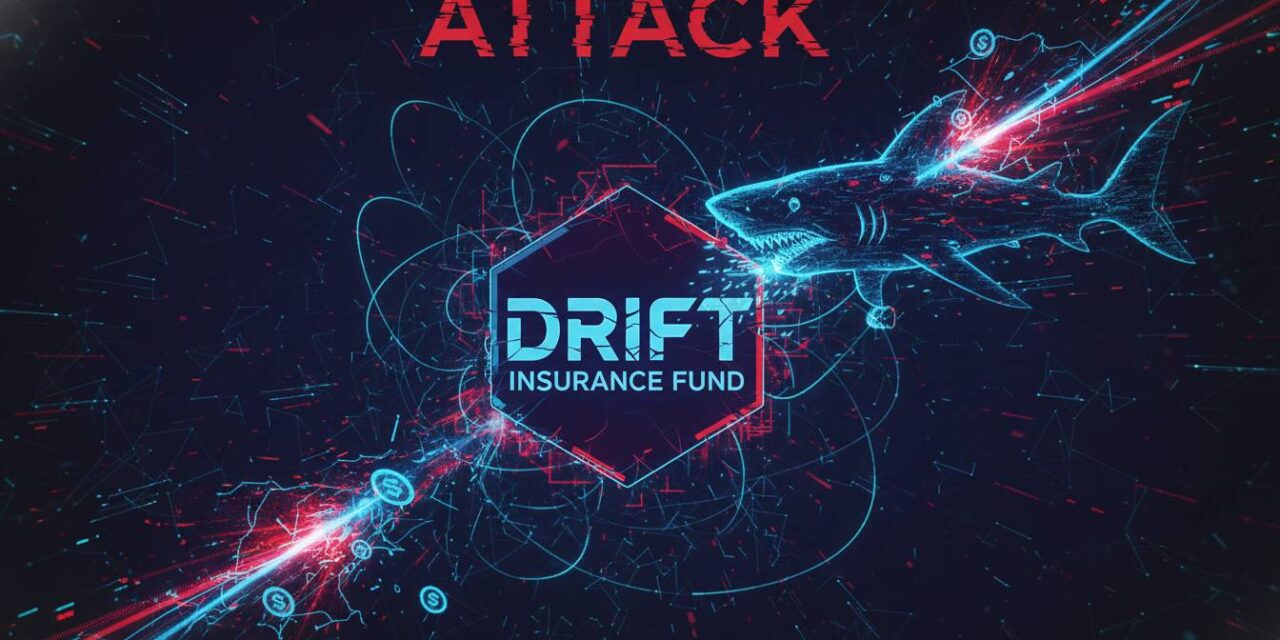
- Drift Protocol's insurance fund remains intact at over $18 million after an exploit targeted $270 million in client assets.
- Tether partnered with Drift on April 17, 2026, to create a USDT-based recovery fund for affected users.
- Drift introduced Recovery Tokens (RTKN) for users, redeemable for USDT based on pre-exploit balances.
This article is for informational purposes only. Always verify information independently before making any decisions.
Drift Protocol confirmed its insurance fund was completely untouched after an exploit targeted more than $270 million in client assets earlier that month. Per drift.trade’s April 16, 2026 incident update, the $18 million-plus fund built from trading fees meant Drift avoided triggering socialized loss.
Per drift.trade’s April 16.
Newsletter
Drift Protocol increased communication with its users by launching a dedicated newsletter as of May 2026. At least two targeted newsletters went out detailing the status of the April exploit, asset recovery strategies, and the timeline for withdrawal reinstatement. These frequent updates, together with transparent declarations of insurance status and protocol upgrades, were vital for calming user uncertainty and keeping affected stakeholders informed as legal and technical recovery actions entered their final phases.
https://t.co/2FRxDL2dP0View on X
Why is the Insurance Fund necessary?
The $285 million at risk during the April 2026 exploit counted among the largest losses seen by a Solana-based decentralized exchange to date. Per drift.trade documentation, most comparable protocols kept only about $4 million in reserve—nowhere near adequate. Published research confirms insurance funds have become a non-optional safeguard, specifically absorbing losses from liquidation failures or exploits that in less-managed environments would spread across all users through “socialized loss” deductions.
When is the Insurance Fund used?
According to Finance.yahoo.com, Drift’s insurance fund is only tapped after extreme losses where normal margin and project reserves cannot absorb the deficit. Under ordinary market conditions, Drift’s liquidation systems handle most losses—keeping the insurance fund intact. But when the April 2026 incident hit, and over $270 million in assets were suddenly in jeopardy, normal mechanisms failed, prompting an immediate emergency response and comprehensive review, per Cryptowisser.com.
How is the Insurance Fund funded?
Per drift.trade, the insurance fund is built chiefly from protocol fees—collected during trading, funding payments, and liquidations—and boosted by a portion of seized collateral at peak leverage events. On-chain figures indicate that average trading volumes before the April hack were around $35 million. This activity helped boost the insurance reserves to over $18 million by April 2026.
What is Socialized Loss?
Drift documentation defines “socialized loss” as a mechanism forcing every platform user to absorb part of in total losses if the insurance fund and core reserves are exhausted.
What is an Isolated Insurance Fund?
According to drift.trade’s incident update, Drift operates its insurance protocol as an “isolated” fund—meaning reserves are ring-fenced strictly for contract failures, liquidation gaps, or quantifiable exploits. On-chain data show that isolation ensures a direct, transparent link between the amount held and the liabilities covered, preventing any ambiguity about where user protection begins and ends.
Drift is currently experiencing an active cybersecurity attack. Pyra user deposits are held in Drift for yield and credit, so Pyra user funds are affected.View on X
Drift has suspended all functionality while they coordinate with security firms, bridges, and exchanges. We have also… https://t.co/LLNIWnPf0B
Tether Partners with Drift Protocol
On April 17, 2026, cryptowisser.com reported Tether joined Drift Protocol to help recover user assets following the Solana exploit. According to Cryptonews.net, this operational partnership created a USDT-based recovery fund and enabled both instant and long-dated compensation tracks for affected users. Tether’s presence fast-tracked plans for a USDT-based perpetuals DEX relaunch, provided immediate liquidity for staged withdrawals, and gave institutional authority to Drift’s asset recovery communications. That $18 million baseline made rapid recovery possible.
30% — Drift token price dip after exploit
Enhanced Security and Platform Relaunch: Timeline and Milestones
According to drift.trade’s roadmap, security improvements after the breach included exhaustive smart contract audits, blacklist screenings of compromised wallet addresses.
- April 1, 2026– Solana DEX targeted, assets exploited
- April 2–15, 2026– Forensic analysis, insurance review
- April 16, 2026– Recovery framework announced
- April 17, 2026– Tether partnership confirmed
- April 20–May 15, 2026– Code audit, user outreach
- May 17, 2026– Withdrawal resumption statement
- May 20, 2026– Asset recovery resumes on Drift
Asset Compensation and Recovery Token Mechanics
Per cryptonews.net, Drift Protocol introduced a compensation strategy centering on a Recovery Token (RTKN) following the April incident. Every affected user received RTKN claims equal to their pre-exploit balances, with the tokens redeemable for USDT in fixed tranches.
User Recovery Framework: Details and Governance
According to drift.trade’s April 16, 2026 update, governance procedures for compensation set a clear priority: first, confirm the exploit’s damage via on-chain audit. Second, use any surviving collateral for user coverage; third, issue Recovery Tokens (RTKN) to restore all prorated balances. And only escalate to insurer payouts if these prior steps proved insufficient. Market data from cryptowisser.com shows this governance model limited lawsuits and minimized capital lock-up, preserving trust among Drift’s retail base while larger DeFi circles monitored for signs of forced socialization.
Solana DeFi and Industry Reactions to the Drift Incident
On May 8, 2026, industry tracking reported the exploit was among the largest perpetrated on a Solana DEX. Other protocols examined the adequacy of their insurance policies and disaster response plans in the wake of the attack. Published research confirms that most rival Solana DEXs kept only about $4 million on average in reserve—nowhere near Drift’s $18 million-plus defense. According to industry tracking, this incident triggered calls for larger reserve mandates and formalized recovery structures among competitors. data show catastrophe at Drift became a stress test for the whole DeFi insurance model.
Drift’s Risk Controls Compared to Top Solana Exchanges
| Exchange | Insurance Fund (April 2026) | Recovery Token Mechanism | Timing of Withdrawals Post-Attack |
|---|---|---|---|
| Drift Protocol | $18M+ | Yes (RTKN) | 6 weeks |
| Orca | (not reported) | No | Immediate |
| Raydium | $4M | No | 3 days |
| Serum (defunct) | (not reported) | No | N/A |
| Jupiter | $6M | Partial | 1 week |
According to cryptowisser.com, Drift held the largest insurance provision among considerable Solana DEXs in April 2026 and was the only one to launch a dedicated recovery token for deposits. Competitors either relied entirely on minimal reserve pools or asked users to absorb losses directly, while Drift’s system avoided immediate write-downs by cycling rewards into tokenized claims.
$295M — Total client assets reported impacted by exploit
Lessons and Policy Implications for DeFi Insurance
Finance.yahoo.com’s DeFi sector review argues the Drift exploit has restarted industry debates about mandatory insurance fund size and architecture. Stakeholders increasingly demand minimum reserve ratios—calculated to withstand rare, catastrophic losses like April 2026. According to cryptowisser.com, the Recovery Token model, first deployed on Drift as a pragmatic fix, is now being evaluated by other protocols for permanent adoption. New governance standards link token issuance or socialized drawdowns to explicit insurance fund triggers. Regulatory scrutiny rose in both the US and Singapore as the scale of user impact forced jurisdictional interventions and pressurized platforms to release full transparency on their protections.
Primary Takeaways
- Insurance fund untouched:Not a single dollar was depleted, keeping all user deposits free from socialized loss or forced haircut.
- Tether joined as a partner:This enabled a new USDT-backed model for both immediate asset recovery and the coming perpetuals DEX relaunch.
- Recovery token:RTKN allows users to claim balances over time, aligning their compensation with protocol renewal.
- Security reforms:Full contract audit cycles and compromised wallet filters were run before withdrawals resumed.
- Industry impact:Several leading Solana exchanges operate with far smaller reserves and no comparable recovery process in place.
For deeper coverage, see more Drift Protocol recovery analysis, or contact us directly for expanded reporting on the aftermath and recovery progress of Drift Protocol.
On Google, tick the box next to stnews.live to see our reporting higher in Top Stories.
Disclaimer: The content on this page is for informational purposes only and does not constitute financial advice. Always do your own research before making investment decisions.

Sarah Williams is STnews's Blockchain Editor, leading coverage of blockchain technology, DeFi investigations, exchange analysis and crypto regulation. Her reporting adheres to STnews's editorial standards — primary-sourced, cited, and non-advisory.
Conflicts of interest
I hold no positions in any cryptocurrency mentioned in my coverage. All investment-related content is reviewed by senior editors before publication. I am not compensated by any project I cover.