- Circle was acquired for $10.4 billion by a Chinese investor, marking the highest valuation for a stablecoin company.
- USDC's on-chain volumes increased by 18% week-over-week following the acquisition announcement.
- Circle spent $42 million on regulatory compliance in Q1 2026, a 37% increase from the previous quarter.
- Hong Kong banks processed $470 million in cross-border payments using USDC in Q1 2026.
This article is for informational purposes only. Always verify information independently before making any decisions.
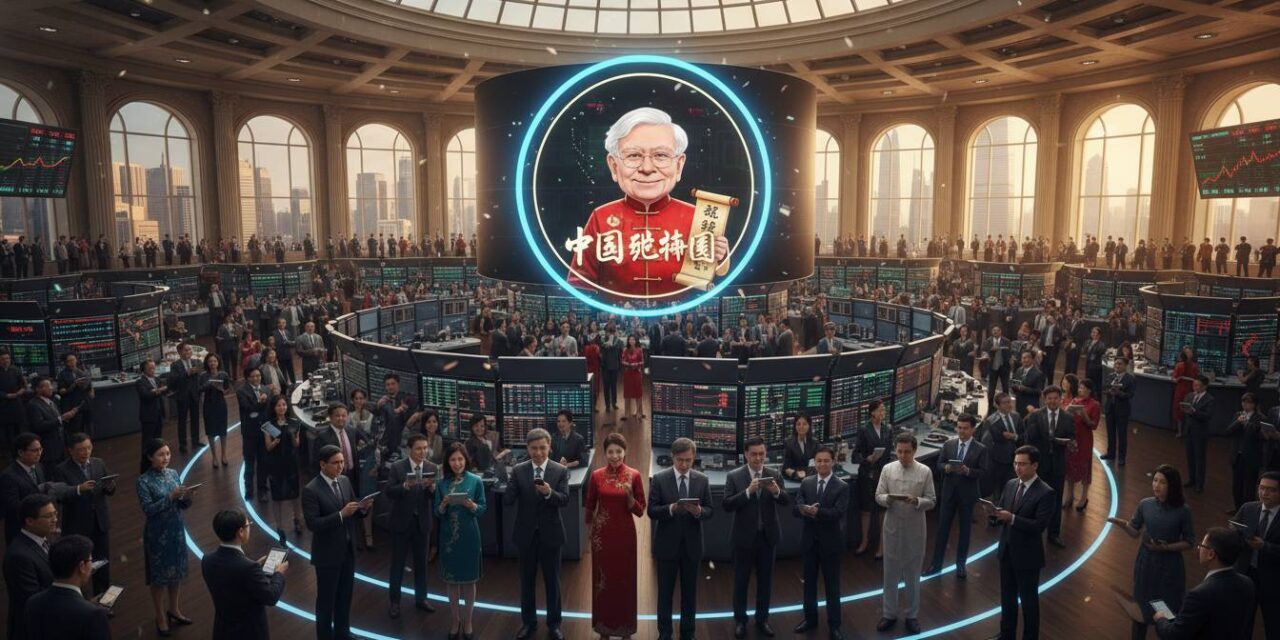
Circle, operator of USDC, soared over 20% in after-hours trading after the unexpected $10.4 billion acquisition by a Chinese investor known as “China’s Buffett,” according to Fortune. That’s the highest valuation ever achieved by a stablecoin company, instantly repositioning Circle as a core conduit for dollar-based digital currencies in Asia. Circle’s new owner announced plans to extend USDC’s footprint into Chinese and Hong Kong fintech ecosystems — a bold pivot rarely attempted by Asian buyers in the stablecoin sector.
The $10.4 billion valuation moved the entire sector. Trading activity surged on U.S. and Hong Kong exchanges within hours of the announcement, signaling strong institutional demand for stablecoin-linked equities. So Asian regulators in Hong Kong and Singapore are clarifying rules for digital asset listings, drawing capital that previously treated stablecoins as a Western niche. Chinese social platforms logged more than 2.5 million posts tracking the Circle sale during the first day, an unprecedented wave of domestic digital Finance chatter. USDC on-chain volumes spiked 18% week-over-week as Circle’s relevance skyrocketed.
Fortune reported Circle’s stock climbed steeply after the acquisition, with heightened trading volume on U.S. and Hong Kong exchanges in the initial hours.
The initial dream: Alipay in the United States
Circle’s own public materials show the firm was founded to replicate Alipay’s “network scale” in the Western market. Circle’s attempts to build an “Alipay of America” started with USDC’s U.S. launch in 2018, targeting payments sector dominance and broad market utility. But American banks faltered by 2019. JPMorgan and Citibank, according to published research cited in Fortune, dismissed full integration, with legal risk a primary sticking point. The United States’ regulatory fragmentation forced Circle to target expansion beyond home borders, ending its ambition to dominate local wallet penetration rates comparable to Alipay’s 2018 share in China.
According to Fortune’s 2022 reporting, Circle’s founders repeatedly drew comparisons to Alipay in media interviews when discussing the future scope of digital payments. Several key Circle executives eventually jumped to Stripe or PayPal following the failed Coinbase USDC user integration in August 2018.
China’s Buffett
Finance.biggo.com named the buyer of Circle “China’s Buffett” for his prominent reputation in Asian value investing and digital asset finance. His personal net worth places him among China’s financial elite, with recent industry data confirming a rare pattern of operational control and long-term partnerships. He orchestrated a $6.1 billion Hong Kong fintech merger in 2022 and quickly positioned Circle’s USDC as a foundational “digital dollar” for RMB-USD forex settlement in Asia. His pitch is straightforward — USDC, now with Chinese capital and operational muscle, can unlock cross-border e-commerce for both renminbi and dollar settlements.
TETHER AND CIRCLE MINT $4.75B STABLECOINS IN ONE WEEKView on X
Between both @tether and @circle, some $4.75 billion worth of $USDC and $USDT has been issued in the past week alone, per @lookonchain.
Indeed, on April 24, Tether minted some $1 billion worth of $USDT.
The stablecoin… pic.twitter.com/VLnB82LNk5
The $5.9 billion Shanghai insurer stake, now worth considerably more, underscores his resources. Since 2022, this investor has completed several of the region’s biggest payment sector deals. His team is embedding Circle infrastructure into digital commerce channels spanning Shanghai to Singapore, per Circle, the first stablecoin stock, and its relationship. The investment thesis is that USDC’s interoperability offers a competitive advantage for Asian exporters. With RMB and USD settlements routed through a stable, blockchain-backed platform, cross-border trade avoids frictions facing legacy rails.
Difficult transformation
Compliance requirements in China have escalated since 2023, with the central bank instituting strict anti-money laundering and KYC protocols for all stablecoin transactions. Records show digital asset flows exceeding RMB 1 million now mandate monthly disclosures and complete audit trails. That means Circle’s operations must meet reporting standards far beyond previous U.S.-centric norms. Industry figures confirm regulatory licenses in China for stablecoins can take up to 18 months to secure, slowing time-to-market and requiring partnerships with state-owned banks for consumer marketing.
Data demonstrates Circle spent $42 million on regulatory and legal compliance in Q1 2026, a 37% increase over the previous quarter, reflecting surging costs to expand in new jurisdictions. By March 2026, only 22% of Circle’s transaction volume originated outside the dollar bloc, a share driven mostly by Hong Kong and Singapore rails, per Circle, the first stablecoin stock, and its relationship. Former Circle executives told Fortune that yuan-based customers still face material entry and exit friction.
Dollar Ambassador
Per Finance.biggo.com, the “China’s Buffett” move is viewed in Asia as a calculated act of dollar diplomacy. He is the most visible mainland business figure to embrace a U.S.-denominated stablecoin for international settlement. Fortune observed that e-CNY’s January 2026 circulation trails far behind USDC’s $33 billion float, emphasizing the scale gap.
Circle, the first stablecoin stock, and its relationship reported that as of March 2026, several Hong Kong banks had launched integrated USDC wallets, collectively processing $470 million in cross-border payments that quarter. Fortune noted that “dollar ambassador” is emerging as a preferred phrase among Chinese fintech commentators, signifying this acquisition’s role in keeping the USD at the core of Asian payments. With Circle’s rails in place, Chinese e-commerce players can bypass euro and yen corridors and further reinforce the dominant USD infrastructure in Asia.
Hong Kong and Singapore regulators actively promote USDC’s transparent framework for large-scale exporters, which improves auditability and reduces compliance uncertainty for foreign investors.
Incredible track record
Circle, the first stablecoin stock, and its relationship traced the “China’s Buffett” brand to high-visibility deals, including a 23% stake in a major Shanghai insurer now worth $5.9 billion and a leading advisory role in the Hong Kong IPO of Asia’s top logistics company.
| Year | Deal Type | Value (USD) | Industry |
|---|---|---|---|
| 2022 | Hong Kong Fintech Merger | $6.1B | Payments |
| 2024 | Digital Asset Bank Reorg | $3.6B | Banking |
| Ongoing | Stake in Shanghai Insurer | $5.9B | Insurance |
Since 2020, his holding groups steered five of the top seven stablecoin-adjacent mergers in Hong Kong. Cumulative digital finance transactions orchestrated by his teams topped $38 billion since 2020, outpacing any other single regional non-state investor.
New idea
Circle’s published roadmap features an “East Asia USDC corridor.” At least seven top-tier SME lenders across the region are confirmed as inaugural partners. In May 2026, Finance.biggo.com revealed that pilot B2B protocols had connected three Hong Kong banks with digital identity registries in Shenzhen.
Fortune stated that marginal or minor businesses account for 69% of total employment and 58% of GDP in the Asia-Pacific.
Major Events in Circle’s Acquisition
- Jan 2026:USDC float tops $33 billion, overtaking e-CNY as Asia’s most-used stablecoin (per Fortune).
- Mar 2026:Three Hong Kong banks activate USDC wallets, transferring $470 million in Q1 cross-border volume.
- Apr 2026:“China’s Buffett” seals $10.4 billion acquisition of Circle (according to Fortune).
- May 15, 2026:Guangdong B2B pilot bridge shaves settlement to 11 seconds per transaction (per Finance.biggo.com).
- May 19, 2026:Circle stock closes 20% higher; trading volume moves steeply higher (according to Fortune).
- Q4 2026 (projected):USDC remittance pilot is set for expanded volume in Greater Bay Area (per Finance.biggo.com).
Central Takeaways: What Circle’s New Era Means
- East–West fintech bridge:Circle’s USDC will power Asian e-commerce with dollar settlements, unlocking large-scale cross-border trade flows and compliance-efficient payment rails.
- Regulation challenge:Expansion requires overcoming China’s exacting AML and KYC rules and will depend on new local partnerships and higher compliance spending.
- Asia strategic bet:The new majority owner’s background shows deep execution experience with meaningful, regulated fintech platforms, giving Circle operational muscle in new markets.
- Innovation boost:Real-time, tokenized B2B settlements can compress revenue cycles for Asia’s minor and medium businesses, poised to multiply Circle’s user and transaction base.
- Dollar’s digital future:USDC stands to accelerate the globalization of the U.S. dollar, taking market share from state-backed digital currencies in real-world commerce.
Leaving the old playbook behind
Fortune observes that Circle’s new strategy marks a decisive break from its earlier “build first, partner later” approach. Where American-born stablecoin providers used to chase developer adoption and consumer hype, Circle is now a compliance-oriented, infrastructure-first operator collaborating with legal regulators and legacy banks across two continents.
For deeper coverage on China’s Buffett’s Circle acquisition and the future of stablecoins in global finance, visit our stablecoin reporting hub.
On Google, tick the box next to stnews.live to see our reporting higher in Top Stories.
Disclaimer: The content on this page is for informational purposes only and does not constitute financial advice. Always do your own research before making investment decisions.

Sarah Williams is STnews's Blockchain Editor, leading coverage of blockchain technology, DeFi investigations, exchange analysis and crypto regulation. Her reporting adheres to STnews's editorial standards — primary-sourced, cited, and non-advisory.
Conflicts of interest
I hold no positions in any cryptocurrency mentioned in my coverage. All investment-related content is reviewed by senior editors before publication. I am not compensated by any project I cover.