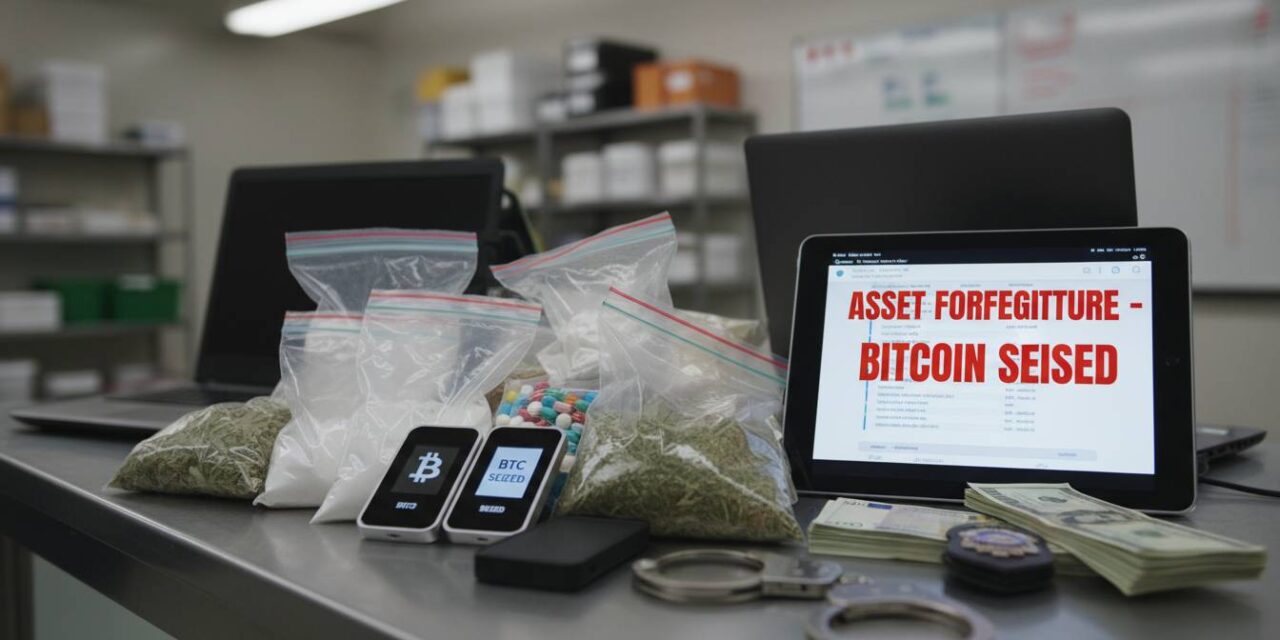
- Irish authorities seized a total of 1,000 BTC in a drug case linked to dealer Clifton Collins.
- Over 500 BTC, valued at $34 million, was unlocked after years of technical challenges.
- Approximately 5,500 BTC, worth over $374 million, remains inaccessible due to lost private keys.
- The Collins case is influencing new digital asset recovery strategies across Europe and globally.
This article is for informational purposes only. Always verify information independently before making any decisions.
According to Decrypt.co, Irish authorities have seized 1,000 BTC in a breakthrough drug case, marking a turning point for digital asset recoveries. With Europol’s cybercrime division, the Criminal Assets Bureau succeeded in cracking long-secured wallets tied to convicted dealer Clifton Collins. Over $34 million in Bitcoin—more than 500 BTC—was accessed after years of technical obstacles, while thousands more BTC remain locked behind lost keys. The Collins case now stands as Europe’s defining test of crypto asset enforcement.
Irish Police Unlocks Seized Bitcoin Wallet
Per Info.arkm.com, Ireland’s Criminal Assets Bureau unlocked over 500 BTC valued at $34 million in early 2026 by successfully breaching one of twelve wallets confiscated in the 2019 Clifton Collins investigation.
🚨 INSIGHT: Irish authorities recovered a “lost” Bitcoin wallet holding 500 BTC tied to Clifton Collins. pic.twitter.com/Y1RaqQFaQSView on X
Persistence and joint European support turned cyber obstacles into recoverable state assets. International police see The collaboration mentioned above as a new template for cracking digital vaults tied to organized crime. Collaboration enabled the conversion of $34 million in digital currency into assets held by the Irish state.
The Collins case is prompting new approaches to digital asset confiscation both in Ireland and across the EU.
Bitcoin Seizure Reaches 1,000 Btc In Irish Drug Case: Missing Keys Lock 5,500 BTC Away
According to Bitcoinworld.co.in, approximately 5,500 BTC—worth more than $374 million at May 2026 prices—is still inaccessible due to missing private keys.
Collins reportedly stored the private keys for his wallets on a single handwritten note, which was either lost or destroyed at the time of his arrest. market data shows this error rendered the bulk of the seized digital fortune untouchable, underscoring the permanence and risk of lost cryptographic credentials. Over 80% of the assets originally confiscated are in limbo due to a single security failure.
According to info.arkm.com, Irish officials confirm that without those private keys no current cryptographic standard permits forced access into the remaining wallets.
Crypto Prices and the State Windfall
According to data tracked by decrypt.co, Bitcoin traded above $68,000 in May 2026—an explosive rise from the 2019 market price of about $3,800 when the assets were seized. That 17-fold rally transformed what started as a sub-$2 million seizure into a $34 million windfall for the Irish state.
Irish CAB Cracks 500 BTC Wallet: First Breakthrough in $378 Million Bitcoin Seizurehttps://t.co/JxrMhG9iiSView on X
The 500+ BTC unlocked by Irish police in 2026 now accounts for more than $34 million. Meanwhile, the inaccessible 5,500 BTC would be valued at $374 million today, amplifying public attention on the stakes of lost keys in criminal proceedings.
| Year | BTC Price | 500 BTC Value | 5,500 BTC Value |
|---|---|---|---|
| 2019 | $3,800 | $1,900,000 | $20,900,000 |
| 2026 | $68,000 | $34,000,000 | $374,000,000 |
Over a four-year period, the Criminal Assets Bureau worked alongside Europol’s European Cybercrime Centre (EC3) using sophisticated hardware wallet analysis, Blockchain explorer platforms, and central recovery tools.
Technical and Legislative Lessons From the Collins Case
Per bitcoinworld.co.in, CAB’s collaboration with Europol is viewed as a model for future transnational investigations involving digital assets.
Broader Impact: Policy, Precedent, and the Fight Against Crypto Crime
According to decrypt.co, the 2026 recovery of $34 million in seized Bitcoin is already influencing European and global enforcement strategies.
Legislative bodies worldwide are now drafting specific provisions for handling decentralized assets in criminal cases. Per info.arkm.com, several EU member states are piloting asset-tracking systems designed to monitor and flag high-risk wallets linked to existing investigations. Ireland is scheduled to present its findings to the Europol Financial Crime Task Force in mid-2026, singling out this case as a textbook for new policy.
FAQs: Key Details From the Case
- How much Bitcoin was seized in total?– 1,000 BTC in total, per bitcoinworld.co.in.
- How much of the Bitcoin has been accessed?– Over 500 BTC, worth roughly $34 million, was unlocked according to decrypt.co.
- Who assisted Irish authorities in this case?– Europol’s cybercrime division, per info.arkm.com.
- Why were the funds frozen for so long?– The private keys were reportedly lost by convicted dealer Clifton Collins, according to bitcoinworld.co.in.
- What is the status of the remaining coins?– More than 5,500 BTC remain inaccessible due to lost private keys, per bitcoinworld.co.in.
- When were the original assets seized?– The Bitcoin was confiscated during the 2019 investigation.
- What does this mean for future crypto cases?– This case provides a new blueprint for digital asset recovery for law enforcement worldwide.
On Google, tick the box next to stnews.live to see our reporting higher in Top Stories.
Disclaimer: The content on this page is for informational purposes only and does not constitute financial advice. Always do your own research before making investment decisions.

Marcus Chen is a Senior Cryptocurrency Analyst at STnews, focusing on derivatives, perpetual futures, options skew and the macro–crypto correlation behind market moves. His analysis follows STnews's editorial standards: primary-sourced, cited, and strictly non-advisory.
Conflicts of interest
I disclose all positions in companies I write about. I do not trade in any asset within 48 hours of publishing analysis on it.