






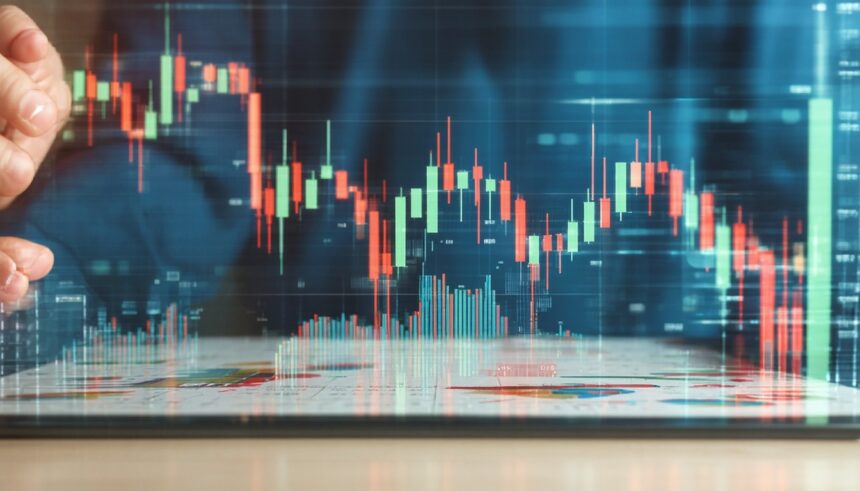
In the ever-evolving world of financial markets, traders are constantly seeking new tools to understand price action and identify profitable opportunities. Among these tools, the concept of the fair value gap (FVG) has gained traction within the technical analysis community, particularly among price action traders and those influenced by institutional order flow theories. An even more nuanced variation—the inverse fair value gap—has emerged as a key topic of discussion for interpreting market imbalances and constructing responsive strategies.
Defining the Inverse Fair Value Gap
The foundation for understanding the inverse fair value gap lies in grasping the classic fair value gap itself. Traditionally, a fair value gap refers to a three-candle price structure where the middle candle (commonly a strong move up or down) leaves a gap between its high and low relative to the previous and subsequent candles. This gap represents an area where little to no trading activity took place, often interpreted as a sign of inefficiency or market imbalance.
The inverse fair value gap, as the name suggests, flips this concept on its head:
- Inverse FVG occurs where price trades efficiently through levels, with minimal wicking and overlap, signifying market “agreement” or a balanced transfer of value.
- Rather than signaling a likely zone of mean-reversion or retracement (as with regular FVGs), the inverse FVG is often used by traders to anticipate continuations—expecting that the market will respect these efficiently-traded zones and move away from them rather than return.
This idea reflects a more advanced understanding of market microstructure, dissecting where liquidity was actively exchanged versus where “inefficiencies” were left behind.
Real-World Example: Spotting Inverse FVG on a Chart
To illustrate, imagine the following three-candle sequence on a 1-hour chart for a major forex pair:
- Candle 1: Opens and closes with a small body, little wicking.
- Candle 2: Large-bodied, minimal wicks, trades steadily upward.
- Candle 3: Matches or nearly matches the high/low of Candle 2, solidifying the efficient price transfer.
In this scenario, there is almost total overlap between the high/low ranges of Candle 2 and its neighbors, leaving very little “gap” in the traditional sense. This can be interpreted as an inverse FVG—an area where significant buyers and sellers agreed on price, and the market confidently moved through it.
Many professional day traders—especially those following methodologies popularized by the “Inner Circle Trader” (ICT)—use these patterns for context:
"Inverse fair value gaps are less about where price will return and more about areas price will accelerate away from, especially when confirmed by volume or order book data," explains Mark S., an independent futures trader with over a decade of experience.
This perspective highlights the growing significance of micro price inefficiencies in both traditional and crypto markets.
Why Inverse Fair Value Gaps Matter
Market practitioners are increasingly aware that not all price gaps or inefficiencies are created equal. Understanding which gaps matter—and how price is likely to respond—can make the difference between a winning and a losing trade.
Key reasons why inverse FVGs are relevant include:
- Market Continuation Bias: Inverse FVGs support the thesis that strongly-traded, “agreed-upon” areas enable price to keep moving in its dominant direction.
- Filtering Trade Setups: Rather than blindly trading into every gap or inefficiency, traders use inverse FVGs to filter out low-quality setups and focus on higher-confidence breakouts or continuations.
- Aligning With Institutional Order Flow: Larger players, such as banks and funds, are presumed to prefer trading in areas of high liquidity and consensus—often revealed by these overlapping price zones.
The tendency for price to respect these zones is especially evident in high-volume markets like major equities, futures, and flagship cryptocurrencies such as Bitcoin or Ethereum.
How Inverse Fair Value Gaps Influence Trading Strategy
For active traders and algorithmic systems alike, incorporating the concept of inverse fair value gaps means shifting from a “gap-filling” to a “momentum and structure-confirming” mindset.
Building a Practical Inverse FVG Trading Approach
Step 1: Identification
Look for zones where multiple consecutive candles exhibit little to no wicking, and price closes overlap significantly. Tools like TradingView can automate part of the process, but manual screening on higher timeframes (1H, 4H, daily) adds context.
Step 2: Market Structure Confirmation
Check for clear trend direction. Inverse FVGs are most actionable when embedded in strong, directional markets rather than choppy congestion.
Step 3: Entry and Risk Management
- Breakout Entries: Enter trades in the direction of the recent price action once an inverse FVG is established and price begins to move away.
- Stop Placement: Stops are generally placed below (for longs) or above (for shorts) the nearest minor swing within or immediately beyond the inverse FVG zone.
- Profit Targeting: Look for logical resistance/support or prior swing highs/lows; avoid assuming price will "come back" to test the zone.
Step 4: Volume and Confirmation
Utilize volume analysis or order flow tools. Higher relative volume through the zone or evidence of block orders can strengthen the setup.
Illustrative Scenario
Consider a scenario in the S&P 500 mini futures contract during a high-volatility session. Near midday, a series of three bullish hourly candles print, with each displaying minimal wicks and strong overlap, forming an inverse FVG. Price then accelerates, making new session highs. Observing volume spikes and sustained order flow, a trader executing a breakout entry would potentially capture the momentum move, while those betting on a reversion to the gap would face drawdown.
Pros and Cons of Using Inverse Fair Value Gaps
To remain objective, it's vital to weigh the strengths and limitations of any new trading approach.
Advantages
- Provides clearer directionality in trending markets.
- Reduces “false positives” compared to traditional gap-filling setups.
- Can be combined with volume, order flow, and institutional tracking tools for enhanced precision.
Limitations
- May offer fewer signals, especially in range-bound or low-liquidity markets.
- Effectiveness varies across asset classes and timeframes.
- Requires experience in contextual price action interpretation.
In practice, the best results often emerge when inverse FVG analysis is integrated with other confluence factors, such as support and resistance, moving averages, or macroeconomic catalysts.
Evolution and Popularity in Modern Markets
The rise of retail trading platforms and access to advanced charting tools has democratized order flow concepts once limited to institutional desks. The inverse FVG, championed by communities focused on ICT-based strategies and smart money concepts, reflects this trend toward greater price transparency and sophistication.
Recent periods of heightened volatility, such as during global economic shocks or crypto market booms, have further motivated traders to refine their edge by distinguishing between meaningful gaps and mere noise.
"The ability to differentiate between fair value inefficiencies and well-traded consensus zones is quickly becoming a hallmark of professional-level technical analysis," observes Emily Tan, market analyst at an institutional trading firm.
Conclusion
The inverse fair value gap adds a nuanced dimension to technical price analysis, offering traders a framework for gauging market agreement and anticipating directional moves. While not a stand-alone trading signal, its integration with other tools and contextual reading can play a pivotal role in increasing trade conviction and filtering out weak setups. As data-driven trading continues to shape markets, the understanding and application of advanced concepts like the inverse FVG is certain to grow in significance.
FAQs
What is the difference between a fair value gap and an inverse fair value gap?
A fair value gap highlights areas of price inefficiency where the market may retrace, while an inverse fair value gap shows efficient, consensus-driven price action where continuation is more likely.
Can inverse fair value gaps be applied in all markets?
They are most effective in highly liquid and trending markets such as forex majors, futures, or popular cryptocurrencies. Their reliability diminishes in thinly traded or sideways markets.
How can traders identify inverse fair value gaps on charts?
Look for sequences of candles with strong overlap, minimal wicking, and clear trend direction. High volume through these zones often adds confirmation.
Are there any risks associated with trading inverse FVGs?
Yes, like any technical method, false signals can occur, especially if used in isolation or without proper risk management. Always combine with broader context and confirmatory tools.
What tools or platforms are best for analyzing fair value gaps?
Advanced charting software like TradingView, MetaTrader, or proprietary institutional platforms can help identify inverse FVGs, especially when enhanced with volume or order flow overlays.
Why has the concept of the inverse FVG gained popularity recently?
Increased market volatility and the growth of order flow and price action trading communities have contributed to a greater focus on advanced price structure analysis, highlighting the value of both inefficiencies and consensus-driven zones.


Certified content specialist with 8+ years of experience in digital media and journalism. Holds a degree in Communications and regularly contributes fact-checked, well-researched articles. Committed to accuracy, transparency, and ethical content creation.
