






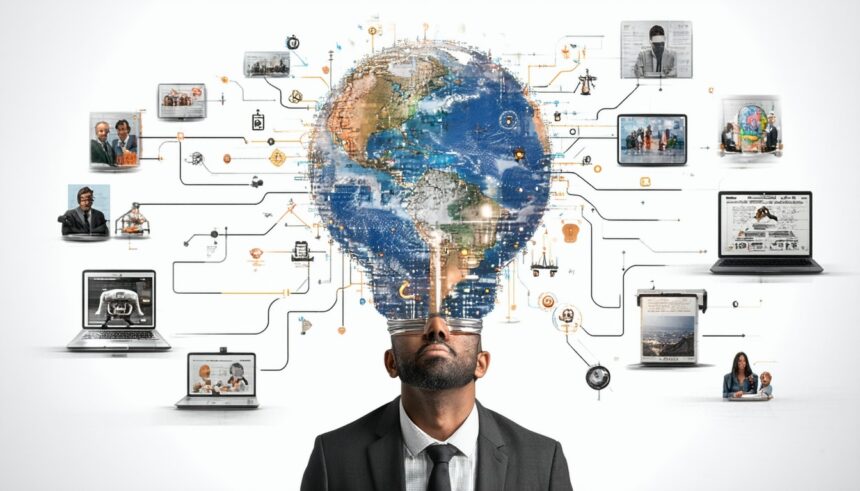
What does it really mean to be called the “smartest man in the world”? Is it about raw IQ, cultural impact, the breadth of one’s intellectual pursuits, or perhaps the ability to reshape the world’s understanding of itself? History is dotted with figures of immense intellect, each challenging the boundaries of knowledge in their own epoch. In the modern age, attention inevitably turns to the elusive title of the world’s greatest genius—and the complexity involved in such a designation.
The Many Dimensions of Intelligence
Traditionally, intelligence has been quantified through standardized testing—most notably, the intelligence quotient (IQ) test. While an IQ score offers a measure of certain cognitive abilities, modern psychology recognizes intelligence as multifaceted. Howard Gardner’s theory of multiple intelligences, for example, proposes that brilliance spans verbal, logical, spatial, kinesthetic, and emotional realms.
Beyond test scores, the contributions a person makes to society—through science, art, mathematics, or philosophy—often serve as a truer benchmark for real-world intelligence.
IQ and the Search for Outliers
Some of the highest documented IQ scores in history have become public fascinations. Marilyn vos Savant, once listed in the Guinness Book of World Records, reportedly scored an IQ of 228. Others, including Kim Ung-Yong, a South Korean civil engineer, and Terence Tao, an Australian-American mathematician, have been cited with IQs above 200.
However, experts caution that IQ scores can differ based on test type and individual conditions at the time of assessment.
“We should be cautious in using IQ as the sole metric of intelligence. True genius often manifests in creativity, resilience, and the ability to connect disparate ideas–qualities not captured by any single number.”
— Dr. Geoffrey Miller, psychologist and intelligence researcher
Modern Contenders for the Title
While there is no internationally recognized “smartest man,” several modern figures routinely appear in discussions of world-class genius. Their stories underline the varied forms intelligence can take.
Terence Tao: The Mathematical Prodigy
Born in 1975, Terence Tao displayed extraordinary mathematical ability from a young age. By age 10, he attended university-level courses. Tao earned his PhD by 21 and became a full professor at UCLA at 24, the youngest in the school's history. Renowned for his work in number theory, combinatorics, and harmonic analysis, Tao’s publication record stands as one of the most prolific in modern mathematics.
Christopher Hirata: The Physics Wunderkind
Christopher Hirata astounded academics when, at age 13, he became the youngest U.S. citizen to win an international physics Olympiad gold medal. After completing his PhD at Princeton, Hirata contributed to NASA’s Mars missions and now leads research on dark energy and cosmology at leading institutions.
Kim Ung-Yong: The Child Genius Who Chose Simplicity
Kim Ung-Yong is a South Korean engineer believed to have one of the highest measured IQs in the world, reportedly above 210. He spoke multiple languages before kindergarten and was invited to NASA as a child. Eventually, he chose to leave the limelight, focusing on personal fulfillment and teaching over scientific grandeur.
The Historic Precedents: From Einstein to da Vinci
On the other hand, no discussion is complete without acknowledgment of historical figures. Albert Einstein’s intuition revolutionized science, while Leonardo da Vinci’s contributions stretched across disciplines from engineering to fine art. Each left legacies that persist centuries later and challenge the notion of intelligence as a one-dimensional trait.
The Pitfalls and Promise of Genius Labels
The Limitations of Quantitative Metrics
Despite the appeal of a definitive ranking, intelligence remains contextual and situational. Societal values often shape who receives attention—and which kinds of smarts we celebrate. For instance, problem-solving skills in a laboratory differ greatly from diplomatic negotiation or creative artistry.
Real-World Impact vs. Abstract Genius
Intellectual prowess, in itself, does not guarantee a legacy. Many of history’s greatest minds struggled to communicate their ideas or effectuate change within their lifetimes. The path from conceptual innovation to societal transformation is rarely straightforward.
The Diversity of Genius: Beyond Gender and Culture
Historically, systemic barriers limited recognition for many thinkers, particularly women and individuals outside dominant cultures. Today, initiatives in education and research work to level the playing field, prompting a broader, more inclusive reconsideration of “the world’s smartest.”
Why the World Needs Multiple Kinds of Intelligence
A singular focus on individual IQ runs the risk of missing the collective dimension of human progress. The most significant advancements emerge at the intersection of different minds and disciplines: the collaborative teams at CERN decoding the subatomic world, or the global partnerships driving the Human Genome Project.
“If we seek the smartest human being, perhaps the answer is not in a solitary figure, but in the networks we create—where individual talents amplify one another.”
— Dr. Lisa Randall, theoretical physicist
Notable Modern Collaborations
- Artificial Intelligence Research: Leaders like Demis Hassabis (DeepMind) and Geoffrey Hinton (Google Brain) leverage interdisciplinary teams to push the boundaries of machine intelligence.
- Medical Innovation: Partnerships between biologists, engineers, and physicians speed breakthroughs in genomics and personalized medicine.
- Philosophy and Ethics: Contemporary figures such as Daniel Dennett and Martha Nussbaum pursue new frameworks for understanding cognition, morality, and society.
Reframing “The Smartest Man in the World”
Rather than anointing a single “smartest man,” the shifting landscape of human knowledge points to the need for diverse talents. While names like Terence Tao, Christopher Hirata, and Kim Ung-Yong command headlines, their stories underscore broader truths: Genius is multifaceted, context-dependent, and best appreciated in the light of its impact on humanity.
Conclusion: The Meaning Behind the Search
The quest to identify the “smartest man in the world” reflects society’s enduring fascination with the boundaries of human potential. Yet, as real-world examples and expert insight show, no single metric or narrative can fully capture true genius. The future of innovation depends less on crowning individual titans, and more on nurturing a broader culture of curiosity, creativity, and collaboration. Ultimately, greatness is measured not solely by intellect, but by the enduring legacy of ideas that shape and uplift us all.
FAQs
Who currently holds the title of the world’s smartest man?
There is no official or universally accepted titleholder; candidates like Terence Tao, Christopher Hirata, and Kim Ung-Yong are frequently mentioned, but definitions of intelligence vary widely.
Is IQ the only measure of genius?
No—while IQ provides a standardized metric for certain cognitive abilities, genius also involves creativity, perseverance, and the capacity to innovate or inspire others.
Can someone be considered a genius outside of science or mathematics?
Absolutely. Genius appears in the arts, humanities, leadership, and social impact. Figures such as Leonardo da Vinci and Marie Curie illustrate its diverse forms.
Have women or non-Western thinkers been recognized as among the smartest?
Recognition has historically skewed toward Western men, but trailblazers from all backgrounds—including mathematician Maryam Mirzakhani and philosopher Hypatia—are now receiving greater acknowledgment.
Why do views on intelligence change over time?
Cultural values, economic priorities, and advances in psychology influence which traits are celebrated as markers of intelligence, making definitions dynamic and evolving.
How can society foster more diverse forms of genius?
By supporting broad, inclusive education systems, encouraging interdisciplinary collaboration, and celebrating nontraditional achievements, society can cultivate a richer spectrum of exceptional minds.


Professional author and subject matter expert with formal training in journalism and digital content creation. Published work spans multiple authoritative platforms. Focuses on evidence-based writing with proper attribution and fact-checking.
