






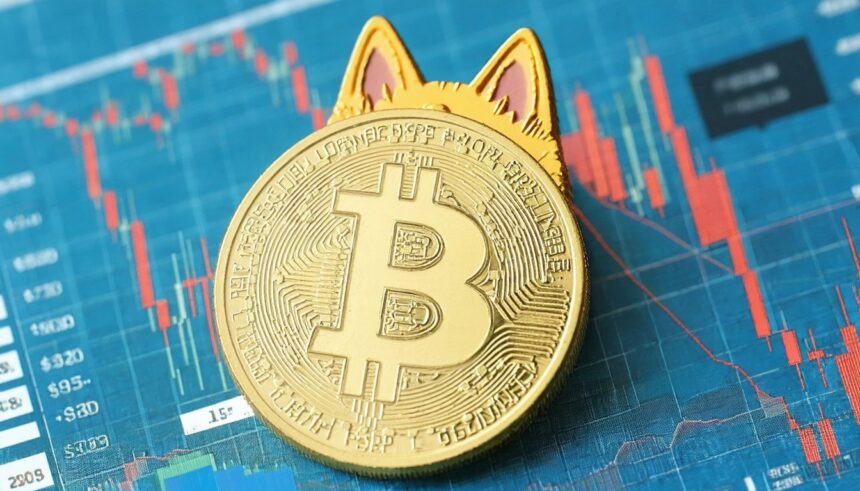
Dogecoin began in 2013 as a lighthearted take on cryptocurrency, inspired by the viral Doge meme. Despite its origins as a parody, Dogecoin has since developed a passionate online community, robust presence on social media, and growing interest from high-profile individuals, most notably Elon Musk. This blend of humor, grassroots advocacy, and celebrity backing has fueled speculation: Will Dogecoin reach $1? While its journey thus far is unprecedented, the path forward is shaped by a complex mix of technical, economic, and psychological factors.
Beyond its comic origins, Dogecoin’s market trajectory reflects broader trends in digital assets. As more retail investors enter the space—often motivated by accessible narratives and social momentum—Dogecoin exemplifies how community-driven assets can unsettle traditional valuation models. Understanding whether Dogecoin can realistically touch the $1 mark requires an analysis grounded in technical data, macroeconomic context, and behavioral finance.
Dogecoin's Market Performance: Momentum and Volatility
Dogecoin’s value has been exceptionally volatile, swinging from fractions of a cent to an all-time high of around $0.73 in May 2021. This explosive growth, propelled by global media coverage and Twitter campaigns, demonstrates how meme-driven assets can rapidly attact speculative capital. Yet, such volatility also exposes investors to sharp corrections, as seen in multiple retracements following spikes.
Key Forces Behind Price Fluctuations
Several variables drive Dogecoin’s price:
- Social Media Sentiment: Coordinated campaigns and viral trends (e.g., “Dogecoin to the moon”) have repeatedly triggered buying frenzies.
- Influencer and Celebrity Endorsements: Tweets from Elon Musk, Mark Cuban, and other influencers have acted as catalysts for price surges.
- Overall Crypto Market Cycle: Bullish sentiment in Bitcoin and Ethereum often spills over to Dogecoin, amplifying gains during uptrends.
- Speculative Trading: Platforms offering simplified access (like Robinhood) enable rapid retail participation, but also contribute to volatility.
While Dogecoin benefits from outsized attention, its price remains highly sensitive to sentiment shifts and market corrections. The unprecedented run-up in early 2021 showcased this phenomenon, but subsequent sell-offs highlighted its underlying fragility.
Fundamental Analysis: Supply, Utility, and Value Proposition
Unlike Bitcoin’s capped supply, Dogecoin has no fixed maximum limit—over 140 billion coins are currently in circulation, with about 5 billion new coins mined each year. This inflationary design serves as a double-edged sword.
Unlimited Supply: Impact on Long-Term Value
Dogecoin’s perpetual supply puts downward pressure on per-coin value, as dilution is mathematically inevitable unless demand keeps pace or exceeds new issuance. This stands in stark contrast to the “digital gold” narrative that underpins Bitcoin’s scarcity-driven appeal.
Real-World Use Cases
Dogecoin was never designed as a “store of value” or institutional-grade ledger. However, its fast block times and low transaction fees have enabled some utility, particularly for microtransactions and tipping content creators online.
Today, a growing number of merchants—especially small businesses and e-commerce platforms—accept Dogecoin, and it is supported by major exchanges globally. Yet, adoption for mainstream payments remains limited relative to larger cryptocurrencies.
"The durability of Dogecoin’s community and its ability to inspire viral adoption may continue to set it apart, but investors should weigh hype against fundamental value," notes Edward Collins, a digital asset strategist at CryptoCompare.
Technical Analysis and Price Predictions: Can Dogecoin Reach $1?
Price predictions around Dogecoin are fraught with uncertainty, especially given the asset’s meme-driven volatility. Nevertheless, several technical frameworks and scenario analyses offer context.
Historical Resistance and Key Price Levels
- 2021 Peak: Dogecoin’s historic high just under $0.73 established a hard upper resistance.
- Psychological Milestones: Each round number ($0.25, $0.50, $1) tends to act as a psychological barrier, impacting both speculative behavior and momentum trading.
- Support Zones: High-volume bands around $0.05–$0.10 have repeatedly served as accumulation zones for long-term holders.
Required Market Cap and Volume
At a $1 per DOGE price, Dogecoin’s fully diluted market capitalization would surpass most altcoins, challenging even some of the largest blockchain projects by network value. Achieving and sustaining this level would likely require:
- Continued influx of new retail investors
- A major bull run in the broader crypto market
- Potential growth in real-world demand or integration with mainstream financial platforms
Predictive Models and Analyst Opinions
While some bullish forecasts foresee Dogecoin revisiting its 2021 highs, most market analysts remain cautious about the $1 target—citing both the token’s inflationary model and the likelihood of profit-taking near historic resistance levels.
On the technical side, moving averages and trading volume suggest that significant momentum, coupled with renewed social hype, would be needed to breach $0.75, let alone test $1. Conversely, extended periods of low volatility and declining on-chain activity could temper such ambitions.
The Role of Community and Memetics in Price Action
Dogecoin’s community—spread across Reddit, Twitter, and Telegram—is among the most active and meme-savvy in all of crypto. This persistent, enthusiastic following continually creates viral waves that can ignite new interest seemingly overnight.
Dogecoin’s social capital is both its strength and its Achilles’ heel. While no other major digital asset matches DOGE’s memetic agility, the price is heavily dependent on maintaining social momentum. A decline in meme virality or a shift in digital trends could erode enthusiasm and lead to stagnation.
Real-World Examples: Coordinated Campaigns and External Catalysts
- In 2021, "#DOGEday" campaigns and coordinated social pushes drove unprecedented trading volume, even briefly overwhelming some cryptocurrency exchanges.
- Elon Musk’s Saturday Night Live appearance, coupled with his ongoing tweets, has repeatedly triggered Dogecoin rallies.
These examples illustrate how an energized base can create price action seemingly independent of traditional value factors—yet, over the long term, such effects are typically cyclical.
Regulatory Factors and External Risks
Regulation remains an unpredictable but critical variable. As governments explore frameworks for digital assets, Dogecoin—like many cryptocurrencies—faces an evolving legal landscape regarding securities laws, tax treatment, and compliance obligations.
In the U.S., the SEC’s stance on memecoins and their trading platforms has the potential to influence market dynamics. Restrictive measures could limit retail access or prompt delistings, while regulatory clarity may encourage wider acceptance.
Cryptocurrency regulations vary drastically worldwide. Countries with more permissive policies may foster trading and merchant adoption, while more conservative regimes could dampen local demand.
Summary: Pathways to $1—Hope, Hype, and Hard Realities
Dogecoin’s ascent to the $1 milestone is not outside the realm of possibility, particularly in a euphoric bull market. However, sustained momentum would require an extraordinary blend of community coordination, favorable macro trends, viral appeal, and possibly new real-world adoption drivers.
While Dogecoin’s narrative remains one of internet-powered optimism, fundamental questions around inflationary supply and real utility persist. Investors intrigued by the prospect of $1 DOGE should weigh the power of grassroots movements and meme culture against the asset’s inherent volatility and structural limitations.
FAQs
Will Dogecoin ever reach $1?
Dogecoin could theoretically hit $1 in a future bull cycle, but reaching and maintaining this level would require a massive surge in demand, widespread adoption, and sustained social momentum. Market analysts emphasize the importance of technical, economic, and psychological factors in making such a move.
What would Dogecoin’s market cap be at $1 per coin?
At $1 per DOGE, the coin’s market capitalization would reach well over $130 billion, challenging the largest cryptocurrencies. Such a surge would likely place it among the top-tier crypto assets by total value.
What are the biggest risks preventing Dogecoin from hitting $1?
Unlimited supply, high volatility, regulatory uncertainty, and reliance on social media hype are the primary risks. Profit-taking near historical highs also tends to spark major corrections.
Does acceptance by merchants help Dogecoin reach $1?
Merchant acceptance adds credibility and potential utility, which can support upward price trends. However, mainstream adoption at scale is still limited, so utility alone is unlikely to drive DOGE to $1 without additional catalysts.
Can Elon Musk or other influencers make Dogecoin reach $1?
Influencers can cause short-term price spikes through social media campaigns or public support. But long-term price sustainability at $1 depends on broader adoption and underlying market dynamics, not just celebrity endorsement.


Seasoned content creator with verifiable expertise across multiple domains. Academic background in Media Studies and certified in fact-checking methodologies. Consistently delivers well-sourced, thoroughly researched, and transparent content.
