






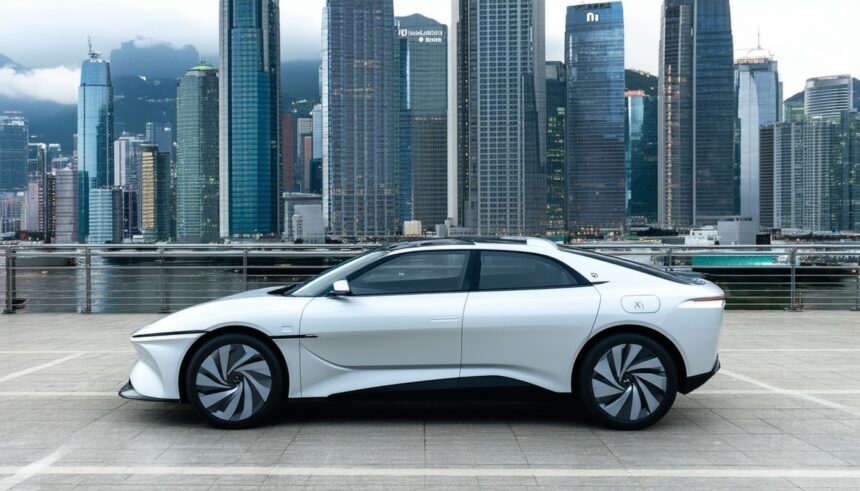
Chinese electric vehicle (EV) manufacturers have seized global attention over the past decade, with NIO emerging as one of the most dynamic brands. Headquartered in Shanghai, NIO is often dubbed the "Tesla of China," partly for its premium electric vehicles and partly for its ambitious global strategy. The company’s stock journey reflects broader trends in cross-border finance, especially since its debut on the Hong Kong Stock Exchange (HKEX) in 2022. The NIO Hong Kong stock (9866.HK) provides international investors with an additional avenue to trade on this high-growth EV company outside U.S. hours and market dynamics.
Understanding the price trajectory, performance patterns, and market sentiment around NIO's Hong Kong listing is increasingly essential for both retail and institutional investors. This article explores the nuances of NIO’s HKEX presence, offering actionable market insights and a broader view of where the stock—and the sector—may be headed.
The Rationale Behind NIO’s Hong Kong Listing
Dual listing on respected exchanges is a hallmark strategy for globalizing technology firms, a factor that played heavily in NIO’s decision to list on HKEX. Several circumstances drove this move:
- Access to Broader Capital Pools: Hong Kong remains Asia’s financial epicenter, with deep liquidity and robust institutional participation.
- Hedge Against U.S. Regulatory Risk: Escalating U.S.-China tensions, culminating in threats of delisting Chinese ADRs from U.S. exchanges, pushed companies like NIO to secure alternative trading venues.
- Appeal to Asian Investors: A local HK listing appeals to investors who may be less comfortable transacting in the U.S. market or whose capital is more regionally focused.
“Hong Kong’s position as a major listing venue provides companies like NIO with flexibility and resilience amid geopolitical uncertainty,” remarks Daniel Chan, Head of IPO Advisory at Hong Kong-based Glory Sun Securities.
Beyond the regulatory hedge, the HK listing can also boost brand awareness among Asian consumers—an intangible but important marketing byproduct.
NIO Stock Price Dynamics: Tracking the Hong Kong Performance
Steady Volatility: Reflecting Market Sentiment
Since its introduction, NIO’s Hong Kong stock has experienced price swings reminiscent of its NYSE-listed counterpart. Mirroring both the excitement and anxiety in the global EV market, NIO’s HKEX shares have shown:
- Significant Correlation with the U.S. ADR, often tracking overnight movements on Wall Street.
- Sensitivity to Market News such as delivery numbers, production halts, or changes in regulatory frameworks.
- Broad Volatility linked to broader Chinese tech sector sentiment and macroeconomic shifts—such as interest rate moves, trade tensions, or government stimulus policies.
Monthly charts since the HKEX debut have often paralleled global sector trends: a strong initial rally, intermittent corrections, and gradual recovery phases paced by earnings reports and macroeconomic shifts.
Key Price Milestones and Events
A few milestones and news cycles have notably impacted NIO’s Hong Kong share price:
- Initial Trading Pop: Upon debut, the shares saw an uptick, reflecting strong pent-up demand and enthusiasm from local fund managers.
- Delivery Updates: Each quarterly delivery report has caused visible price moves, as the market digests sales growth versus expectations.
- China’s EV Subsidy Shifts: Announcements concerning official subsidies or regulatory clampdowns have injected sharp, sometimes exaggerated volatility.
In practice, NIO’s HK stock isn’t just a proxy for NYSE trading, but a real-time barometer for Asian EV optimism and regulatory clarity.
Performance Metrics and Peer Comparisons
Looking Beyond Price: Volume, Liquidity, and Investor Mix
The HKEX listing quickly established decent daily trading volume, helped by a large base of retail investors and institutional funds. While liquidity is lower than NIO’s NYSE shares, the gap has narrowed, especially during periods of elevated market interest.
How Does NIO Stack Up Against Peers?
NIO’s primary local competitors also boast dual listings, making head-to-head comparisons easy for global investors:
- XPeng Inc. (9868.HK)
- Li Auto (2015.HK)
- BYD (1211.HK)
Performance-wise, NIO often trades at a higher valuation multiple than smaller rivals, driven by its branding, technology leadership, and battery swap differentiation. However, BYD remains the segment heavyweight, buoyed by manufacturing scale and Warren Buffet’s Berkshire Hathaway stake.
Short Case Study: NIO’s 2023 Delivery Recovery
Late 2022 and early 2023 saw soft sales across the Chinese EV sector due to supply chain disruptions and phase-out of some government subsidies. Notably, NIO rebounded faster than some peers, reporting renewed monthly delivery growth by mid-2023. This performance, reflected in both price support and increased liquidity, solidified NIO’s HKEX credentials as a blue-chip new energy stock.
Strategic Insights: Risks and Opportunities for Investors
Navigating Geopolitics and Sector Risks
International investors face a mosaic of risks when trading Chinese EV equities—NIO included. Key considerations:
- Policy Volatility: Ongoing government involvement in energy and tech has created unpredictable regulatory backdrops.
- Data Transparency: Chinese reporting standards may differ from Western norms, adding to analyst caution.
- Global Supply Chain Exposure: Component shortages or trade frictions can quickly dent production figures and, by extension, share prices.
Nevertheless, several factors underpin NIO’s longer-term prospects:
Growth Levers to Watch
- International Expansion: NIO is aggressively targeting Europe, a continent poised for rapid EV adoption.
- Premium Positioning: The brand seeks to capture affluent, tech-savvy buyers, both in China and abroad.
- Battery Innovation: Its “Battery as a Service” model is unique among pure-play EV firms and could pave the way for recurring revenues.
- R&D Investment: Sustained funding for autonomous driving and connectivity may prove a significant differentiator.
"While the volatility is notable, NIO’s positioning in technology and branding offers substantial upside for patient investors who can weather the near-term crosswinds," observes Alex Huang, portfolio manager at J.P. Morgan Asset Management Asia.
Institutional and Retail Investor Behavior
The HKEX listing has gradually attracted a blend of long-term funds, thematic ETFs, and “retail traders” seeking day-trading opportunities on local news flow. Particularly on event-driven days—such as product launches or major policy announcements—NIO’s Hong Kong volumes spike, indicating widespread regional engagement.
Conclusion: NIO’s Hong Kong Stock—A Strategic Asian Listing
NIO’s dual listing in Hong Kong exemplifies the changing landscape of global capital markets for Chinese innovators. The HKEX shares are now central to NIO’s investor story, offering both a hedge against geopolitical risk and a strategic anchor in Asia’s dynamic financial ecosystem. While near-term volatility is set to persist, investors with a tolerance for risk—and a belief in NIO’s technology and branding edge—may find its Hong Kong presence an appealing gateway to the Chinese EV revolution. Prudent analysis of delivery metrics, regulatory trends, and sector competition will remain critical to unlocking value in NIO’s journey.
FAQs
What is the NIO Hong Kong stock ticker?
NIO’s Hong Kong listed shares trade under the ticker symbol 9866.HK on the HKEX.
How does NIO’s HK stock compare to its NYSE listing?
Both listings track NIO’s core business but may reflect trading hours, regional news flow, and liquidity differences. Price movements often correlate, though Hong Kong markets can react first to Asia-specific developments.
Why did NIO choose to list in Hong Kong?
Facing potential regulatory challenges in the U.S. and seeking broader access to Asian capital, NIO listed in Hong Kong to diversify funding and appeal to local investors.
Are there risks unique to holding NIO stock in Hong Kong?
Risks include regulatory volatility, differences in disclosure standards, and periodic swings driven by China’s tech and energy policy environment.
How do NIO’s Hong Kong shares perform compared to peers like Li Auto or XPeng?
NIO holds a premium valuation owing to its branding and innovation leadership, though all major Chinese EV makers are subject to similar broader market trends and government policy impacts.
Can international investors buy NIO shares on the HKEX?
Yes, many global brokerage platforms allow access to Hong Kong-listed shares, though trading hours and currency considerations (Hong Kong dollars) should be noted.


Certified content specialist with 8+ years of experience in digital media and journalism. Holds a degree in Communications and regularly contributes fact-checked, well-researched articles. Committed to accuracy, transparency, and ethical content creation.
