






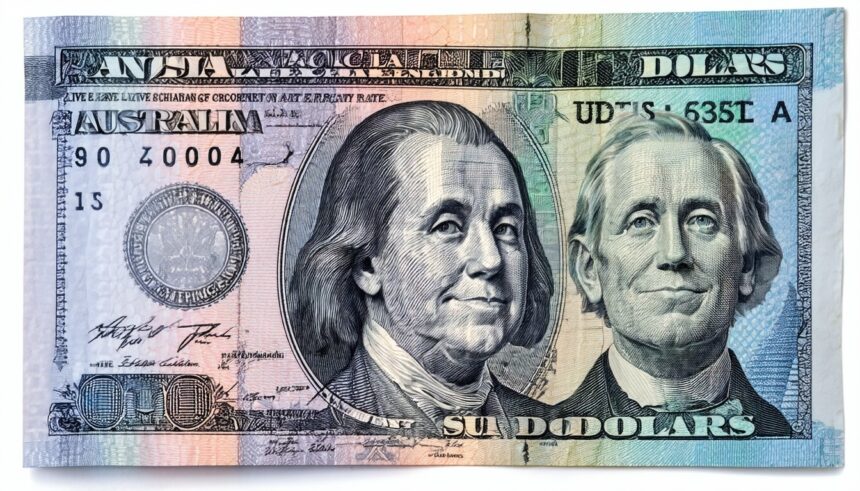
The relationship between the Australian dollar (AUD) and the US dollar (USD) is pivotal for global commerce, investment decisions, and cross-border travel. As two of the world’s most actively traded currencies, their exchange rate serves as both an economic indicator and a practical tool, affecting everyone from multinational corporations to Australian families planning trips to the United States.
Exchange rates fluctuate daily, influenced by an array of factors spanning economic performance, commodity markets, and international politics. For anyone conducting international transactions or monitoring market trends, staying updated on the AUD/USD rate is essential—for budgeting, risk management, or maximizing value.
What Drives the Australian Dollar to US Dollar Conversion?
Key Economic Influences
The AUD/USD exchange rate is shaped by a complex web of economic and geopolitical forces. At its core, supply and demand in both countries' economies dictate currency valuations. The Reserve Bank of Australia (RBA) and the US Federal Reserve play central roles in monetary policy, setting interest rates that often sway investor sentiment toward or away from each currency.
Commodity Prices and Trade Ties
Australia’s economy is heavily reliant on commodities—iron ore, coal, and natural gas among its key exports. Strength in commodity prices often boosts the AUD, as foreign buyers must purchase Australian dollars to pay for these goods.
"Commodity cycles have a distinct impact on the AUD. When global demand for iron ore and coal surges, the Australian dollar usually strengthens against its peers, especially the US dollar," says Jennifer Lowe, a senior FX strategist at a major investment bank.
By contrast, the US dollar is viewed as a ‘safe-haven’ currency, often rising in value during periods of geopolitical uncertainty or global market downturns.
Interest Rate Differentials
Interest rates also play a prominent role. When Australia’s key interest rate is higher than that of the US, the AUD can attract investors chasing superior yields. Conversely, when the Federal Reserve hikes US rates, the USD typically gains ground at the AUD’s expense.
In recent years, as major central banks responded to inflation and growth concerns, even modest shifts in policy have triggered sizable moves in currency markets. Thus, monitoring statements from the RBA and Federal Reserve is crucial for those tracking this exchange rate.
Live Exchange Rate Tools and Currency Conversion
Accessing up-to-the-minute AUD/USD Rates
Modern technology has made it easier than ever to track the AUD/USD exchange rate in real time. Financial news platforms, forex brokers, and dedicated currency converter websites update their data every few seconds, equipping traders, businesses, and tourists with actionable information.
Currency converters are particularly useful for planning travel expenses or calculating the effective cost of international online purchases. Many tools allow users to input Australian dollars and instantly view the equivalent in US dollars, taking into account the latest mid-market rates.
Practical Scenarios for Currency Conversion
- Travel: An Australian traveler heading to New York monitors the live AUD/USD rate to decide when to exchange funds, seeking to maximize their purchasing power.
- E-commerce: Online shoppers comparing prices on US-based platforms instantly convert product prices to AUD for better budgeting.
- Business: Exporters and importers assess conversion rates to set product prices, hedge risks, and manage international payments.
Beyond simple rate checks, some platforms offer historical charts and forecasts, arming users with a broader context for decision-making.
Recent Trends and Historical Context
The AUD/USD Rate in Perspective
The relationship between the Australian and US dollars has evolved over decades. Historically, the AUD was pegged to the British pound and later to the US dollar, before adopting a floating regime in 1983. Since then, its value has oscillated widely—influenced by resource booms, global crises, and shifts in monetary policy.
For instance, during the commodities boom of the early 2010s, the AUD briefly surpassed parity with the USD, making Australian exports more expensive but enhancing Australians’ purchasing power abroad. However, during periods of global uncertainty—such as the COVID-19 pandemic—the AUD typically weakens as investors flock to the perceived stability of the US dollar.
How Institutions and Individuals Respond
Both ordinary consumers and sophisticated investors must navigate these trends. Multinational firms often use derivatives and hedging strategies to protect profits from adverse currency swings. Meanwhile, individual travelers and students may time their conversions to take advantage of temporary rate peaks.
Australia’s close trade ties with China also exert an indirect influence, as shifts in Chinese demand for Australian resources impact the AUD, and, by extension, its value relative to the USD.
Key Considerations and Risks When Converting Currency
Transaction Costs and Exchange Margins
One critical factor often overlooked is the cost of conversion itself. Retail exchange rates usually include a spread above the mid-market rate, representing the provider’s margin. Banks, airports, and currency kiosks tend to charge higher spreads compared to online platforms and specialized money transfer services.
Tips for Minimizing Costs
- Compare Providers: Online comparison tools can reveal significant differences in rates and fees between providers.
- Watch for Hidden Fees: Beyond quoted rates, investigate service charges or minimum transaction amounts.
- Plan Timing: Currency markets operate 24/5, but certain periods—like overlapping US and Asian trading hours—often bring higher liquidity and tighter spreads.
Security and Regulation
When transferring significant sums, choose regulated financial institutions or licensed money services. Digital tools should employ encryption and robust consumer protection mechanisms. In practice, the safest options may not always offer the lowest published rates but deliver peace of mind and reliability.
The Future Outlook: Forecasts and Volatility
Forecasting currency movements is fraught with uncertainty, given the interplay of so many external factors. Some analysts point to ongoing US monetary tightening and shifting global commodities demand as key forces that may shape longer-term AUD/USD trends. Investors and everyday users should stay flexible, using both real-time information and prudent judgment.
Conclusion
Understanding the dynamics driving the Australian dollar to US dollar exchange rate is vital for effective personal finances, international trade, and investment strategy. Live exchange rate tools, sound market knowledge, and awareness of conversion costs empower individuals and businesses to make informed decisions. With economic, geopolitical, and technological factors constantly in flux, keeping a close eye on developments is as important as ever—ensuring that money works harder across borders.
FAQs
How often does the AUD to USD exchange rate change?
The AUD/USD rate fluctuates constantly during global trading hours, which typically run 24 hours a day from Monday to Friday. These changes reflect ongoing shifts in supply and demand across currency markets.
Are online currency converters accurate for making transfers?
Most online currency converters provide rates close to the interbank (mid-market) rate, but actual conversion rates may differ due to provider spreads or transaction fees. Always verify actual costs before committing to a transaction.
What factors have the biggest impact on AUD to USD rates?
Key drivers include interest rate differentials between Australia and the US, global commodity prices (especially those linked to Australian exports), investor sentiment, and major economic news or geopolitical events.
Is it better to exchange currency in Australia or the US?
Exchange rates and fees vary by provider and location. Traveling Australians often find better rates through online money transfer platforms or specialized currency services rather than airport kiosks or generic banks.
Can I forecast future AUD/USD rates reliably?
While experts analyze market trends and economic indicators to form projections, currency forecasting is inherently uncertain due to the large number of variables involved. Using up-to-date information and hedging strategies can help manage risk, but guaranteed predictions are impossible.


Professional author and subject matter expert with formal training in journalism and digital content creation. Published work spans multiple authoritative platforms. Focuses on evidence-based writing with proper attribution and fact-checking.
