






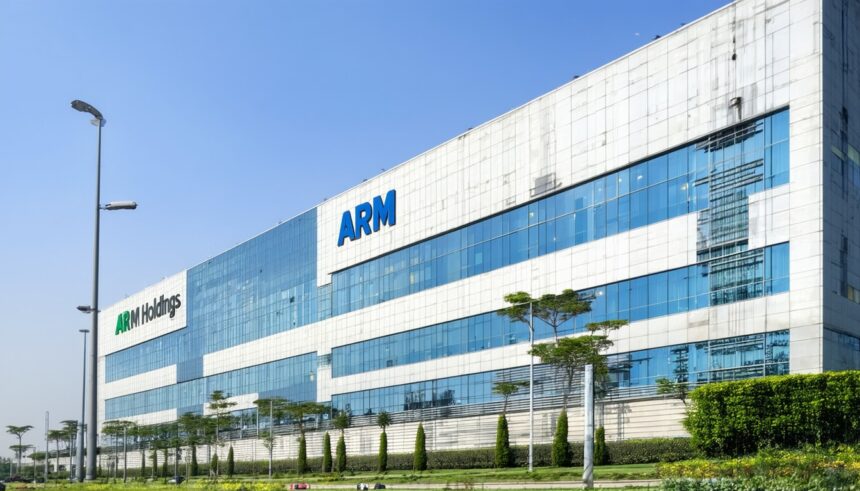
As the global technology sector races ahead, few companies are as integral to the digital economy as Arm Holdings. Known for its foundational semiconductor designs, Arm's microarchitectures power billions of devices—from smartphones to servers at the heart of generative AI. As a result, the Arm Holdings stock price is closely monitored by investors, analysts, and partner companies seeking insight into the health of both the semiconductor industry and broader tech trends.
Since its high-profile return to public markets via a major Nasdaq listing in late 2023, Arm’s stock has become a bellwether for the semiconductor industry at the intersection of AI, mobile, and IoT innovation. The firm's fluctuating valuation is shaped by evolving demand, shifting competition, and the fast pace of technological change.
The Evolution of Arm Holdings: From IPO to Industry Influence
Arm’s journey as a public company is a fascinating case study in strategic evolution. Originating in the UK, Arm’s open licensing business model enabled exponential ecosystem growth, attracting customers as diverse as Apple, Qualcomm, and Nvidia. After briefly being owned by SoftBank, Arm returned to public markets in one of the decade’s most-watched IPOs.
Why Arm’s Business Model Matters
Unlike traditional chip manufacturers like Intel or TSMC, Arm licenses its intellectual property rather than producing chips itself. This asset-light model enables high margins and scalability—traits that are attractive to investors seeking exposure to growth without capital-intensive risks.
Several leading experts have commented on the significance of Arm's business model post-IPO:
"Arm’s licensing-first model enables it to benefit from exploding demand across AI, mobile, and automotive segments—without the direct exposure to cyclical semiconductor manufacturing risks," says Mark Lipacis, a senior semiconductor analyst.
Arm Holdings Stock Price: Recent Movements and Market Sentiment
Trends Since the IPO
Following its Nasdaq debut, Arm’s stock experienced substantial volatility—a common trait among tech IPOs. Its initial surge reflected pent-up demand and excitement around semiconductors, especially as AI became a key thematic driver for investors. However, like many newly public tech stocks, it also faced profit-taking and recalibration as markets assessed its near-term growth prospects against lofty early valuations.
- Debut enthusiasm: Early trading saw significant gains, briefly pushing Arm’s market cap into the ranks of the world’s largest chip companies.
- Profit-taking and recalibration: As excitement cooled, the stock pulled back, affected by sector rotations and broader market volatility.
- AI and data center optimism: Renewed optimism has coincided with reports of increasing Arm adoption in data centers and AI applications.
Factors Impacting the Stock Price
Arm’s share price is notably sensitive to a tapestry of macro and industry-specific forces:
- Global chip demand: As device shipments rise and fall, Arm’s royalty revenues fluctuate, affecting investor sentiment.
- Geopolitical developments: Trade tensions and regulatory scrutiny around semiconductors can add turbulence.
- AI and cloud infrastructure: Headlines touting Arm’s penetration into these markets often trigger positive repricing.
Comparative Analysis: Arm vs. Other Chip Giants
In the public imagination, Arm’s closest peers are often chip manufacturers like Nvidia, AMD, and Intel. Yet, the differences are stark:
| Company | Model | AI Exposure | Manufacturing | Profit Margins |
|------------------|------------------------|-------------------------|--------------------|-------------------|
| Arm Holdings | Licensing IP | High (AI cores) | None (fabless) | High (asset-light)|
| Nvidia | Designing chips (fabless)| High (AI GPUs) | None (outsourced) | Strong |
| Intel | Designing & manufacturing| Growing (AI chips) | In-house | Lower (capital-heavy)|
While Nvidia has captured recent headlines with its surging demand in AI, Arm’s architectural foundations underpin many of Nvidia's own AI chips. This provides Arm with broad, indirect exposure to surging AI investment, even if it’s not selling the chips directly.
Growth Drivers: AI, Mobile, and Automotive Sectors
Artificial Intelligence: The Next Frontier
Arm has aggressively pivoted to capitalize on the AI boom. Its architectures are now embedded in cutting-edge data centers and AI inference devices, cementing Arm’s relevance in this explosive sector. Partnerships with hyperscale cloud providers and chip designers position it as a silent backbone of the modern AI stack.
Mobile and 5G Devices
The mobile sector remains Arm’s bread and butter, accounting for a significant portion of licensing and royalty revenue. With the ongoing transition to 5G phones and even more power-efficient chips, Arm is well-positioned for continued relevance.
Automotive and Edge Computing
Emerging trends in automotive (especially advanced driver-assistance systems, or ADAS) are expanding Arm’s addressable market. As more vehicles require sophisticated onboard computing, Arm’s low-power designs are increasingly in demand.
- Notable use case: Many leading EV and autonomous vehicle manufacturers rely on Arm-based processors for infotainment, safety, and connectivity.
Risks and Challenges: Navigating Market Headwinds
Despite its strong position, Arm Holdings faces a complex web of challenges:
Market Cyclicality and Competitive Pressures
The semiconductor industry is famously cyclical, with booms and busts driven by changes in end demand for devices and cloud services.
- Competition: As RISC-V and other open-source architectures gain traction, Arm’s dominance in certain segments could face pressure.
- Licensing risk: Large customers may seek alternative IP solutions to reduce their royalty burden.
Geopolitical and Regulatory Headwinds
Arm’s location in the UK and its global customer base expose it to varying export regulations and trade restrictions, particularly in the US-China rivalry.
- Export controls: Limitations on chip technology transfers can disrupt royalty streams or hinder strategic partnerships in certain regions.
Valuation Risks
Following its IPO, Arm's rich valuation implies high expectations for revenue and earnings growth. Any disappointments in quarterly guidance or slower-than-anticipated adoption in AI and data centers can lead to swift corrections in the stock price.
Investor Insights: What Analysts and Institutional Investors Are Watching
Institutional investors and Wall Street analysts are scrutinizing several key metrics with every Arm earnings report:
- Royalty and licensing growth: How rapidly is Arm expanding into new verticals?
- AI/data center traction: Is Arm’s technology being adopted in next-generation infrastructure?
- Profit margins: Does the asset-light, IP-centric model maintain its edge?
A recent investor note from a leading global investment bank summarized the outlook:
"Arm’s IP fortress is well-defended, but market success hinges on its ability to translate technological leadership into growing recurring revenue, particularly in high-growth segments like AI and automotive."
Conclusion: Arm Holdings’ Stock Price—A Technology Barometer
Arm Holdings sits at the epicenter of digital transformation, enabling innovations in mobile, cloud, AI, and automotive technology. Its stock price reflects not just the company’s current performance but also broader market optimism (and anxiety) about the future of computing. Investors would do well to track Arm’s ongoing strategic moves—especially within AI and high-performance computing—as it seeks to sustain growth and justify its premium valuation.
Key Takeaway: Arm’s long-term direction will likely mirror the fortunes of the broader chip industry: riding high on tech megatrends but facing inevitable volatility as cycles turn and competition intensifies.
FAQs
What influences the Arm Holdings stock price most?
Arm’s share price is primarily impacted by global semiconductor demand, royalty and licensing growth, developments in AI and automotive technology, and shifts in broader market sentiment.
How does Arm differ from other chip companies like Nvidia or Intel?
Arm licenses chip designs rather than manufacturing chips itself, focusing on scalable royalties from its intellectual property. Nvidia and Intel design and (in Intel’s case) manufacture their own chips, which entails greater capital intensity but also the potential for higher direct sales growth.
Is Arm considered an AI stock?
Yes. Arm is deeply integrated into AI device infrastructure via its CPU architectures used in data centers and edge devices. While not an AI chip designer like Nvidia, its technology is central to many AI applications.
What are the biggest risks for Arm Holdings?
Key risks include increasing competition from alternative chip architectures like RISC-V, cyclical swings in the semiconductor market, and potential impacts from geopolitical tensions affecting technology exports.
How do geopolitical events affect Arm Holdings?
Arm’s business is global, so trade conflicts, export controls, or regulatory shifts in major markets like the US and China can impact its revenue and partnership opportunities.
Is Arm Holdings stock suitable for long-term investors?
Arm may offer strong potential for long-term growth given its foundational role in global technology, but investors should be prepared for volatility due to industry cycles and evolving competition.


Certified content specialist with 8+ years of experience in digital media and journalism. Holds a degree in Communications and regularly contributes fact-checked, well-researched articles. Committed to accuracy, transparency, and ethical content creation.
