






Global demand for semiconductors has soared in recent years, and few companies are as pivotal to this narrative as Applied Materials Inc. As a leader in materials engineering solutions for the semiconductor, display, and related industries, Applied Materials (NASDAQ: AMAT) stands at the intersection of cutting-edge technology and modern equity markets. The stock’s journey reflects macroeconomic cycles, innovation in chip manufacturing, and shifting investor sentiment. This overview examines the performance, core drivers, and future prospects of Applied Materials stock, contextualizing its price action against broader sector and market trends.
Historical Trends in Applied Materials Stock Price
Decades of Growth and Volatility
Since its public debut in the early 1970s, Applied Materials has experienced periods of dramatic growth, punctuated by volatility typical of the tech sector. The company’s fortunes have long been intertwined with global appetite for electronics—rising in periods of technological innovation and consumer upgrade cycles, and contracting amid downturns like the dot-com crash and the 2008 financial crisis.
Fast forward to the past decade: surging demand for advanced chips, especially in artificial intelligence, cloud computing, and mobile, has rewarded patient shareholders. The stock has outperformed many benchmarks over five- and ten-year spans, often delivering double-digit annualized returns, especially during robust economic environments.
Recent Price Movements
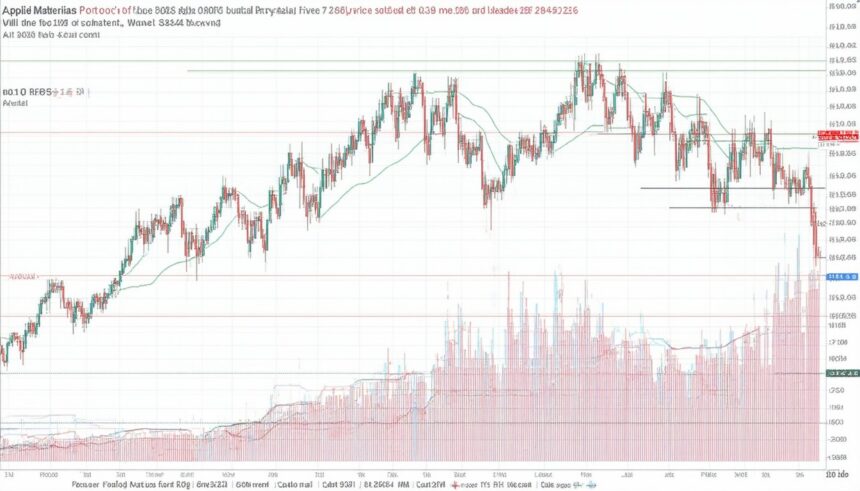
Stock price action since 2020 paints a picture of resilience and momentum. When pandemic-driven supply chain disruptions threatened manufacturers, Applied Materials benefited from accelerated capital expenditure among chipmakers seeking to alleviate shortages. From early 2020 through late 2023, the company’s share price more than doubled, pushed by tailwinds in semiconductor demand and government funding initiatives supporting domestic chip production.
“Applied Materials is a bellwether for the health of the semiconductor equipment industry. Its price swings offer an early read on broader cyclical trends—when chipmakers spend, Applied’s revenue, and often its share price, soars.”
— Semiconductor Industry Analyst Commentary
Yet, as with all cyclical stocks, periods of consolidation and pullback have followed exuberant runs. Rising interest rates and concerns of a global slowdown have at times weighed on valuations, underscoring the sector’s sensitivity to macroeconomic shifts.
Fundamental Drivers Behind Stock Performance
Revenue, Margins, and Market Leadership
Applied Materials’ financials are at the heart of its stock price story. For years, the company has posted consistent revenue growth, with occasional surges when chip demand spikes. Its gross profit margins have generally hovered above industry averages, a testament to operational efficiency and pricing power in mission-critical equipment.
The company maintains leadership in etching, deposition, and inspection systems—essential steps in semiconductor wafer fabrication. With a diversified customer base that includes chip giants like Intel, TSMC, and Samsung, Applied Materials is less vulnerable to customer concentration risk than some peers.
R&D and Technology Roadmap
Ongoing investment in research and development has fueled the company’s product pipeline. By focusing on enabling ever-smaller transistor nodes and novel chip architectures, Applied stays relevant as chipmakers push manufacturing boundaries.
Key strategic moves—such as acquiring rivals or investing in adjacent markets like display or solar manufacturing equipment—have augmented its core offerings. This diversification cushions the company against cyclical downturns in a single segment.
External Factors Shaping Share Price
Geopolitics and Supply Chain Dynamics
The global chip industry is often caught in the crosshairs of trade tensions and geopolitical maneuvering. Export restrictions, particularly those affecting sales to China, have introduced periodic uncertainty into Applied Materials’ revenue outlook. Moreover, supply chain disruptions—ongoing since 2020’s turbulence—have sometimes led to project delays and shifts in capital expenditure timing.
Beyond geopolitics, increased national investments in semiconductor manufacturing (the U.S. CHIPS Act, for example) have boosted industry optimism. Companies like Applied Materials, supplying the critical tools for these expansions, stand to benefit from robust policy support.
Broader Market Sentiment
Applied Materials stock also reflects broader market sentiment toward technology equities. When risk appetite is high and investors flock to growth sectors, multiples expand; in risk-off environments, even sector leaders see compression. Interest rates, inflation, and currency fluctuations play a notable role, often overshadowing even strong operational performance in the short term.
Peer Comparisons and Sector Benchmarks
How AMAT Stacks Up
Viewed against a basket of semiconductor equipment makers—key peers include Lam Research, KLA Corporation, and ASML—Applied Materials’ stock price trajectory is generally in line with sector moves but can diverge based on quarterly earnings, guidance, and strategic developments.
For instance, ASML’s focus on cutting-edge EUV lithography gives it a premium, while Applied Materials’ broader portfolio provides stability and exposure across several critical process steps. The company’s forward price-to-earnings and PEG ratios tend to position it as a value-growth hybrid, attracting both momentum investors and those focused on long-term fundamentals.
ETF and Index Inclusion
Inclusion in larger indexes—like the S&P 500 and various technology or semiconductor ETFs—further magnifies the stock’s trading volumes and institutional ownership. Flows into sector ETFs can sometimes drive price moves independent of company-specific news.
Technical Analysis of Recent Price Patterns
Key Support and Resistance Levels
Chart watchers often identify support near prior breakout areas, where institutional buying has historically emerged. Resistance levels are generally marked at post-earnings highs or round psychological numbers, where sellers tend to pause rallies.
Recent technical patterns have included bullish formations after earnings beats, with periods of consolidation following guidance updates or macroeconomic news. Moving averages—like the 50-day and 200-day—serve as popular guideposts for traders monitoring the health of ongoing trends.
Trading Volumes and Volatility
Volatility in AMAT’s stock is often elevated around major industry events, such as new product announcements or quarterly results. High volume upswings are a strong validation of directional moves, especially when accompanied by robust forward guidance.
Risks and Potential Headwinds
Cyclical Business and Economic Sensitivity
Applied Materials remains exposed to capital spending cycles at its key customers. If global demand for consumer electronics, automotive chips, or mobile devices slows, companies may defer new capacity investments, directly impacting Applied’s sales and profit outlook.
Attempts to forecast stock price movements should acknowledge these inherent cycles—as well as potential supply bottlenecks or regulatory changes that could unexpectedly disrupt forward momentum.
Innovation and Competitive Threats
A failure to keep pace with technological evolution in semiconductor manufacturing, or a misstep in product development, could erode Applied’s market share. Meanwhile, aggressive competition from emerging equipment makers in Asia and Europe presents ongoing market share risks.
Strategic Outlook and Investor Perspective
Applied Materials’ long-term thesis remains strong: semiconductors underpin the digital economy, and advanced manufacturing tools will only grow in importance. For investors with a moderate risk appetite and a multi-year horizon, sector leadership and diversified revenue streams make AMAT stock a mainstay of technology portfolios.
Short-term traders should remain cognizant of volatility stemming from sector rotations and broader economic news, while longer-term holders may focus on the ever-expanding addressable market for advanced chips.
Conclusion
Applied Materials stock price has been shaped by innovation, sector cycles, and external shocks alike. Financial discipline, technological leadership, and a focus on strategic diversification have enabled the company to thrive in a rapidly changing landscape. While risks—both macroeconomic and competitive—remain, Applied’s central role in semiconductor manufacturing means its stock will likely continue to attract investor attention. For those seeking exposure to the heartbeat of the global tech supply chain, AMAT remains a company to watch.
FAQs
What drives the price of Applied Materials stock?
The stock price is influenced by semiconductor industry cycles, company earnings, global technology trends, and broader market sentiment toward tech stocks.
How does Applied Materials compare to its competitors?
AMAT competes with firms like ASML, Lam Research, and KLA. While peers may dominate certain niches, Applied’s broad portfolio and customer diversification support long-term stability.
Are geopolitical issues a concern for AMAT’s stock price?
Yes, trade tensions and export restrictions, particularly involving China, can impact revenue forecasts and investor sentiment.
What are key risks investors should consider?
Major risks include semiconductor demand swings, supply chain disruptions, competitive pressures, and potential for rapid shifts in customer capital spending.
Is AMAT a good long-term investment?
For many, Applied Materials represents a strong long-term bet due to its sector leadership and centrality to global technology growth. However, investors should be aware of cyclical swings and conduct their own risk analysis.
How can technical analysis be useful with AMAT stock?
Technical tools such as trend lines, moving averages, and volume analysis help investors identify support/resistance levels and gauge momentum around earnings or news events.


Credentialed writer with extensive experience in researched-based content and editorial oversight. Known for meticulous fact-checking and citing authoritative sources. Maintains high ethical standards and editorial transparency in all published work.
