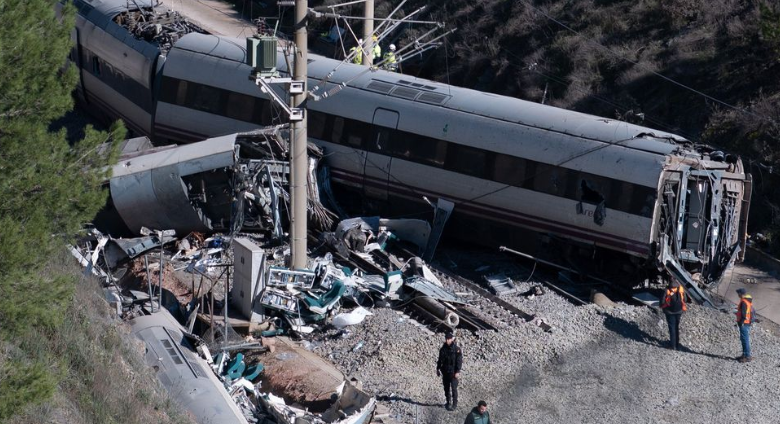
The deadly train derailment in southern Spain that claimed the lives of 45 people was likely caused by a fracture in the railway track, according to preliminary findings from Spanish transport authorities.
Broken Rail Detected Before the Accident
Investigators from Spain’s Ministry of Transport report that the damaged rail section existed before the accident occurred. Based on the evidence collected so far, officials believe the rail fracture played a decisive role in the derailment of the high-speed Iryo train.
“Based on the information gathered to date, we can assume that the rail fracture was already present before the Iryo train derailed,” the investigation committee stated.
How the Train Accident Unfolded
The accident took place on Sunday evening at approximately 7:40 p.m. near Adamuz in the Andalusia region. The Iryo high-speed train derailed and was diverted onto a neighboring track.
Moments later, an Alvia passenger train collided with the derailed carriages. As a result, two wagons of the Alvia train also derailed, significantly worsening the impact of the crash.
Series of Train Accidents Raises Safety Concerns
Following Sunday’s tragedy, three additional train accidents occurred across Spain within the same week, intensifying public concern about rail safety.
- Barcelona region: A train struck debris from a collapsed wall near the tracks, killing a trainee engineer and injuring at least 37 passengers.
- Blanes, Catalonia: A train derailed after hitting stones on the track. Around ten passengers were onboard; no injuries were reported.
- Cartagena: A passenger train collided with a construction crane, resulting in several injuries.
Railway Workers Call for Nationwide Strike
In response to the incidents, train drivers and railway unions have called for a general rail strike. The Spanish union SEMAF reports longstanding concerns about deteriorating infrastructure across multiple high-speed rail routes.
According to union representatives, drivers regularly encounter:
- Loose rail components
- Gaps and fractures in the tracks
- Inadequate preventive maintenance
Government Responds to Infrastructure Allegations
Transport Minister Óscar Puente stated shortly after the crash that the rail line involved had been renovated last year. The government reportedly invested €700 million in railway infrastructure, asserting that the track was in “perfect condition.”
The minister also noted that the derailed train was only four years old, describing it as relatively new.
Investigation Ongoing
Authorities have not yet determined whether the broken rail resulted from poor maintenance or another underlying issue. The investigation is ongoing, and further findings are expected to clarify responsibility and prevent future rail disasters.