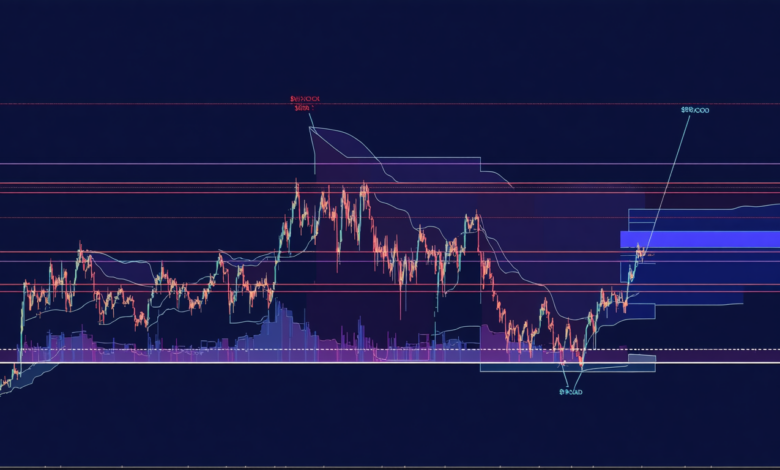
Bitcoin—nobody who follows markets can really ignore the rollercoaster, even if they want to pretend it’s boring or old news. The past few weeks, though, have been anything but dull, and now a new narrative has crept in: Bitcoin enters an ‘early bear phase’ while $84,000 emerges as a critical support level. The mood is awkward—confident bulls faltering, bears sniffing blood, and general traders just quietly scrolling their apps, hoping for some clarity. But is this genuinely a bear market, or just one of those messy in-between stages?
Let’s unpack the current sentiment, look at the data, and maybe admit that, like most crypto cycles, there’s more confusion than universal wisdom.
Technical Signals Point to an Early Bearish Momentum
One of the most glaring patterns emerging lately is a cooling-off in Bitcoin’s relentless 2024 uptrend. After surging to near all-time highs in previous months, prices have retreated, testing the patience (and margin calls) of leveraged traders. Analysts and traders alike are zeroing in on the $84K mark—not just as another nice round number, but as a linchpin for market structure.
“When we see consistent lower highs and a mounting struggle to reclaim lost territory, seasoned participants start taking a harder look at their stop-losses and risk models,” says Marsha Lin, a portfolio manager at a mid-sized crypto hedge fund. “$84,000 has psychological weight; crack it, and you could accelerate liquidations.”
Recent data from several analytics firms show that daily trading volumes dropped by a notable margin, and volatility on major exchanges is up—not a classic sign of optimism. Short interest on derivatives platforms has increased, indicating more traders are hedging or outright betting against BTC’s immediate prospects.
Divergent On-Chain Activity and Sentiment
Beyond price, on-chain metrics add to the narrative. Exchange inflows are slightly up, often a precursor to sell pressure, but HODLers (especially long-term ones) are not exactly stampeding for the exits. It’s a mixed vibe—a kind of standoff between old hands and nervous new capital.
- Exchange inflows/outputs: Higher inflows can lead to increased selling.
- Active address growth: Flatter than expected considering major news cycles.
- Funding rates: More neutral to negative, suggesting short bias.
Unsurprisingly, social media—another battleground—shows less blind euphoria and more debate, even bickering. Are the whales just teasing another shakeout? Or has the cycle truly shifted?
Why $84,000 Is Suddenly the Line in the Sand
Support and resistance levels often sound arbitrary to outsiders, but for Bitcoin, these numbers pack serious punch. The $84K range (give or take—crypto prices never pause neatly at a number) has emerged as a critical battleground. It didn’t just pop out of thin air, though.
Historical Precedent and Psychological Anchors
A quick look at order book data and past chart clusters confirms heavy trading and accumulation zones from earlier in the year around $84,000. Remember late-March, early-April? Every time BTC dipped toward this region, buyers stepped in, and prices rebounded… until now. As it’s being tested again, the stakes get higher.
Some traders, like Simran Patel—a self-described “chartist who usually hates Twitter”—are vocal about what happens if this level breaks:
“It’s not about magic numbers, really. If $84K doesn’t hold, it opens space for acceleration lower. Then you see a kind of cascading effect; panic selling, forced liquidations. It would make the headlines, for sure.”
The Ripple Effects on the Broader Crypto Ecosystem
If $84K flips into confirmed resistance, the sentiment shift will likely ripple into altcoins—many of which already underperform when Bitcoin gets shaky. Web3 startup funding, exchange volumes, and even NFT transactions could take a hit. While some in the space hope for “decoupling,” history suggests the correlation is still hard to break, at least in the short term.
Diverse Perspectives: Is This a Pause or a True Bear Phase?
Just because price action looks bearish doesn’t mean consensus. Even mainstream finance media can’t agree—depending which talking head is on, Bitcoin is either “oversold” and primed for a comeback, or “dangerously overbought and overdue for collapse.”
The Case for a Temporary Consolidation
Some analysts argue this is just healthy consolidation after a ferocious run. They point to macroeconomic factors—like ongoing interest rate hikes and regulatory rumblings—which create headwinds, but not necessarily a full market reversal. In short: cooling off doesn’t always mean collapse.
Skeptics See Structural Risks Mounting
On the flip side, bears highlight a few things that could prolong pain:
- Memecoin and altcoin frothiness often peaks before Bitcoin’s big pullbacks.
- Central banks’ uncertain stance on inflation/crypto policy.
- ETF inflows slowing, which has provided a lot of the recent bullish fuel.
So, you have voices from all angles, some shouting, some whispering, and, honestly, a few who say they’re just “checking out for the summer—wake me up if we retake $90K.”
Real-World Scenarios: Lessons From Past Bear Phases
Looking back, every notable Bitcoin cycle has included these moments of deep doubt—sometimes brief, sometimes brutal and relentless. Remember 2018’s multi-month winter? Or 2021’s May crash after the initial high? While the cast of characters changes (China bans, SEC tweets, or some billionaire making waves), patterns often echo.
Anecdotally, some smaller traders are already talking about hunkering down, parking positions in stablecoins, or even pulling capital out entirely for now. Others are buying the dip, convinced these moments are gift-wrapped opportunities.
In practical terms, market watchers suggest maintaining good habits: don’t overleverage, mind your risk, and know that rushing into crowds rarely ends well.
Concluding Thoughts: Navigating the Unfolding Bear or Blip
There will always be debate over what phase Bitcoin is in. Is this a true bear phase, a mid-cycle correction, or just a dramatic pause before new highs? What’s clear is that the $84,000 support zone now matters—a lot. As the market tests these levels, both newcomers and veterans need to pay attention, avoid blind optimism or fear, and stick to disciplined strategies.
No one’s got a crystal ball—especially not in crypto—but watching the numbers and learning from past cycles beats following hype or despair. Whether you’re a HODLer or a day trader, now’s a good time to tune out the noise, stay nimble, and maybe, just maybe, get some sleep.
FAQs
What does it mean that Bitcoin is entering an “early bear phase”?
It suggests the market is starting to show prolonged signs of weakness after a bullish period, with more sellers than buyers, causing price declines and fading optimism—though there’s still debate about how severe or lasting this phase will be.
Why is $84,000 considered such a key support level for Bitcoin?
Because a significant amount of past trading activity—buying and selling—occurred near this price, it’s seen as an important psychological and technical “floor.” Losing it could trigger even steeper drops due to panic selling and automated liquidations.
Could the Bitcoin price bounce back quickly from this support?
It’s possible—crypto is notorious for sharp reversals. If buyers step in and defend the $84K level, it could trigger a rebound, but if support fails, further declines might follow before any recovery.
How does this phase impact altcoins and the broader crypto market?
Usually, when Bitcoin struggles, many altcoins fare even worse. Market sentiment often shifts quickly across the whole crypto ecosystem, making risk management crucial during these periods.
Is this downturn part of the typical Bitcoin cycle, or something else?
Every Bitcoin cycle has periods of cooling off, correction, or even harsh bear markets. While each cycle is unique, the current move fits patterns seen in the past—though global factors always add complexity.
What should I keep in mind during volatile crypto markets like this?
Stay disciplined: set clear limits for risk, avoid emotional trading, and recognize that uncertainty is part of this market. Diversification, patience, and skeptical optimism tend to outlast reckless speculation.