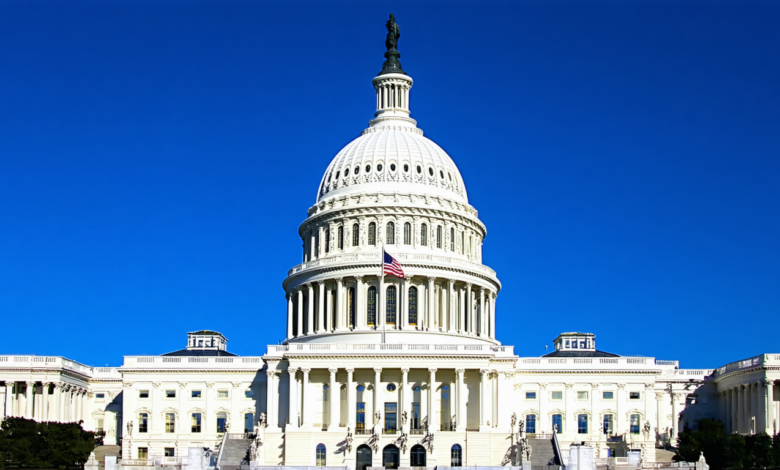
Donald Trump never misses a good headline—especially when it comes to what he calls “financial freedom.” This time, he threw his weight behind a crypto bill, promising it would be a turning point for Americans hungry for a different kind of wealth. His backers cheered. Twitter/X spun with memes. Crypto influencers acted like the world was changing right before their eyes, even if a few were rolling their eyes in the background. So why, after all the fuss, did the U.S. Senate hit the pause button and delay the bill’s progress until March?
That’s the million-dollar question plaguing anxious investors, policy wonks, and everyday folks wondering what really goes on behind closed doors in D.C.
Inside the Crypto Bill: Opportunity or Optical Illusion?
What Did Trump Actually Say—and Promise?
Just weeks ago, Trump hailed the new crypto legislation as “the next step towards real financial freedom for Americans,” promising that regulated, digital innovation would spark job creation and keep the U.S. ahead of China and Europe. “We’re not letting this tech slip away. Not on my watch,” he told a rally crowd, who responded with scattered shouts and a few confused faces. Hey, not everyone follows the crypto world—can you blame ’em?
Dissecting the Bill: More Than Just Bitcoin
On paper, the legislation aims for much more than Bitcoin. It sets out a framework for:
- Regulating stablecoins
- Defining digital asset classifications
- Creating a new “crypto sandbox” for startups to innovate, mostly free from old-school banking restrictions (for a trial period)
- Requiring exchanges to meet robust consumer protection rules
Some say it’s a step toward clarity. Others call it a government power grab. But the real kicker? The bill doesn’t ban or endorse any particular coin. Instead, it tries to sketch out the vague outlines of an industry that’s never stood still.
Why Did the Senate Delay the Crypto Bill Anyway?
Political Chess and Unfinished Homework
Legislative battles in D.C. rarely run on schedule, and this is no exception. Sources close to the Senate Banking Committee (who, let’s be real, sometimes sound a bit exasperated) say the delay was about “due diligence”—a phrase used so much it probably deserves its own meme at this point. Lawmakers cited a need for more public hearings, additional research on recent crypto hacks, and frankly, a bit more time to decipher what this new tech means for everyday Americans, not just traders in Miami or Silicon Valley.
But political gamesmanship isn’t exactly new in Washington. Some senators in tight re-election races worry that moving too quickly on anything labeled “crypto” could open them up to attack ads, especially after last year’s FTX and Celsius implosions.
“Whenever you see a big delay in Congress, it’s rarely just about the policy itself,” notes Dr. Lena Nguyen, a finance law expert at Georgetown. “It’s about who gets credit if it goes right, and who takes the blame if it goes wrong. Crypto’s got a lot of both.”
Lobbyists, Disagreement, and… Wait, Who’s Missing?
Lobbying is an Olympic sport in Congress, and with crypto, you get a full-blown decathlon: bankers, tech firms, civil rights groups, and old-guard consumer protection advocates all elbowing for a seat. Some want more government oversight. Others—the innovation crowd, especially newer fintechs—say, “Hey, let us build, don’t box us in!” Even within the crypto world, the industry can’t quite agree on priorities, with Bitcoiners, Ethereum fanatics, stablecoin operators, and DeFi founders all penning dueling op-eds and think pieces.
Amid all that noise, a few key stakeholders (think everyday Americans who don’t yet own crypto) have been left out of the conversation, at least so far.
The Broader Context: From Crisis Memories to Regulatory Catch-Up
FTX Fallout Still Lingers
Roll back the tape a year or so, and the headlines were all about FTX’s historic collapse—customers locked out of accounts, billions evaporated, politicians scrambling to hold hearings that felt part justice, part PR theater. Memories of what went wrong are still fresh, and the political calculus hasn’t faded yet.
Senators also know they’re being watched closely by regulators. The SEC and CFTC are both jostling for jurisdiction, with Chair Gary Gensler arguing that much of the crypto universe already falls under existing securities laws, while crypto advocates call for “fresh rules for a new era.” It’s a mess, honestly.
Global Pressure: Will the U.S. Lead or Follow?
Internationally, the EU advances new MiCA (Markets in Crypto-Assets) rules, aiming for clarity (and some would say, strictness). China continues major state-led blockchain experiments, and even smaller economies experiment with national digital currencies. For American lawmakers, the stakes are pretty real: move too slow, and the U.S. falls behind; move too fast, risk another disaster.
Divergent Opinions: Freedom or Folly?
Crypto Optimists: A New American Dream
There’s a segment, especially among Gen Z and young millennials, who see digital assets not just as risky bets but as paths to economic agency. Peer-to-peer transactions, digital ownership, bypassing traditional banks—these stories get shared endlessly on TikTok and Discord.
Jacob, a 23-year-old coder in Austin, says: “People act like crypto’s a scam or something, but for me, it’s just an alternative system. Maybe not perfect, but at least it’s ours, you know?”
Skeptics and Realists
On the other side, voices warn that without tough rules, digital assets become casinos for the rich or tools for fraudsters. Several academics, privacy advocates, and even Fed officials have repeatedly pushed for “deeper consumer protections before mainstream adoption.”
And then there are folks who just, well, shrug: “Sounds interesting, but I don’t want to lose my savings. The stock market’s confusing enough already,” says Donna, a teacher in rural Ohio.
Looking Ahead: Will March Bring Real Progress?
The delay until March is both frustrating and, perhaps, inevitable. Crypto, by its very nature, moves fast. Congress, famously, does not. Some say that gives lawmakers time to listen and tweak the bill for broader support—others argue it’s simply more gridlock with an updated buzzword.
If the Senate returns to debate next spring, here’s what’s at stake:
- How clear and fair the new crypto rules actually turn out to be
- Who gets the upper hand: consumer advocates or industry insiders
- Whether the U.S. can set a global example, or keeps playing catch-up
There’s no final answer yet. Maybe there never is, with the crypto world evolving by the hour.
Conclusion
Trump’s championing of the crypto bill showed the growing political weight behind digital finance, but the Senate’s delay reveals just how complicated, messy, and, honestly, very human American lawmaking can be. Between distrust, lobbying, and the lingering aftershocks of past failures, the road to “financial freedom” is a zigzag—maybe with more potholes (and memes) than anyone expected. Come March, expect another chapter in this ongoing drama, with new surprises almost guaranteed.
FAQs
Why was the crypto bill delayed until March?
The Senate postponed the bill mainly to allow more hearings, gather broader feedback, and address unresolved concerns from different stakeholders. Political calculations and recent scandals in the crypto space also played a role.
Did Trump actually write or design the bill?
No, Trump voiced strong support and claimed it represents financial freedom, but the legislation was developed by lawmakers and committees, not by him directly.
How does the bill impact regular consumers?
If passed, it would clarify which digital assets are legal and regulated, aiming to protect consumers without banning crypto. Still, there’s debate over whether these rules go far enough—or maybe too far.
Will crypto be banned in the U.S. because of this bill?
The current draft doesn’t ban crypto; instead, it seeks to regulate digital assets and provide more oversight to prevent fraud and abuse.
What happens if the Senate doesn’t act in March?
Delays could mean more uncertainty for the crypto market and for companies waiting for legal clarity. Some worry the U.S. risks falling behind other countries with clearer regulations.
Is this bill just about Bitcoin?
Not at all—while Bitcoin gets the headlines, the bill covers the full spectrum of digital assets, stablecoins, and even some DeFi innovations, aiming to regulate the broader ecosystem.